

| Number of Core Archetypes Covered | 6 (Minimalist, Classic, Romantic, Streetwear-Influenced, Bohemian, Eclectic) |
| Most Common Style Pattern | Hybrid (two or more archetypes blended) |
| Key Identifier | Silhouette + color palette + texture preferences |
| Budget Compatibility | All archetypes are achievable at any price point |
Why Archetypes Are a Useful Starting Point
Style identity can feel like a moving target — one week you're drawn to clean lines and neutral tones, the next you're eyeing bold prints and statement pieces. That's completely normal. But having a vocabulary for your aesthetic makes it dramatically easier to shop with intention, resist impulse purchases, and build a wardrobe that actually coheres.
Style archetypes aren't boxes to lock yourself into. They're reference points — a shared language for describing how you want to look and feel. Think of them the way you'd think of a map: the map isn't the territory, but it's enormously helpful when you're navigating unfamiliar ground. If you're just beginning this process, this beginner's guide to finding your style identity is a strong companion read.
Style Archetype
A recurring pattern of aesthetic choices — silhouettes, colors, textures, and references — that together describe a recognizable personal style identity. Archetypes are descriptive tools, not prescriptions.
Capsule Wardrobe
A curated, small collection of versatile clothing pieces that can be combined in many ways. Usually built around a cohesive color palette and a set of foundational silhouettes.
Silhouette
The overall shape or outline a garment creates on the body — for example, fitted, oversized, A-line, or tailored. Silhouette is one of the primary signals of any style archetype.
High-Low Dressing
The practice of mixing pieces from different price points or formality levels in a single outfit — such as pairing an elevated blazer with casual sneakers.
Aesthetic
The visual and sensory quality of a style approach — the overall impression created by a combination of colors, textures, shapes, and cultural references.
The Core Wardrobe Archetypes
Most personal styles fall somewhere within — or between — a handful of recognizable identities. Here's a working reference for the most common ones:
| Number of Core Archetypes Covered | 6 (Minimalist, Classic, Romantic, Streetwear-Influenced, Bohemian, Eclectic) |
| Most Common Style Pattern | Hybrid (two or more archetypes blended) |
| Key Identifier | Silhouette + color palette + texture preferences |
| Budget Compatibility | All archetypes are achievable at any price point |
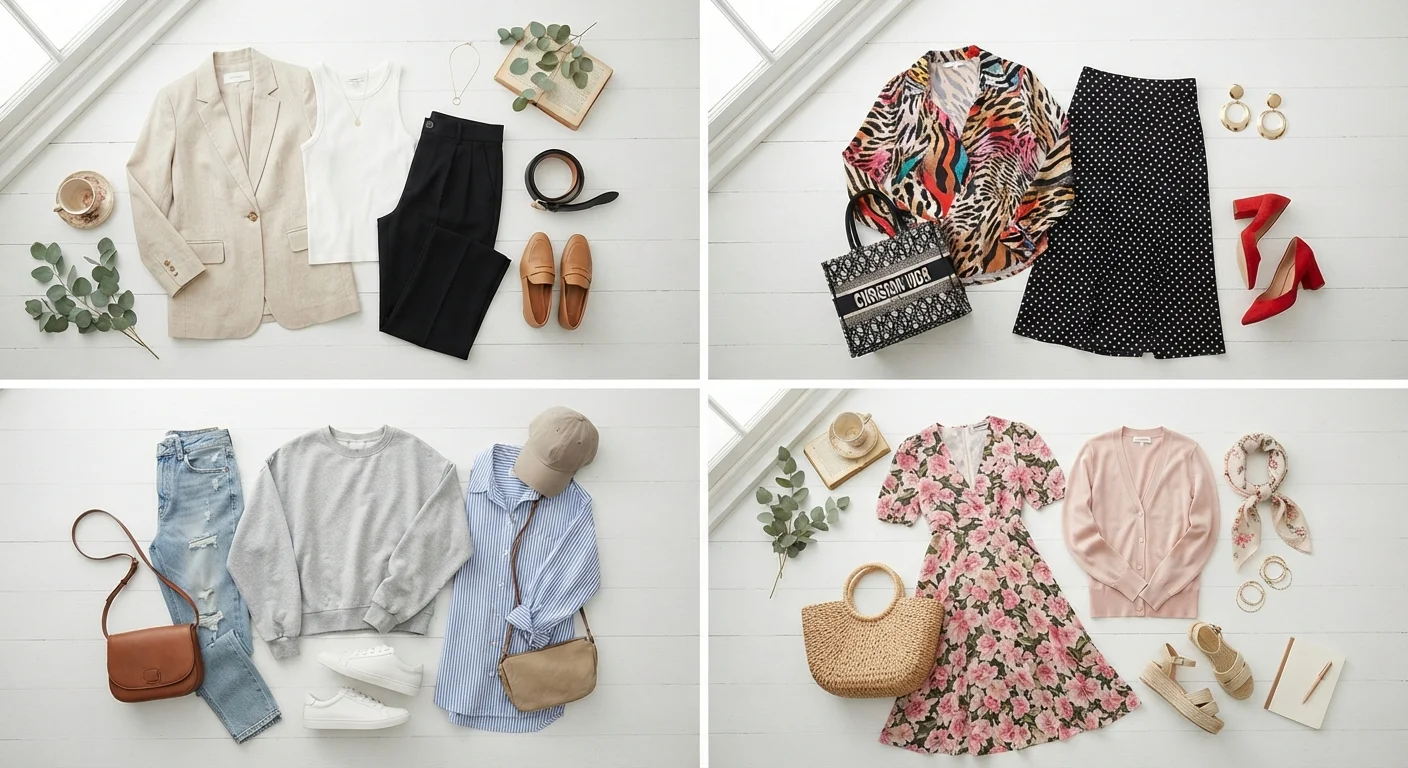
The Minimalist
Defined by restraint. Neutral palettes, clean silhouettes, and a preference for fewer, better-chosen pieces. The minimalist wardrobe resists clutter and relies on quality of cut over quantity of items. Works especially well with a capsule approach — see Signature Style vs. Capsule Wardrobe for how this plays out in practice.
The Classic
Anchored in timeless silhouettes: tailored trousers, structured blazers, button-downs, and loafers. The classic dresser values longevity over novelty and tends to invest in well-made staples that don't date. Trend cycles largely pass them by — intentionally.
The Romantic
Drawn to softness: flowing fabrics, floral prints, delicate textures, and feminine detailing like ruffles or lace. The romantic aesthetic isn't exclusively about dresses — it shows up in blouse choices, color palettes (blush, ivory, dusty rose), and layering habits.
The Streetwear-Influenced
Rooted in urban culture, comfort, and self-expression. Key elements include oversized silhouettes, graphic tees, sneakers, and relaxed-fit bottoms. This archetype values cultural references and often mixes high-low pieces with ease.
The Bohemian
Layered, textured, and eclectic. The bohemian aesthetic pulls from global craft traditions — embroidery, natural fibers, earthy tones — and tends to feel relaxed and artful rather than polished or formal. Accessories play a major role.
The Eclectic
Doesn't settle. The eclectic dresser treats clothing as a creative medium, mixing eras, aesthetics, and unexpected combinations. This archetype requires the most self-awareness to pull off consistently — mining your past for style cues can help ground the experimentation.
How to Use This Guide Without Getting Boxed In
Real personal style is rarely one archetype, pure. Most people are two or three in combination — a minimalist with romantic leanings, or a classic dresser who incorporates streetwear silhouettes on weekends. The goal is to identify your dominant thread, then understand how your secondary influences shape it.
You Don't Have to Pick Just One
Identifying a primary archetype is a starting point, not a final answer. Your style will naturally evolve as your life, priorities, and tastes shift — and that's a sign of growth, not inconsistency. Revisit this reference whenever your wardrobe starts to feel misaligned with how you want to show up.
Once you've identified your general territory, the next practical move is auditing what you already own against it. Our style audit checklist walks you through exactly that. And if building a wardrobe that works across different occasions is the priority, this guide to occasion-spanning wardrobes covers the principles behind flexible dressing. For the full arc — from self-discovery through confident daily dressing — The Full Picture pulls it all together. All of this is achievable within a thoughtful budget; the Budget Fashion hub is built around exactly that premise.