
Signature Style vs. Capsule Wardrobe: Two Approaches to Dressing With Intention

Key Takeaways
- Signature style is about a consistent aesthetic identity; a capsule wardrobe is a practical clothing system.
- Both approaches reduce decision fatigue and discourage impulse buying.
- You can build a signature style with any budget — neither approach requires high spending.
- A capsule wardrobe prioritises versatility; signature style prioritises self-expression.
- Many people find the most success combining elements of both approaches.
- Knowing your lifestyle and daily needs is the essential first step for either method.
Option A
Signature Style
The expressive, identity-first approach.
Best for: People who want their clothing to communicate a consistent personal aesthetic, regardless of how many pieces they own.
Option B
Capsule Wardrobe
The streamlined, function-first system.
Best for: People who want a finite, curated closet where every item is versatile, mix-and-match, and purposeful.
If you want a consistent look that feels unmistakably 'you'
Signature Style
Signature style anchors your wardrobe in self-expression and identity, making every purchase an extension of who you are rather than a trend reaction.
If your goal is a clutter-free closet with maximum outfit options from minimal pieces
Capsule Wardrobe
A capsule wardrobe's strength is its efficiency — fewer items that mix and match freely means less overwhelm and more confident daily choices.
If you're working with a tight clothing budget
Capsule Wardrobe
A capsule system's emphasis on versatile, enduring pieces naturally steers spending toward items with the highest cost-per-wear value.
If you love expressing creativity and personality through what you wear
Signature Style
Signature style gives you room to be bold or eclectic while staying intentional, because its guiding principle is authentic self-expression rather than a strict item count.
If you want a structured framework to rebuild your wardrobe from scratch
Capsule Wardrobe
The capsule method offers clear, concrete guidelines — typically 25–40 versatile items — that make starting over feel manageable and purposeful.
What Each Approach Actually Means
Both terms get tossed around interchangeably, but they describe genuinely different things. Understanding the distinction is the first step toward figuring out which one — or which combination — makes sense for your actual life.
Signature style is about cultivating a recognisable aesthetic that reflects who you are. It's less a rule system and more a guiding sensibility. Someone with a signature style might own 80 pieces or 20 — what matters is that their wardrobe choices feel coherent, intentional, and distinctly theirs. Think of it as a visual vocabulary for your personality. For more on what this really means, explore what personal style actually means.
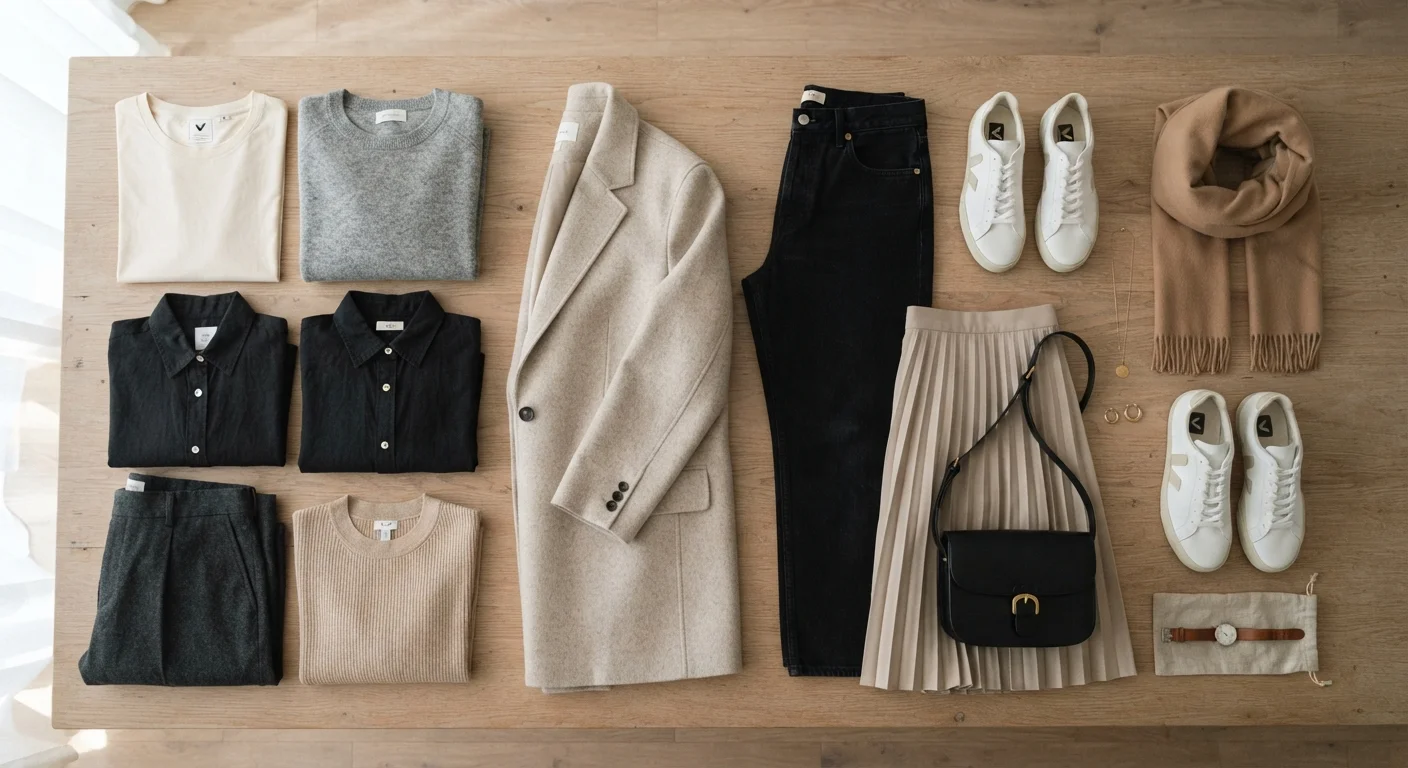
A capsule wardrobe is a practical system built around a deliberately small collection of versatile, coordinating pieces. The goal is maximum outfit combinations from a minimal number of garments. It's structural by nature — you're essentially engineering your closet for efficiency. If you're thinking of building one on a budget, building a capsule wardrobe on a tight budget is a great next read.
| Criterion | Signature Style | Capsule Wardrobe |
|---|---|---|
| Core focus | Consistent personal aesthetic | Functional, versatile item set |
| Guiding principle | Identity and self-expression | Efficiency and mix-and-match ease |
| Item count | No fixed number | Typically 25–40 core pieces |
| Colour palette | Whatever fits your aesthetic | Usually neutral and coordinating |
| Best for | Creative, identity-driven dressers | Efficiency-focused, clutter-averse dressers |
| Budget friendliness | Works at any budget | Naturally limits spending by design |
| Flexibility | High — evolves with you | Moderate — changes are deliberate |
Where They Overlap — and Where They Diverge
At their core, both approaches push back against mindless consumption. Neither is about owning more for the sake of it, and both reduce the daily stress of getting dressed. That's where the common ground ends.
A capsule wardrobe is defined by constraints: a set number of items, a neutral or coordinating colour palette, and a strong emphasis on versatility. It asks you to prioritise function — will this piece work across multiple occasions? — over expression. The principles behind occasion-spanning wardrobes align closely with the capsule philosophy.
Signature style, by contrast, is defined by coherence rather than quantity. You might have a preference for bold prints, vintage silhouettes, or earthy tones — and every piece you add either fits that aesthetic or it doesn't. The filtering mechanism is identity, not item count. This approach pairs naturally with the ideas in wardrobe archetypes and style identities, which can help you locate your own aesthetic starting point.
80%
Of wardrobe items rarely worn
Research consistently suggests most people regularly wear only about 20% of what they own, pointing to the value of intentional curation regardless of method.
25–40
Typical capsule wardrobe item count
Style educators and wardrobe consultants commonly cite this range as a practical target for a functional capsule collection covering all daily needs.
Choosing the Right Framework for Your Life
Neither approach is universally superior — the right fit depends on how you actually live, shop, and relate to clothing. A few honest questions can steer you in the right direction. Before committing to either method, a style audit can help you evaluate what you already own and clarify what you're really after.
If you tend to dress differently for different moods and contexts — say, creative at work and casual on weekends — a signature style approach may feel more freeing, because it's anchored in you rather than a checklist. If, on the other hand, you feel paralysed by too many options or keep reaching for the same seven items anyway, a capsule structure might simply make that tendency explicit and deliberate.
It's also worth checking whether your wardrobe reflects your real life or an aspirational one. Dressing for your lifestyle, not your Pinterest board explores exactly this gap. Budget considerations matter too — both approaches work at any spending level, but a capsule wardrobe's emphasis on fewer, more versatile pieces can make it especially compatible with smart budget fashion principles.
Why Not Both? A Hybrid Approach
Many people find the most sustainable wardrobe sits somewhere between the two frameworks — using capsule-style versatility as the structural base while letting signature style guide which colours, silhouettes, and details they gravitate toward. This hybrid approach means you're not locked into a rigid count, but you're also not shopping without direction. For practical colour and pattern strategies that support both goals, see colour and pattern strategies for a small wardrobe.