

Key Takeaways
- Personal style is about self-expression, not following trends or spending more.
- Identifying what you already love wearing is the most honest starting point.
- A small wardrobe of versatile pieces outperforms a large, disconnected closet.
- Fit and fabric quality matter more than labels or price tags.
- Style evolves naturally with your life — that's a feature, not a flaw.
What Personal Style Actually Means
Personal style is not a capsule collection you buy overnight or a mood board you copy from someone else's feed. At its core, it's the ongoing conversation between who you are and what you wear — and it belongs entirely to you.
Trends come with an expiration date. Personal style doesn't. When your wardrobe reflects your actual life — your job, your weekend habits, your comfort preferences, your sense of humor — getting dressed stops feeling like a chore and starts feeling like a small daily win.
The good news: you don't need a big budget or a fashion background to develop a style that feels genuinely yours. What you need is a little self-awareness, some honest editing, and a willingness to experiment without pressure.
Style Is Not a Destination
No wardrobe is ever truly "finished," and that's okay. Personal style is a practice — something you return to, refine, and renegotiate as your life changes. Resist the pressure to have it all figured out at once. Even seasoned stylists describe their own wardrobes as works in progress.
Discovering Your Style Identity
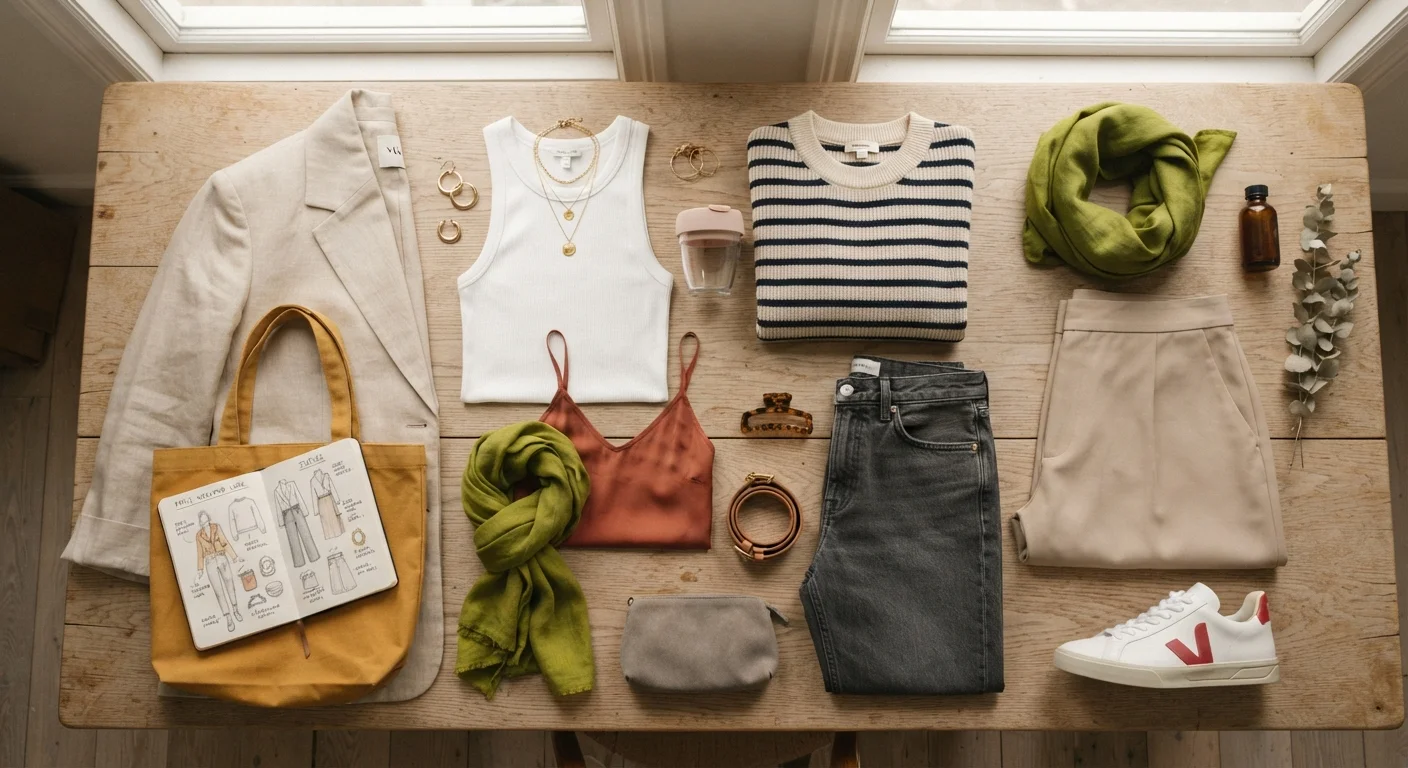
Before you buy a single thing, spend some time observing yourself. Pull up your most-worn outfits from the past few months and look for patterns. Are you always reaching for the same silhouette? Do you gravitate toward a specific color family without thinking about it? Those instincts are data.
A practical exercise: create a private image folder on your phone and screenshot outfits — from anywhere — that genuinely excite you. After two weeks, review them together. Themes will surface: structured vs. relaxed, minimal vs. layered, muted vs. bold. This isn't about labeling your aesthetic with a Pinterest category. It's about understanding your actual visual language.
Understanding how color, pattern, and texture work together is a game-changer here. Our guide on color, pattern, and texture breaks down the mechanics so you can make intentional choices instead of guessing.
Before buying anything new, ask whether it works with at least three things you already own. If the answer is no, it probably belongs to someone else's wardrobe.
Impulse purchases that don't connect to existing pieces are the primary driver of a cluttered, unusable closet — and wasted money.
Don't curate your style folder from just one type of source. Include outfit photos from real life, not just editorial shoots, so your reference points stay grounded in wearable reality.
Aspirational imagery skewed toward luxury or heavily styled editorial contexts can create unrealistic benchmarks that make your actual wardrobe feel inadequate by comparison.
Building a Wardrobe That Works
Once you know what you're drawn to, the next step is translating that into a functional closet — not a full one. A wardrobe built around a handful of genuinely versatile pieces will serve you better than a closet stuffed with impulse purchases that never quite fit together.
Start with what you already own. Do a clothing audit: everything gets pulled out, tried on, and sorted into keep, donate, or maybe. Keep only what fits well right now, not what might fit someday or what felt like a good idea at the sale rack. Fit is the single biggest driver of whether something looks polished or thrown together.
80%
Of outfits come from 20% of your wardrobe
The 80/20 principle, frequently cited by wardrobe consultants, suggests most people regularly wear only a fraction of what they own.
$1,700+
Average annual U.S. clothing spend per household
According to the U.S. Bureau of Labor Statistics Consumer Expenditure Survey, American households spend significantly on apparel each year.
From there, identify the gaps — the specific items your current wardrobe is missing that would make your existing pieces more versatile. A go-to layer, a reliable bottom in a neutral, a shoe that bridges casual and semi-dressed occasions. These are the things worth investing in thoughtfully.
For practical strategies on stretching your clothing budget without sacrificing quality, the Budget Fashion hub is a strong resource to bookmark.
Start With Three Core Pieces
Rather than overhauling your entire wardrobe at once, identify just three pieces that would anchor new outfits. A well-fitted layer, a versatile bottom, and a reliable shoe cover an enormous amount of ground. Building incrementally is less overwhelming and easier on your budget.
Dressing With Confidence at Any Budget
Confidence in what you wear has almost nothing to do with how much you spent. It has everything to do with fit, intention, and comfort — physical and psychological.
Fit adjustments from a tailor can transform a so-so thrifted find into something that looks custom. Even simple hemming or taking in a seam makes an enormous difference. The cost is often modest and nearly always worth it.
Fabric quality affects how clothing moves, drapes, and holds up over time — all of which shape how you feel wearing it. Natural fibers like cotton, linen, and wool tend to breathe better and age more gracefully than fast-fashion synthetics, though blends can be excellent depending on the application. You don't need to memorize fiber content charts; just notice how a garment feels in your hands before you buy it.
“Style is a way to say who you are without having to speak.”
— Rachel Zoe, Fashion designer and stylist
Managing your clothing spending as part of a broader financial picture matters too. General money-management principles — like setting a monthly clothing budget or waiting 48 hours before non-essential purchases — apply just as well to fashion as to anything else. The Everyday Money Tips hub covers practical frameworks for staying in control of daily spending decisions.
Trend-Chasing Can Drain Your Budget Fast
Buying pieces specifically because they're trending — rather than because they fit your actual style — often results in items worn once or twice before they feel dated. Trend pieces can be fun in small doses, but anchoring your wardrobe in them is an expensive cycle. Focus the bulk of your budget on pieces you'd happily wear regardless of what's currently popular.
Letting Your Style Evolve Over Time
Here's something worth saying plainly: the style that suited you five years ago doesn't have to be the style you wear forever. Life changes — jobs, relationships, where you live, how you spend your time — and your wardrobe can shift with it. That's not inconsistency. That's growth.
Treat your wardrobe as a living system rather than a finished project. Do a light audit every season: pull out what isn't getting worn, ask yourself why, and decide whether it still fits your current life. Rotate in a piece or two that reflects where you are now, not where you were.
Resale platforms, clothing swaps, and thrift shopping make this kind of ongoing evolution much more financially accessible than buying everything new. You can refresh your wardrobe regularly without a large outlay — and often find higher-quality pieces in the process.
The goal isn't to arrive at some perfect, final version of your style. It's to feel at home in what you wear right now — and to give yourself permission to keep figuring it out.
Sustainable Doesn't Mean Expensive
Buying less but better, shopping secondhand, and caring for your clothes properly are all sustainability-aligned habits that also tend to save money over time. Garment care — following washing instructions, storing items correctly, making small repairs early — significantly extends the life of your clothing without requiring any additional spending.