

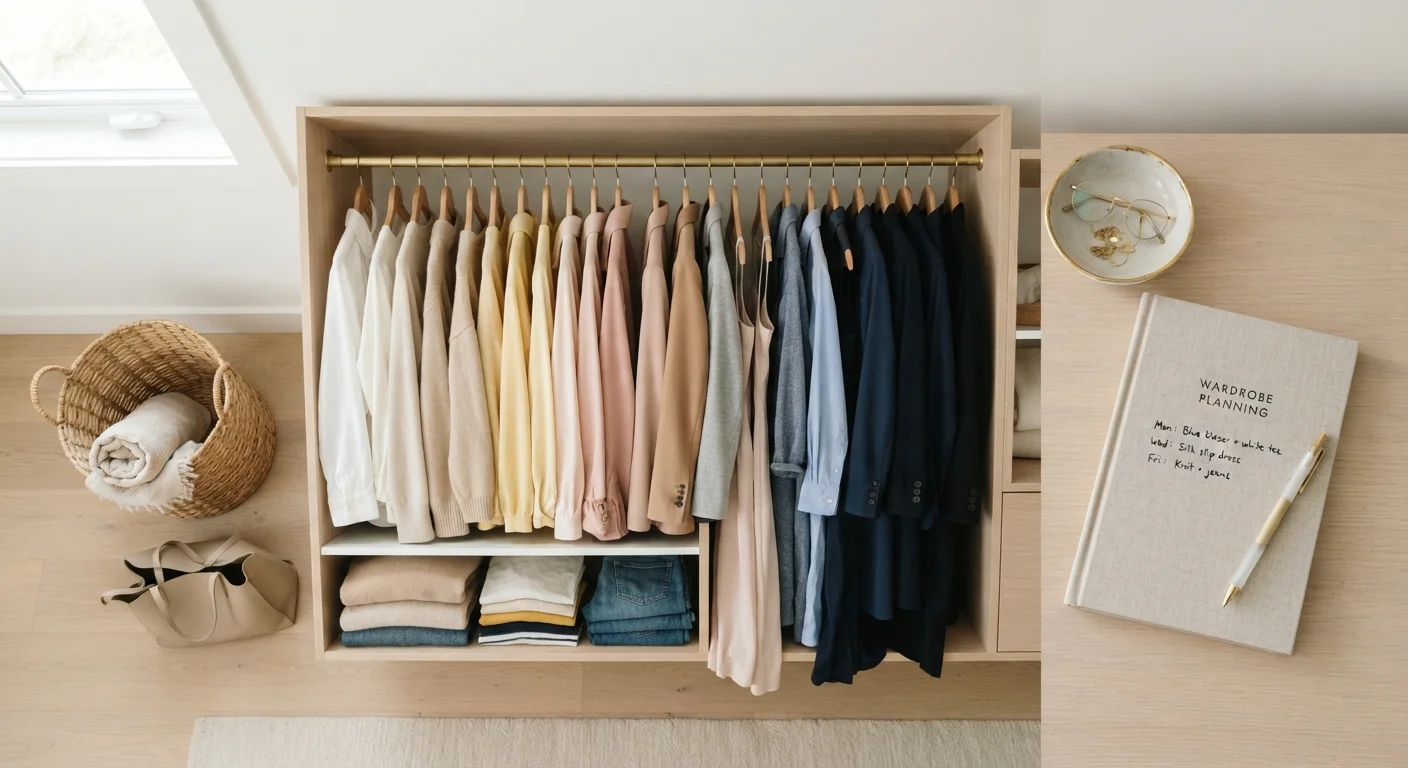
Key Takeaways
- A style audit helps you buy with intention, not impulse.
- Clarifying your lifestyle needs prevents wardrobe mismatches that waste money.
- Identifying gaps means new purchases actually earn their closet space.
- Your style identity should reflect your real life, not an aspirational fantasy.
- Asking the right questions before buying saves frustration and spending regret.
Summary
22 items · 20–45 minutes
Why a Style Audit Beats Another Shopping Trip
Most of us have stood in front of a full closet insisting we have nothing to wear. That disconnect — between what we own and what actually works — is exactly what a style audit is designed to fix. Before you add one more item to your cart, it pays to get honest about what's already hanging in your wardrobe and what story you want your clothes to tell.
This isn't about restriction or guilt. It's about spending your energy (and your dollars) on pieces that genuinely serve you. Think of the checklist below as a personal style interview — the kind that surfaces real answers rather than impulse reactions. If you're starting from scratch on defining your look, this beginner's guide to finding your style identity is a great companion resource. And if overspending is a recurring challenge, the principles in smart budgeting apply just as powerfully to your wardrobe as to your grocery run.
Wardrobe Reality Check
Lifestyle Reality Check
Style Identity Questions
Before-You-Buy Filter
Gap Identification and Next Steps
How to Use This Checklist Without Overwhelm
You don't need to tackle all 22 questions in one sitting. Work through one group at a time — ideally with your actual wardrobe in front of you, not just your memory of it. Grab a notepad or open a notes app and jot down your honest answers. Patterns will emerge quickly.
Pay special attention to the Lifestyle Reality Check group. Many wardrobe frustrations trace back to a mismatch between how we imagine our lives and how we actually spend our days. Dressing for your real lifestyle rather than an aspirational one is one of the most underrated style moves you can make.
Don't Audit While You're Browsing
Doing a style audit while actively shopping — in a store or online — tends to backfire. The goal of an audit is clarity, and retail environments are designed to override careful thinking. Complete your audit first, identify your real gaps, and bring that focused list to your next shopping session. You'll make sharper decisions and feel better about what you bring home.
Once you've completed the audit, cross-reference your findings with a physical wardrobe review. The wardrobe audit guide on what to keep, alter, donate, or replace pairs perfectly with this checklist — together, they give you a full picture of what you actually need versus what you've been reflexively buying. If certain habits keep derailing your progress, spotting the patterns that keep your wardrobe feeling wrong is worth a read before your next shopping trip.
Notepad or Notes App
Record your audit answers and emerging patterns in real time as you work through each checklist group.
Full-Length Mirror
Try on items you've been skipping to make accurate assessments about fit and feel rather than guessing from the hanger.
Style Mood Board (physical or digital)
Collect images that represent how you actually want to look day-to-day, helping you articulate your style identity in concrete terms.
Wardrobe Inventory Spreadsheet
Track what you own by category so you can see gaps and duplications at a glance without relying on memory.