
Alterations on a Budget: Small Tailoring Fixes That Make Inexpensive Clothes Look Expensive

Key Takeaways
- Fit is the single biggest factor separating polished-looking clothes from cheap-looking ones.
- Most high-impact alterations — hems, seams, darts — cost less than $20 at a local tailor.
- Secondhand and clearance finds benefit most from alterations since they're priced low enough to absorb the extra cost.
- Learning a few basic hand-stitching skills lets you handle minor fixes at home for free.
- Pairing smart alterations with good fabric care dramatically extends the life of inexpensive garments.
Why Fit Beats Price Every Time
Walk into any room in a well-fitted $25 blazer and most people will assume it cost five times that. Walk in wearing a $200 blazer that's two sizes too big, and the opposite impression sticks. Fit is the single most powerful signal of quality — and it's one you can control regardless of your clothing budget.
The good news: most off-the-rack garments, especially at budget price points, are cut generously to fit the widest range of body shapes. That means almost every piece you own has hidden potential waiting to be unlocked by a simple alteration. A hem here, a taken-in seam there, and suddenly a clearance-rack find looks custom.
If you're actively building a wardrobe without overspending, alterations are one of your sharpest tools — pair them with a solid foundation of versatile pieces (see our guide to building a capsule wardrobe on a tight budget) and you'll get dramatically more mileage out of every dollar. Below are the six alterations that consistently deliver the biggest visual payoff.
Find a Local Tailor Before You Need One
The best time to scout a reliable local tailor or alterations shop is before you have something urgent to fix. Ask for a price list on common alterations — a straightforward hem, a side seam take-in — so you can factor realistic costs into your clothing purchases going forward. Many dry cleaners offer basic alterations at competitive prices, too.
Six Alterations Worth Every Penny
Hemming Trousers and Skirts
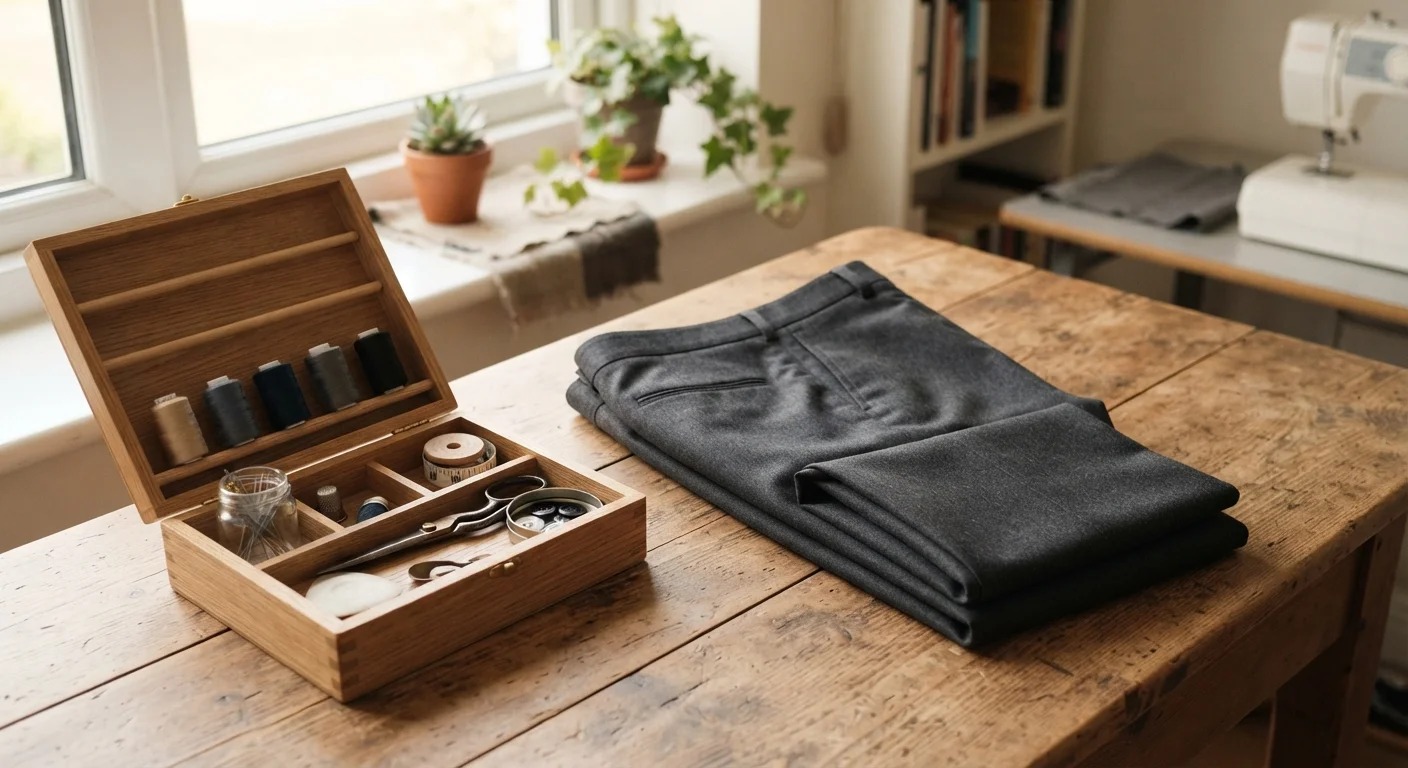
An incorrect hem length telegraphs "off-the-rack" more loudly than almost anything else. Trousers that bunch at the ankle or a skirt that hits at an unflattering point on the calf can undermine an otherwise sharp outfit. A straight hem at a tailor typically runs between $10 and $20 and takes less than a week — or can be done at home with iron-on hem tape in under an hour.
When getting pants hemmed, always wear the shoes you plan to pair them with. The break (the slight fold where the trouser meets the shoe) changes depending on heel height, and getting that detail right is what makes the finished look feel intentional.
A simple hem is the most cost-effective alteration you can make to any garment.
Taking In Side Seams on Tops and Dresses
Budget tops are often cut with extra room through the torso to accommodate a wide size range. The result is fabric that billows away from the body — the visual opposite of a tailored fit. Taking in the side seams by even half an inch on each side creates a silhouette that appears far more structured and intentional.
This is one of the most versatile alterations a tailor can do and usually costs between $15 and $30 depending on the garment type. For stretchy knit fabrics, the fix is also something many beginners can tackle at home with a sewing machine set to a zigzag stitch.
Taking in side seams by just half an inch can completely transform how a top reads on the body.
Adding or Adjusting Darts for Shape
Darts — the small, stitched folds of fabric sewn into blouses, blazers, and dresses — are what give flat fabric a three-dimensional shape. Budget garments frequently skip darts to simplify manufacturing, leaving structured pieces looking shapeless. A tailor can add darts to the back of a blouse or adjust existing ones in a blazer to follow the body's natural contours.
This alteration makes the biggest difference in woven fabrics like cotton poplin, linen, and polyester suiting blends. If you've ever tried on a blazer that sat perfectly on the shoulders but puffed out at the back, a dart adjustment is exactly what it needs.
Darts transform flat fabric into shape — their absence is why budget blazers often look boxy.
Shortening or Slimming Sleeves
Sleeve length is one of the most frequently overlooked fit issues, and one of the most noticeable when it's wrong. Blazer or dress shirt sleeves that extend past the wrist bone look sloppy; shortening them to just above the wrist bone (with about a quarter inch of the shirt cuff visible on a blazer) is a classic finishing detail associated with quality tailoring.
Slimming overly wide sleeves on casual tops or shirts is equally impactful. Narrow, tapered sleeves read as more modern and intentional compared to wide, boxy ones — a distinction that's especially visible in photos and professional settings. See our article on building a professional wardrobe on a limited budget for more context on where this detail matters most.
Perfectly positioned sleeve length is a classic tailoring detail that elevates any garment instantly.
Taking In or Adding a Waistband
Pants and skirts that gap at the back waistband are one of the most common fit problems for people with a smaller waist relative to their hips. A tailor can take in the waistband seam at the center back, eliminating that telltale gap for roughly $15 to $25. The fix is invisible from the outside and makes a dramatic difference in how the garment sits and moves.
For jeans and trousers without a center back seam, the alteration is slightly more involved but still widely offered. If you're shopping secondhand or clearance and consistently find this issue — common when buying across standard sizes — factor in this small additional cost as part of your total wardrobe smart budgeting strategy.
A taken-in waistband eliminates the most common fit complaint and costs less than most coffee runs.
Replacing Cheap Buttons
This one requires no sewing skill whatsoever if you use basic hand-stitching — and it has a surprisingly outsized effect. The plastic buttons on budget shirts and blazers often have a thin, hollow look that reads as low quality at close range. Swapping them out for horn-look, matte metal, or resin buttons (available in bulk at craft stores for just a few dollars) instantly elevates the garment's perceived quality.
Match the button color to the fabric's undertone rather than its surface color for the most polished result. Dark navy buttons on a navy blazer will look flat; a slightly contrasting dark charcoal or tortoiseshell creates depth. This small detail is especially worth it on pieces you wear frequently, like a go-to blazer or workwear shirt. Understanding what your fabric label tells you about garment quality can help you choose which pieces are worth the upgrade.
Replacing hollow plastic buttons with quality alternatives is one of the cheapest high-impact upgrades you can make.
When Alterations Aren't Worth It
Not every garment is a candidate for alterations. If a top's shoulder seams sit well off the shoulder or a pair of pants needs significant crotch depth adjustments, the alteration cost can easily exceed what you paid for the item — or what a similar, better-fitting piece would cost. Stick to alterations in length, waist, and width; avoid restructuring garments at the shoulder or neckline unless the piece is genuinely special. Our overview of secondhand versus fast fashion value can help you decide when a find is worth the extra investment.
Making the Math Work
The smartest way to think about alteration costs is as part of the garment's total price. A pair of trousers bought secondhand for $8 that costs $15 to hem still comes in at $23 — often far less than a properly hemmed pair at a mid-range retailer. That framing flips the mental hurdle most shoppers feel about paying a tailor.
To avoid impulse buys that aren't worth altering, be honest before you purchase: does the garment fit well in the shoulders and chest (for tops) or the hips (for pants)? Those structural areas are expensive to alter. Everything else — length, waist suppression, sleeve width — is usually fast and affordable. Knowing which sale items are actually worth buying is just as important as knowing how to fix them afterward.
Once altered, protect that investment with smart garment care. Inexpensive fabrics are more vulnerable to washing damage than pricier ones, so following the right care routine — detailed in our guide to caring for inexpensive clothes — keeps your newly polished pieces looking great for the long haul.