
Whole Foods vs. Processed Foods: What the Difference Really Means for Your Diet

Key Takeaways
- Processing exists on a spectrum - not all processed foods are nutritionally equivalent or harmful.
- Whole foods generally retain more fiber, vitamins, and minerals than heavily processed alternatives.
- Ultra-processed foods often contain added sugars, sodium, and additives not found in whole ingredients.
- Reading nutrition labels helps you evaluate any food regardless of how it is marketed.
- A mostly whole-food diet pattern is associated with better long-term health outcomes in research.
Option A
Whole Foods
Food in or close to its natural, unaltered state.
Best for: People seeking to maximize fiber, micronutrients, and minimize additives in their everyday eating.
Option B
Processed Foods
Foods altered from their natural state through manufacturing techniques.
Best for: Situations requiring convenience, shelf stability, or accessibility - though nutritional quality varies widely across the spectrum.
If you want to maximize nutrient density in everyday meals
Whole Foods
Whole foods deliver vitamins, minerals, and fiber in their naturally occurring forms, with minimal interference from manufacturing processes.
If you need quick, shelf-stable, or budget-friendly options
Processed Foods
Minimally processed items like canned legumes, frozen vegetables, or fortified cereals can be practical and nutritionally sound choices within a balanced diet.
If you are managing sodium, added sugar, or calorie intake
Whole Foods
Whole foods naturally contain little to no added sodium or sugar, making portion and intake tracking more straightforward.
If you want to understand what is in your food before you eat it
Whole Foods
An apple is an apple - whole foods require no ingredient list decoding, reducing the guesswork around additives and preservatives.
Defining the Terms: A Spectrum, Not a Binary
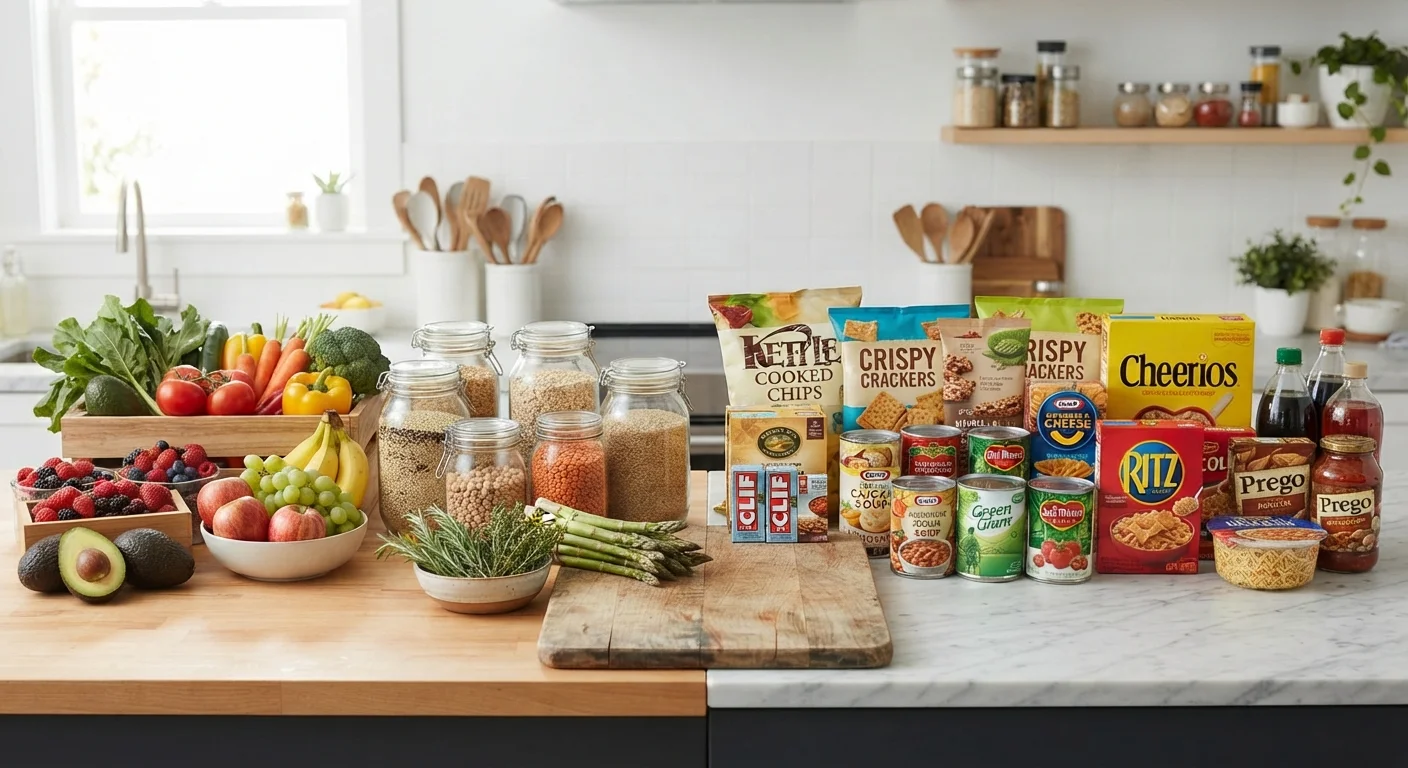
The phrase "whole foods" refers to foods that are consumed in, or very close to, their natural state - think fresh fruit, raw vegetables, dried legumes, eggs, and unground whole grains. They have undergone little to no processing between harvest and your plate.
"Processed foods," however, is not a single category. Nutrition scientists and organizations like the PAHO use the NOVA classification system to describe four levels of food processing:
- Unprocessed or minimally processed: Fresh produce, plain meats, plain milk, dried grains.
- Processed culinary ingredients: Flour, cooking oils, salt, butter - used to prepare food at home.
- Processed foods: Canned vegetables, cheese, cured meats, bread - whole foods with added salt, sugar, or preservation techniques.
- Ultra-processed foods: Products made mostly from industrial substances, with extensive additives, emulsifiers, artificial flavors, and little recognizable whole-food content - including many packaged snacks, sodas, and fast food items.
This distinction matters because lumping all processed foods together misses important nutritional differences. Canned chickpeas and a sugar-sweetened soft drink are both technically "processed" - but their nutritional profiles are vastly different. See our guide to reading nutrition labels to learn how to evaluate any food based on its actual nutrient content.
| Criterion | Whole Foods | Processed Foods (Ultra-Processed) |
|---|---|---|
| Fiber content | Naturally present, often high | Frequently removed or absent |
| Added sugars | None | Often added in significant amounts |
| Sodium levels | Naturally low | Commonly elevated for preservation or flavor |
| Micronutrient density | Generally high and intact | Often reduced; sometimes artificially enriched |
| Additives and preservatives | None | Common - emulsifiers, colors, flavor enhancers |
| Shelf life | Short - requires refrigeration or quick use | Extended - engineered for longevity |
| Preparation required | Moderate to high | Minimal - ready to eat or heat |
What Processing Actually Does to Nutritional Quality
The nutritional impact of processing depends on what is added and what is removed. Here is what typically happens across the spectrum:
Nutrient Loss
Refining grains - removing the bran and germ to produce white flour or white rice - strips away a significant portion of fiber, B vitamins, and minerals. Some products are later enriched to add back specific nutrients, but they rarely replicate the full nutritional profile of the original whole grain.
Heat and exposure to air during processing can also degrade heat-sensitive vitamins like vitamin C and some B vitamins. Our related article on how cooking methods affect nutritional value explains this in more detail.
What Gets Added
Ultra-processed foods are frequently engineered with added sugars, refined starches, sodium, and saturated fats to enhance palatability and shelf life. Research published in journals including BMJ and Cell Metabolism has found associations between high ultra-processed food consumption and increased risk of several chronic conditions - though nutritional science continues to refine our understanding of these relationships.
Understanding how added and natural sugars differ can also help clarify why ingredient lists matter so much when evaluating processed products.
57%
Share of U.S. calories from ultra-processed foods
A study published in BMJ Open estimated that ultra-processed foods account for approximately 57% of total daily calorie intake among American adults.
95%
Americans falling short on dietary fiber
According to USDA data and nutrition surveys, the vast majority of Americans consume less than the recommended daily fiber intake, largely attributed to low whole-food consumption.
25+
Additives common in ultra-processed products
The NOVA classification notes that ultra-processed foods may contain more than 25 substances not typically used in home cooking, including industrial emulsifiers and artificial flavor compounds.
Fiber: The Clearest Casualty
One of the most consistent differences between whole and heavily processed foods is dietary fiber. Most Americans consume well below the recommended daily intake, largely because ultra-processed foods dominate much of the food supply. To understand why this matters and where fiber shows up in food, see our article on dietary fiber and why most Americans fall short.
Practical Guidance: Using This Knowledge Day to Day
The goal of understanding whole foods versus processed foods is not to create rigid rules, but to give you a working framework for everyday decisions. A few practical strategies:
- Use the ingredient list as a signal. A shorter list of recognizable ingredients generally indicates less processing. Multiple types of added sugars, artificial colors, or stabilizers suggest ultra-processing. Our article on food label terms that require a closer look can help you interpret common packaging language.
- Minimally processed options are often practical whole-food alternatives. Frozen vegetables, canned beans (preferably low-sodium), and plain yogurt preserve much of the original food's nutrition while offering convenience.
- Context matters more than category. A diet built primarily around whole foods with some processed items is well within what public health guidance supports. The USDA Dietary Guidelines for Americans consistently emphasize overall eating patterns over individual food restrictions.
- Protein sources vary widely by processing level. Plain lentils and a processed deli product are both protein sources, but differ substantially in sodium, additives, and nutrient completeness. See our overview of protein sources across eating styles for a fuller comparison.
Not All Processed Foods Are Equal
It is worth emphasizing that "processed" covers an enormous range - from lightly salted nuts to artificially flavored snack cakes. Nutritional quality within the processed category can vary more than the category label suggests. When evaluating any packaged food, check the nutrition facts panel and ingredient list rather than relying solely on front-of-package claims. Our nutrition label guide walks through each section of a standard panel in plain terms.
This article is for general informational and educational purposes only and does not constitute medical or dietary advice. Consult a qualified healthcare provider or registered dietitian for guidance specific to your health needs.