

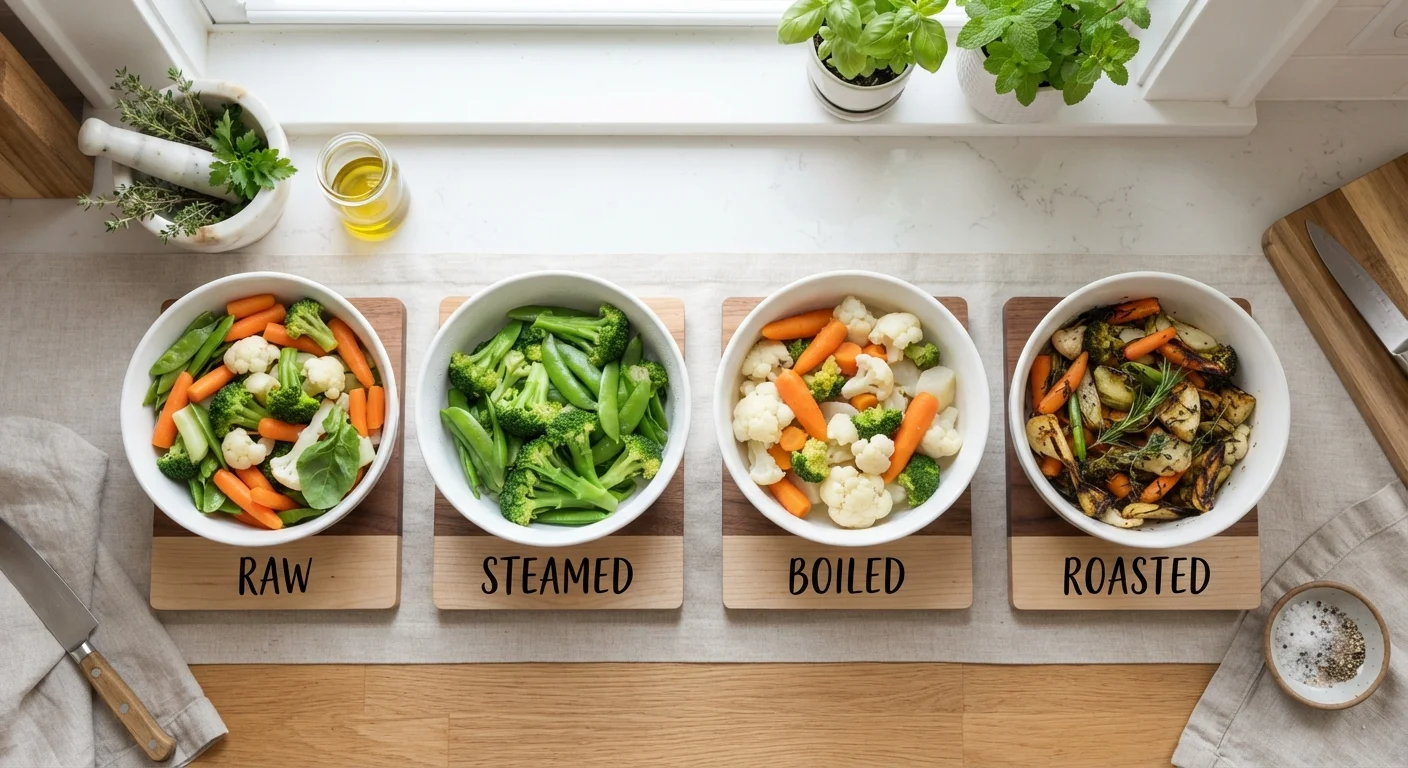
Key Takeaways
- Boiling can leach significant amounts of water-soluble vitamins like vitamin C and B vitamins into cooking water.
- Steaming is widely considered one of the most nutrient-preserving cooking methods available.
- Roasting and grilling can enhance certain nutrients while reducing others, depending on temperature and time.
- Cooking some foods - like tomatoes - actually increases the availability of key nutrients such as lycopene.
- No single cooking method is perfect; variety in preparation can help balance nutrient intake across meals.
Nutrient Retention in Cooking
Nutrient retention refers to how much of a food's original vitamins, minerals, and other beneficial compounds survive the cooking process. Heat, water, and even air exposure can break down or leach out nutrients before food reaches your plate. Understanding these changes helps you make more informed choices in the kitchen without overhauling your entire diet.
Water-soluble vitamins (B vitamins and vitamin C) are the most vulnerable to heat and water exposure, while fat-soluble vitamins (A, D, E, K) and many minerals tend to be more stable across cooking methods.
Why Cooking Method Matters for Nutrition
Most people understand that food's nutritional content matters - but fewer realize that how food is cooked can be just as important as what food is chosen. Heat, water, and cooking duration all influence which nutrients survive and in what quantities.
This doesn't mean home cooking is undermining your nutrition. It means that with a little awareness, everyday cooking decisions - like whether to steam or boil broccoli - can meaningfully support a more nutrient-rich diet. Understanding these trade-offs is part of building a broader, practical approach to eating well, as explored in our guide on building a nutritionally balanced plate.
Up to 50%
Vitamin C lost when boiling some vegetables
Research published in nutrition journals has found boiling can reduce vitamin C content by half or more, depending on vegetable type and boiling duration.
3 key types
Nutrient loss pathways in cooking
Nutrition scientists identify leaching (into water), heat degradation, and oxidation as the primary routes through which cooking affects food's nutrient content.
Higher after cooking
Lycopene bioavailability in cooked tomatoes
Multiple studies have found that cooking tomatoes - through roasting or sautéing - increases the body's ability to absorb lycopene compared to eating them raw.
Boiling: Convenient but Costly for Water-Soluble Vitamins
Boiling is one of the most common cooking methods, but it comes with a notable nutritional trade-off. When vegetables are submerged in hot water, water-soluble vitamins - particularly vitamin C and B vitamins like folate - leach out of the food and into the surrounding liquid. Studies published in nutrition journals have found that boiling can reduce vitamin C content in vegetables by 50% or more, depending on the vegetable and boiling duration.
That said, boiling isn't a nutritional dead end. Minerals like potassium and magnesium, while partially lost to cooking water, are more stable than delicate vitamins. And if you use the cooking liquid as a base for soups or sauces, you recover a meaningful portion of what leached out. Shorter boiling times also reduce losses significantly.
Save Your Cooking Water
When boiling vegetables, the nutrient-rich water left behind doesn't have to go down the drain. Use it as a base for soups, stews, or sauces to recover water-soluble vitamins and minerals that leached out during cooking. This simple habit reduces nutrient waste without changing your cooking routine.
Steaming and Microwaving: Gentler on Nutrients
Steaming is frequently highlighted in nutrition research as one of the better methods for preserving water-soluble nutrients. Because food isn't submerged in water, there's far less opportunity for vitamins to leach away. A 2009 study in the Journal of the Science of Food and Agriculture found that steaming broccoli retained significantly more vitamin C and glucosinolates - a group of beneficial plant compounds - compared to boiling.
Microwaving often surprises people: because cooking times are short and little to no water is used, it can be quite nutrient-preserving. The primary driver of nutrient loss during cooking is exposure time and temperature, not the specific method or appliance. Microwaving, by both measures, is often a low-loss option.
Roasting, Grilling, and High-Heat Methods
High-heat methods like roasting and grilling add flavor through browning reactions (known as the Maillard reaction), but they also affect nutritional content in more complex ways. Prolonged high heat can degrade heat-sensitive vitamins, particularly vitamin C and some B vitamins. However, because roasting typically doesn't involve water, leaching losses are minimal.
Fat-soluble vitamins - A, D, E, and K - are generally more stable under heat and fare better during roasting than water-soluble counterparts. Adding a small amount of healthy fat during roasting can also enhance the absorption of fat-soluble nutrients, since they require dietary fat to be properly absorbed by the body.
One important nuance: some nutrients become more bioavailable through cooking. Lycopene in tomatoes, for example, increases in concentration when tomatoes are roasted or cooked. Beta-carotene in carrots similarly becomes more accessible to the body after cooking, as heat softens cell walls and releases the compound. This is a useful reminder that raw isn't always superior - a point worth keeping in mind when evaluating popular nutrition claims.
Putting It Into Practice
No single cooking method wins across all foods and all nutrients. A practical strategy is to vary your cooking methods throughout the week rather than committing to one approach. Steam your broccoli to protect its vitamin C; roast your tomatoes to boost lycopene; enjoy carrots both raw and cooked to capture different forms of their nutritional value.
This principle fits well within broader dietary patterns that nutrition research consistently supports - eating a wide variety of minimally processed whole foods prepared in different ways. For more on those patterns, see our overview of eating patterns supported by nutrition research.
It's also worth noting that cooking method is just one piece of the nutritional picture. Starting with high-quality ingredients matters too - something discussed in depth in our article on whole foods vs. processed foods.
“The way we prepare food affects not just its taste and texture, but the very nutrients our bodies are able to absorb. Cooking is a form of food processing - and understanding it gives us real agency over our nutritional intake.”
— Nutrition Science Editorial Perspective, General principle reflected across peer-reviewed nutrition research
This article is for general informational and educational purposes only and is not medical or dietary advice. Consult a registered dietitian or qualified healthcare professional for guidance tailored to your individual health needs.