

Key Takeaways
- Most Americans consume only about half the daily fiber their bodies need.
- Fiber comes in two forms - soluble and insoluble - and both serve distinct health functions.
- Inadequate fiber intake is associated with digestive problems, blood sugar instability, and elevated cardiovascular risk.
- Whole plant foods are the most reliable and affordable sources of dietary fiber.
- Increasing fiber gradually and with adequate water prevents common digestive discomfort.
- Fiber from food is preferable to fiber from supplements for most people, according to nutrition guidance.
Dietary Fiber
Dietary fiber is the indigestible portion of plant foods - including vegetables, fruits, legumes, and whole grains - that passes through your digestive system largely intact. Unlike proteins, fats, and most carbohydrates, fiber isn't broken down for energy. Instead, it performs a range of structural and regulatory functions in the gut and beyond. There are two main types: soluble fiber, which dissolves in water to form a gel-like substance, and insoluble fiber, which adds bulk to stool.
The USDA Dietary Guidelines define adequate fiber intake as 14 grams per 1,000 calories consumed, equating to roughly 25-38 grams daily for most adults depending on age and sex.
The Fiber Gap: Why Most Americans Come Up Short
Despite decades of public health messaging about eating more fruits, vegetables, and whole grains, the average American adult consumes roughly 15 grams of dietary fiber per day - only about half of what federal dietary guidelines recommend. This shortfall is not simply a matter of willpower. It reflects a food environment where ultra-processed products dominate grocery aisles and convenience foods crowd out fiber-rich whole plant foods.
~15g
Average daily fiber intake for U.S. adults
According to data from the USDA and CDC, most American adults consume only about 15 grams of fiber per day - roughly half the recommended amount.
25-38g
Recommended daily fiber intake for adults
The USDA Dietary Guidelines for Americans set fiber targets at approximately 25 grams for women and 38 grams for men, based on a 2,000-2,500 calorie intake.
95%
Americans not meeting fiber recommendations
Nutrition researchers have described inadequate fiber intake as a genuine public health concern, with estimates suggesting the vast majority of Americans fall below recommended levels.
When manufacturers refine grains to produce white flour or white rice, they strip away the bran and germ - which is exactly where fiber lives. The result is a food supply in which calories are plentiful but fiber is scarce. Understanding why fiber matters is the first step toward closing that gap in practical, everyday ways. For a broader look at how food processing affects nutritional quality, see our guide to whole vs. processed foods.
Two Types of Fiber, Two Distinct Jobs
Not all fiber works the same way. Nutrition science distinguishes two primary categories:
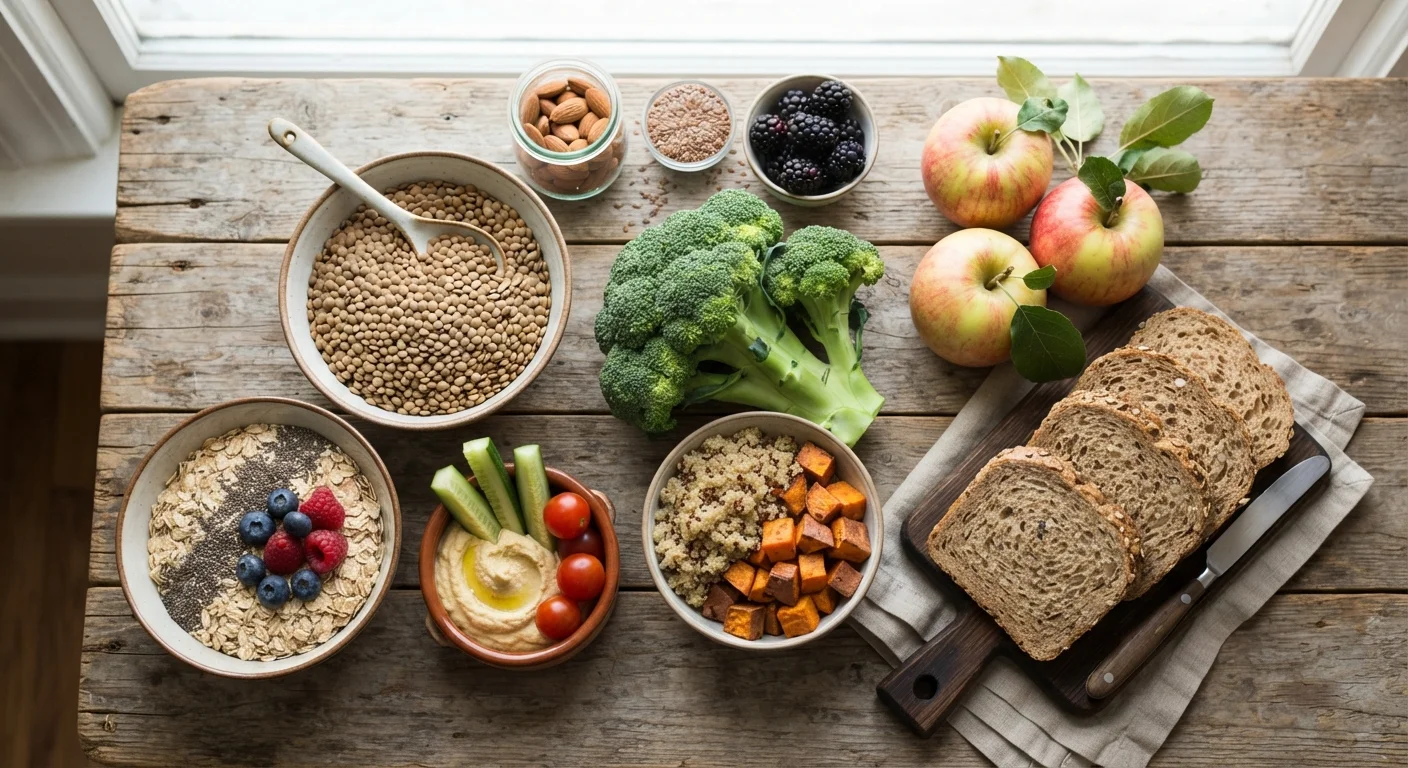
- Soluble fiber dissolves in water to form a thick, gel-like material in the digestive tract. This slows the absorption of glucose (blood sugar) and binds to cholesterol particles, helping to remove them before they enter circulation. Rich sources include oats, barley, apples, citrus fruits, psyllium, and legumes such as lentils and black beans.
- Insoluble fiber does not dissolve. It absorbs water and adds bulk to stool, promoting regular bowel movements and reducing the time waste spends in the colon. Whole wheat products, bran, nuts, seeds, and most vegetables are strong sources.
Most plant foods contain both types in varying ratios, which is one reason nutrition guidance consistently points to diverse plant food intake rather than reliance on a single source or supplement.
Prioritize Food First, Supplements Second
Whole plant foods deliver fiber alongside vitamins, minerals, antioxidants, and phytonutrients that no supplement fully replicates. Fiber supplements like psyllium husk may help in specific situations, but nutrition guidance consistently emphasizes food-based sources as the foundation. If you are considering a fiber supplement, discuss it with your healthcare provider first.
What Low Fiber Intake Actually Costs Your Health
The health implications of chronically low fiber intake extend well beyond occasional constipation. Research published across major nutrition and gastroenterology journals has associated inadequate fiber consumption with a range of health concerns:
- Digestive health: Low fiber is a primary driver of constipation and is associated with increased risk of diverticular disease, a condition in which small pouches form in the colon wall.
- Blood sugar regulation: Soluble fiber slows glucose absorption, helping to moderate blood sugar spikes after meals. Diets low in fiber are associated with a higher risk of type 2 diabetes in long-term population studies.
- Cardiovascular risk: The FDA has authorized a qualified health claim linking adequate oat beta-glucan (a soluble fiber) consumption to reduced risk of heart disease, based on accumulated evidence.
- Gut microbiome: Fiber serves as the primary food source for beneficial gut bacteria. Low intake is associated with reduced microbial diversity, which emerging research links to immune function and overall health - though this area of science is still developing.
It is important to note that associations in observational nutrition research do not establish direct cause and effect, and individual health circumstances vary widely. Always consult a qualified healthcare professional for guidance specific to your situation.
Nutrition Research Has Important Limitations
Much of what we know about fiber and health comes from observational studies - meaning researchers track what large groups of people eat and what health outcomes they experience over time. These studies show associations, not proven cause and effect. Factors such as overall diet quality, physical activity, and genetics also influence health outcomes. Treat fiber recommendations as part of a broader, balanced approach to nutrition rather than a single cure-all.
Practical Ways to Eat More Fiber Every Day
Raising fiber intake does not require expensive specialty foods or dramatic diet overhauls. The most fiber-dense foods are also among the most affordable in any grocery store: dried or canned legumes, oats, frozen vegetables, and seasonal fruits.
Consider these practical approaches:
- Start with breakfast. Swap refined cereals for rolled oats or a whole grain option. A half-cup of dry oats provides roughly 4 grams of fiber before you add fruit.
- Add legumes to familiar meals. Stirring a half-cup of canned black beans or lentils into soups, salads, or grain bowls adds 6-8 grams of fiber with minimal effort or cost.
- Choose whole fruit over juice. An orange has about 3 grams of fiber; orange juice has nearly none. The act of juicing removes most of the pulp - and with it, the fiber.
- Keep the skin on. Much of the fiber in potatoes, apples, pears, and cucumbers is concentrated in or just beneath the skin.
- Increase gradually. Adding too much fiber too quickly often causes bloating and gas. Spread increases over two to four weeks and drink adequate water throughout the day.
Eating patterns that naturally emphasize fiber - such as Mediterranean-style or plant-forward diets - have earned consistent support in nutrition research. See eating patterns that nutrition research consistently supports for a deeper look at those approaches.
This article is for general informational and educational purposes only and is not a substitute for professional medical or nutritional advice. Consult a qualified healthcare provider before making significant changes to your diet, particularly if you have a diagnosed health condition.