

Key Takeaways
- Serving size is the foundation of every number on the label - always check it first.
- Percent Daily Value (%DV) shows how much a nutrient contributes to a standard 2,000-calorie daily diet.
- Limit saturated fat, sodium, and added sugars; prioritize fiber, vitamins, and minerals.
- Ingredients are listed by weight, with the heaviest ingredient appearing first.
- Nutrition labels are a tool for comparison, not a verdict on whether a food is 'good' or 'bad.'
What you will need
Why the Label Exists - and What It Can Tell You
The Nutrition Facts panel is a federally standardized format regulated by the U.S. Food and Drug Administration (FDA). It was designed to give consumers consistent, comparable information across every packaged food product. Used well, it's one of the most practical tools you have for making informed everyday food choices - no nutrition degree required.
That said, the label reflects a snapshot of one product in one serving. It doesn't account for your individual health needs, activity level, or the rest of your diet. Think of it as a reference point, not a prescription. For personal dietary guidance tailored to your health, always consult a registered dietitian or your healthcare provider.
If you're also curious how food labeling intersects with broader product marketing language, see our companion piece on food label terms that seem meaningful but require a closer look.
What you will need
How to Read the Label, Section by Section
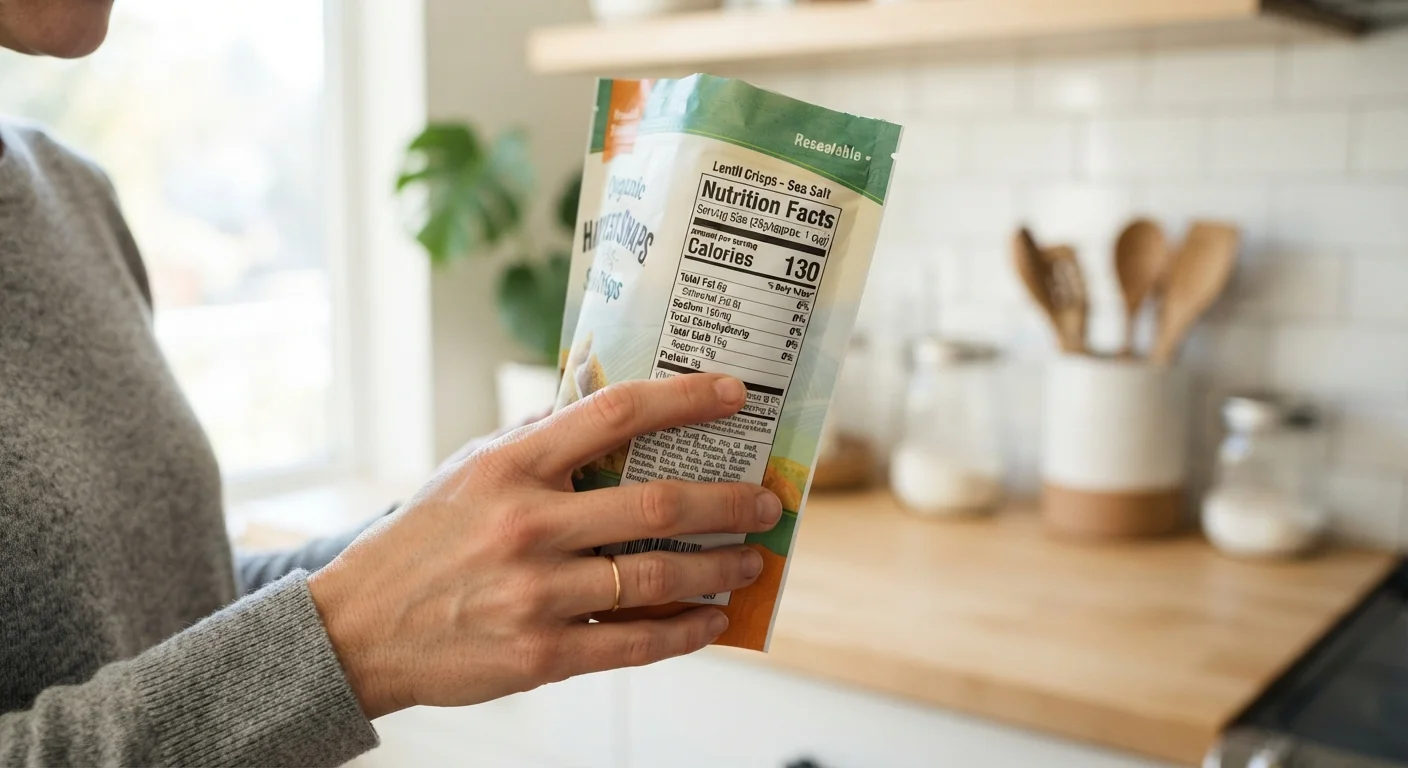
Work through the panel from top to bottom - the FDA structured it that way intentionally, with the most foundational information at the top.
Start with Serving Size and Servings Per Container
Every number on the label - calories, fat, sodium, everything - applies to one serving, not necessarily the whole package. The serving size is listed in common household units (e.g., "1 cup" or "3 crackers") followed by the metric weight in grams.
If a bag contains 2.5 servings and you eat the whole bag, multiply every value by 2.5. This single step changes how you interpret the entire label.
Check the Calorie Count
Calories measure the energy one serving provides. The number is displayed prominently because energy balance is a meaningful factor in overall health. However, calories don't tell you about nutrient quality - a 200-calorie serving of nuts and a 200-calorie serving of cookies carry very different nutritional profiles.
Use calories as one data point, not the whole story. The nutrients below the calorie line provide the fuller picture.
Review the Nutrients to Limit
The FDA requires labels to list saturated fat, trans fat, sodium, and added sugars because Americans tend to consume too much of these. High intake of each is associated with increased risk for certain chronic conditions, according to established dietary guidance.
- Saturated fat: Listed in grams; dietary guidelines recommend limiting this to less than 10% of daily calories for most adults.
- Trans fat: Artificially produced trans fats have largely been removed from the food supply, but small amounts may still appear; aim for as close to zero as possible.
- Sodium: Listed in milligrams; standard guidance suggests limiting intake to 2,300 mg per day for most adults.
- Added sugars: Distinguished from naturally occurring sugars (found in fruit and dairy). Added sugars are those introduced during processing.
Look for Nutrients to Get Enough Of
Below the nutrients to limit, the label lists nutrients many Americans under-consume: dietary fiber, vitamin D, calcium, iron, and potassium. Getting adequate amounts of these supports bone health, immune function, digestive health, and more.
A higher %DV (20% or more) for these nutrients is generally a positive sign for that food.
Understand Percent Daily Value (%DV)
The %DV column tells you how much of a nutrient one serving contributes toward a standard 2,000-calorie daily diet. Use these benchmarks as a quick guide:
- 5% DV or less = low in that nutrient
- 20% DV or more = high in that nutrient
These percentages are reference points, not personal targets. Your actual needs may differ based on age, sex, activity level, and health status. A registered dietitian can help you determine what's appropriate for you specifically.
Scan the Ingredients List
Ingredients are listed in descending order by weight - the ingredient present in the greatest amount appears first. A long ingredients list isn't automatically a problem, but the order reveals a product's primary components.
If added sugar (under any of its many names - corn syrup, dextrose, maltose, fruit juice concentrate) appears within the first three ingredients, it's a substantial component of that product. The same logic applies to refined grains versus whole grains.
For a deeper look at how whole and processed food categories differ, see whole foods vs. processed foods and what the difference means for your diet.
Use Labels for Comparison, Not Judgment
The Nutrition Facts panel is most powerful when you use it to compare two similar products side by side - same serving size, different nutrient profiles. This helps you make a more informed choice without labeling foods as strictly 'good' or 'bad.' Nutrition exists in the context of your whole diet, not a single item.
Once you're comfortable reading individual labels, the next step is putting those numbers to work at mealtime. Our guide on building a nutritionally balanced plate without a strict diet plan shows how to apply what you've learned without following a rigid diet.
It's also worth knowing that calories alone don't capture the full nutritional picture - explore why calorie counting alone misses the point of good nutrition for broader context.
This article is for general informational and educational purposes only and does not constitute medical or dietary advice. Consult a qualified healthcare professional for guidance specific to your health needs.