

| "Natural" - FDA regulated? | No formal definition; enforcement discretion applies (U.S. Food and Drug Administration) |
| "Light" - FDA regulated? | Yes, but multiple valid meanings exist (calories, fat, sodium, or appearance) (FDA nutrient content claim regulations, 21 CFR 101.56) |
| "Multigrain" - implies whole grain? | No; only indicates more than one grain type is present (FDA labeling guidance) |
| "No Added Sugar" - FDA regulated? | Yes; means no sugars added during processing (FDA nutrient content claims) |
| "Made with Whole Grains" - minimum amount required? | No minimum threshold established (FDA labeling guidance) |
| "Free-Range" (poultry) - USDA regulated? | Yes for poultry; outdoor access required but duration not specified (USDA Food Safety and Inspection Service) |
Why Food Label Language Deserves Scrutiny
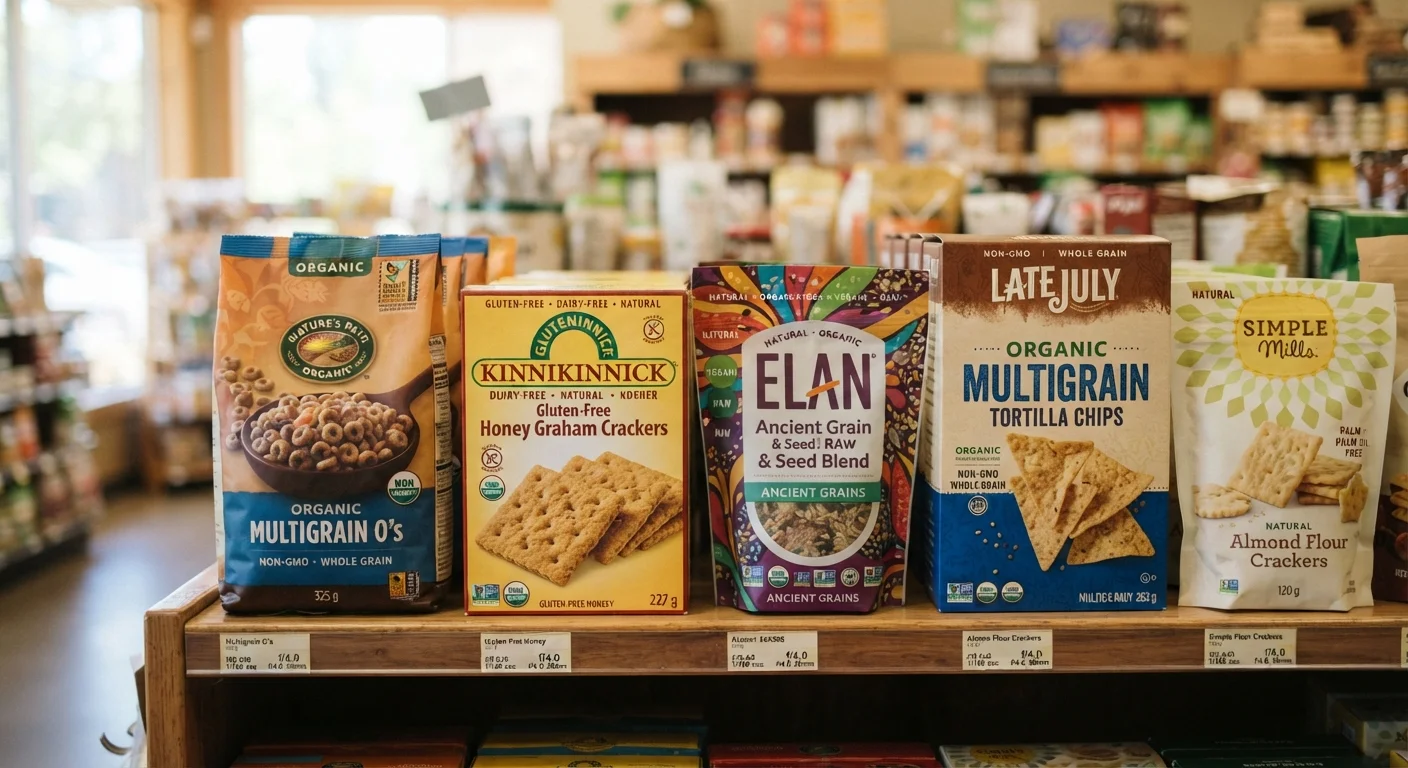
Grocery shopping feels like it should be straightforward, but food packaging is designed to communicate quickly-and sometimes that speed comes at the expense of accuracy. Terms like "natural," "light," and "multigrain" are everywhere, and most shoppers reasonably assume they signal something meaningful about nutrition or quality. In some cases, they do. In others, they carry little to no regulatory weight.
The U.S. Food and Drug Administration (FDA) and the U.S. Department of Agriculture (USDA) regulate specific nutrient content claims on food labels, but not every marketing term on a package falls under that regulatory umbrella. Understanding which terms are defined-and which are largely up to manufacturers-helps you make decisions based on facts rather than packaging impressions. See our guide to reading a Nutrition Facts label for a detailed walkthrough of the panel itself.
Nutrient content claim
A statement on a food label that describes the level of a nutrient in a product (e.g., "low fat," "high fiber"). The FDA regulates these claims and sets specific criteria that must be met before they can be used.
Whole grain
A grain that contains all three parts of the kernel: the bran, germ, and endosperm. Whole grains retain more fiber and nutrients than refined grains, which have had the bran and germ removed.
Refined grain
A grain that has been milled to remove the bran and germ, resulting in a finer texture and longer shelf life but fewer nutrients and less fiber compared to whole grain versions.
Added sugar
Sugars and syrups added to a food during processing or preparation, distinct from sugars naturally present in ingredients like fruit or milk. Added sugars are listed separately on the Nutrition Facts panel.
Enforcement discretion
A regulatory agency's decision not to actively pursue or penalize a practice even when it falls outside a strict rule-meaning the practice is tolerated rather than officially approved.
Reference food
A standard or comparison product used by the FDA to evaluate nutrient content claims. For example, 'light' is measured against a reference food with a higher calorie or fat level.
Common Label Terms: What They Mean (and Don't)
The following terms appear on food packaging with high frequency. Here's what each one is-and isn't-regulated to mean under current U.S. labeling standards.
| "Natural" - FDA regulated? | No formal definition; enforcement discretion applies (U.S. Food and Drug Administration) |
| "Light" - FDA regulated? | Yes, but multiple valid meanings exist (calories, fat, sodium, or appearance) (FDA nutrient content claim regulations, 21 CFR 101.56) |
| "Multigrain" - implies whole grain? | No; only indicates more than one grain type is present (FDA labeling guidance) |
| "No Added Sugar" - FDA regulated? | Yes; means no sugars added during processing (FDA nutrient content claims) |
| "Made with Whole Grains" - minimum amount required? | No minimum threshold established (FDA labeling guidance) |
| "Free-Range" (poultry) - USDA regulated? | Yes for poultry; outdoor access required but duration not specified (USDA Food Safety and Inspection Service) |
"Natural"
The FDA has not established a formal regulatory definition for "natural" on food labels. The agency has historically exercised enforcement discretion, generally not objecting to the use of "natural" when a food contains no added color, artificial flavors, or synthetic substances-but this is not a strict legal standard. Importantly, "natural" says nothing about how a food was grown, processed, or whether it is nutritious. For a deeper look at this term in wellness products, see why 'natural' doesn't mean safe.
"Multigrain"
"Multigrain" simply means a product contains more than one type of grain. It does not indicate that those grains are whole grains. A multigrain bread may be made primarily from refined (white) flour with small amounts of other grains added. Look for "100% whole grain" or check that a whole grain is listed as the first ingredient to verify grain quality.
"Light" or "Lite"
When used on food labels, "light" is an FDA-regulated nutrient content claim-but it has multiple possible meanings. It can indicate that a product contains at least one-third fewer calories or half the fat of a reference food, or that sodium has been reduced by at least 50% in a low-calorie, low-fat food. However, "light" can also legally refer to color or texture (e.g., "light brown sugar" or "light olive oil") without any nutritional implication. Context matters.
"Made with Whole Grains"
This phrase has no minimum threshold regulated by the FDA. A product could contain a small fraction of whole grain flour and still carry this claim. Compare it to "100% whole grain," which means all grain ingredients are whole grains, or USDA's stamp-based whole grain guidelines used by some manufacturers.
"Low Sugar" vs. "No Added Sugar"
"No added sugar" is an FDA-defined claim meaning no sugars or sugar-containing ingredients were added during processing-but the product may still contain naturally occurring sugars. "Low sugar" is not an FDA-defined nutrient content claim for most foods and therefore carries no standardized meaning. Check the Nutrition Facts panel and the ingredients list for clarity. Our article on added sugar vs. natural sugar explains why that distinction matters nutritionally.
"Free-Range"
For poultry, USDA requires that "free-range" birds have been allowed access to the outside. However, the regulation does not specify the duration, quality, or size of outdoor access. For eggs, "free-range" has no USDA-standardized definition, making it a largely marketing-driven term in that context.
Always Cross-Check with the Nutrition Facts Panel
Marketing terms on the front of a package are not a substitute for the Nutrition Facts panel and ingredients list on the back. The panel is regulated and standardized, giving you consistent, comparable data regardless of what the front label claims. When a term like 'multigrain' or 'light' is unclear, the ingredients list and nutrient breakdown will tell you more. See wellness product label claims that deserve scrutiny for related context.
Understanding these distinctions applies well beyond human food. If you're also evaluating pet food claims, what 'grain-free' and 'natural' mean on pet food packaging covers a parallel set of regulatory gaps.
This article is for general informational and educational purposes only and does not constitute dietary, medical, or nutritional advice. Consult a registered dietitian or qualified healthcare professional for guidance specific to your health needs.