

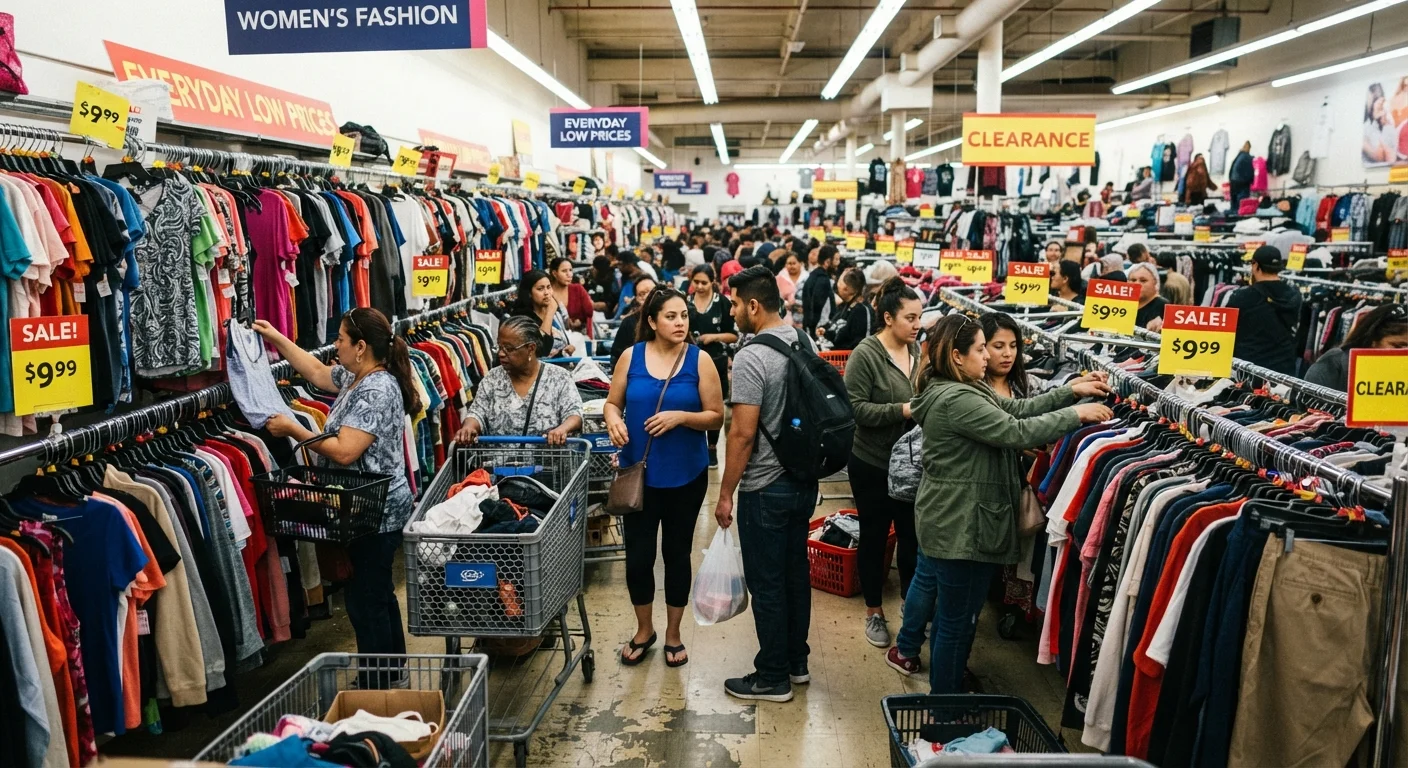
Key Takeaways
- Discount retailers can deliver genuine savings, but inconsistent stock makes building a cohesive wardrobe harder.
- Time investment is a hidden cost — hunting for finds takes longer than targeted shopping at traditional stores.
- Quality varies widely at off-price stores; knowing what to inspect helps you avoid costly mistakes.
- Mixing discount finds with other shopping strategies usually produces better results than going all-in on one channel.
Significantly lower price tags on many items
Off-price and discount stores frequently carry merchandise at 20–60% below original retail, making everyday essentials far more accessible on a tight budget.
Opportunity to find quality items at low cost
Overstock from well-regarded manufacturers often lands on discount shelves; shoppers who inspect labels and construction can score durable goods at a fraction of their original value.
Wide product variety under one roof
Many discount retailers span clothing, home goods, beauty products, and accessories, allowing budget shoppers to cover multiple needs in a single trip.
Low-risk experimentation with new styles
Lower price points make it easier to try a trend or a new silhouette without committing a large portion of your budget to something that might not suit you.
Inconsistent inventory makes planning difficult
Discount stores restock unpredictably, so returning for a specific item — or completing a matching set — is often impossible. Building a cohesive wardrobe requires more effort and multiple sourcing channels.
Quality varies widely and requires vigilance
Not everything on a discount rack is a bargain — some items are priced low because of quality issues, irregular sizing, or discontinued styles that didn't sell for good reason. Inspecting seams, fabric weight, and labels is essential.
Time investment is high and underestimated
Effective discount shopping requires more browsing, multiple trips, and patience than targeted traditional retail — a hidden cost that adds up, especially for shoppers with demanding schedules.
Impulse purchases erode budget savings quickly
The low-price atmosphere encourages buying items simply because they seem like a deal, rather than because they're genuinely needed. Unplanned purchases in discount stores are a well-documented budget leak.
Limited size and style range for some shoppers
Overstock-based inventory often skews toward middle sizes and mainstream styles, leaving shoppers at the ends of the size spectrum or with distinctive taste underserved.
Our Verdict
Shopping exclusively at discount retailers is a genuinely smart move for certain categories — basics, home goods, and seasonal items especially — but relying on them as your only source creates real gaps in quality, time, and wardrobe consistency. The savviest value shoppers treat discount stores as a powerful tool rather than the whole toolbox.
Ideal for budget-conscious shoppers who enjoy the hunt, have flexible wardrobing needs, and can supplement with secondhand or traditional retail for hard-to-find staples.
What We Mean by 'Discount Retailers'
The umbrella covers a wide range: off-price chains that sell overstock and past-season merchandise, dollar-format stores, warehouse clubs, and deep-discount fashion outlets. Each operates differently, but they share a common pitch — lower price tags than traditional retail. Before weighing the trade-offs, it's worth noting that how these stores keep prices low matters. Overstock, irregular sizing runs, and discontinued styles are common sourcing methods, and that reality shapes almost every pro and con on this list.
For context on how discount-only shopping compares with other low-cost strategies, see our look at secondhand versus fast fashion trade-offs.
The Real Advantages
Let's start with what genuinely works in discount retail's favor.
Significantly lower price tags on many items
Off-price and discount stores frequently carry merchandise at 20–60% below original retail, making everyday essentials far more accessible on a tight budget.
Opportunity to find quality items at low cost
Overstock from well-regarded manufacturers often lands on discount shelves; shoppers who inspect labels and construction can score durable goods at a fraction of their original value.
Wide product variety under one roof
Many discount retailers span clothing, home goods, beauty products, and accessories, allowing budget shoppers to cover multiple needs in a single trip.
Low-risk experimentation with new styles
Lower price points make it easier to try a trend or a new silhouette without committing a large portion of your budget to something that might not suit you.
The price-per-item wins are real, especially for categories where brand or provenance doesn't affect function — think basic tees, workout socks, home storage, or seasonal décor. Shoppers who know what they're looking at can also uncover genuinely high-quality pieces that simply didn't sell through at full-price stores, making the treasure-hunt element a legitimate perk rather than just marketing spin.
The Real Disadvantages
Here's where things get honest — and where exclusive reliance starts to cost more than it saves.
Inconsistent inventory makes planning difficult
Discount stores restock unpredictably, so returning for a specific item — or completing a matching set — is often impossible. Building a cohesive wardrobe requires more effort and multiple sourcing channels.
Quality varies widely and requires vigilance
Not everything on a discount rack is a bargain — some items are priced low because of quality issues, irregular sizing, or discontinued styles that didn't sell for good reason. Inspecting seams, fabric weight, and labels is essential.
Time investment is high and underestimated
Effective discount shopping requires more browsing, multiple trips, and patience than targeted traditional retail — a hidden cost that adds up, especially for shoppers with demanding schedules.
Impulse purchases erode budget savings quickly
The low-price atmosphere encourages buying items simply because they seem like a deal, rather than because they're genuinely needed. Unplanned purchases in discount stores are a well-documented budget leak.
Limited size and style range for some shoppers
Overstock-based inventory often skews toward middle sizes and mainstream styles, leaving shoppers at the ends of the size spectrum or with distinctive taste underserved.
Perhaps the most underappreciated downside is time. Discount shopping is slower by design: inventory turns constantly, sizing is unpredictable, and finding a specific item requires multiple visits or a lot of patience. That hidden time cost is real money if you're not careful. Our guide on impulse buys and sale traps explains how the excitement of a low sticker price can quietly drain a clothing budget — a dynamic that's especially acute in discount environments.
It's also worth factoring in the costs that don't show up on the price tag. Hidden costs like returns and restocking fees can flip a perceived deal into a net loss, even at off-price stores.
A Note on Return Policies
Return policies at discount retailers vary considerably — some are generous, others are quite restrictive or offer store credit only. Before committing to a purchase, especially on higher-priced items, check the specific return window and conditions. A no-return policy on a defective item eliminates any savings advantage quickly.
Building a Smarter Mixed Strategy
The data consistently points toward a blended approach as the most effective path for value-conscious shoppers. Use discount retailers confidently for the categories where they excel — basics, accessories, seasonal items, home goods — and supplement with consignment and thrift stores for quality wardrobe anchors at low prices. Reserve traditional retail (especially during actual sales, not manufactured urgency) for fit-critical pieces like tailored pants or quality footwear that you simply can't gamble on sizing.
~$0.30
Average cost per wear for discount basics
Consumer budgeting research suggests that high-volume, low-cost basics purchased at discount stores often achieve a favorable cost-per-wear ratio when they hold up through repeated washing.
30–60 min
Extra time per trip vs. targeted shopping
Shopper behavior studies generally find that off-price and treasure-hunt retail formats require significantly more browse time per successful purchase compared to category-specific stores.
For deal-hunters who want to stretch dollars further across channels, deal-hunting strategies and loyalty program discounts can unlock savings at traditional retailers that rival what discount stores offer — without the unpredictability.