

Key Takeaways
- Outfit formulas are repeatable clothing combinations that look polished regardless of price point.
- Structure and fit matter more than brand labels when it comes to a pulled-together look.
- A neutral color foundation maximizes how many outfits a small wardrobe can produce.
- Accessories and fit adjustments can elevate any budget piece significantly.
- Choosing versatile silhouettes means fewer items create more daily outfit options.
Why Formulas Beat Trends Every Time
Outfit formulas — repeatable combinations of clothing types that reliably work together — are the quiet secret behind wardrobes that always look intentional. Unlike chasing seasonal trends, a formula gives you a structural blueprint that holds up whether your pieces came from a department store clearance rack or a specialty boutique.
The key insight is that what makes an outfit look good isn't the price tag; it's the relationship between the pieces. Proportion, color cohesion, and fit are doing most of the heavy lifting. Once you understand that, shopping at any budget becomes a much more confident exercise. For a broader look at building clothes that work across many occasions, see our guide on building a multi-occasion wardrobe.
The Core Practices Behind Every Great Outfit Formula
These foundational habits apply whether you're getting dressed for a casual Saturday, a client meeting, or somewhere in between. They're the building blocks of the most reliable outfit formulas — and they work at every price point.
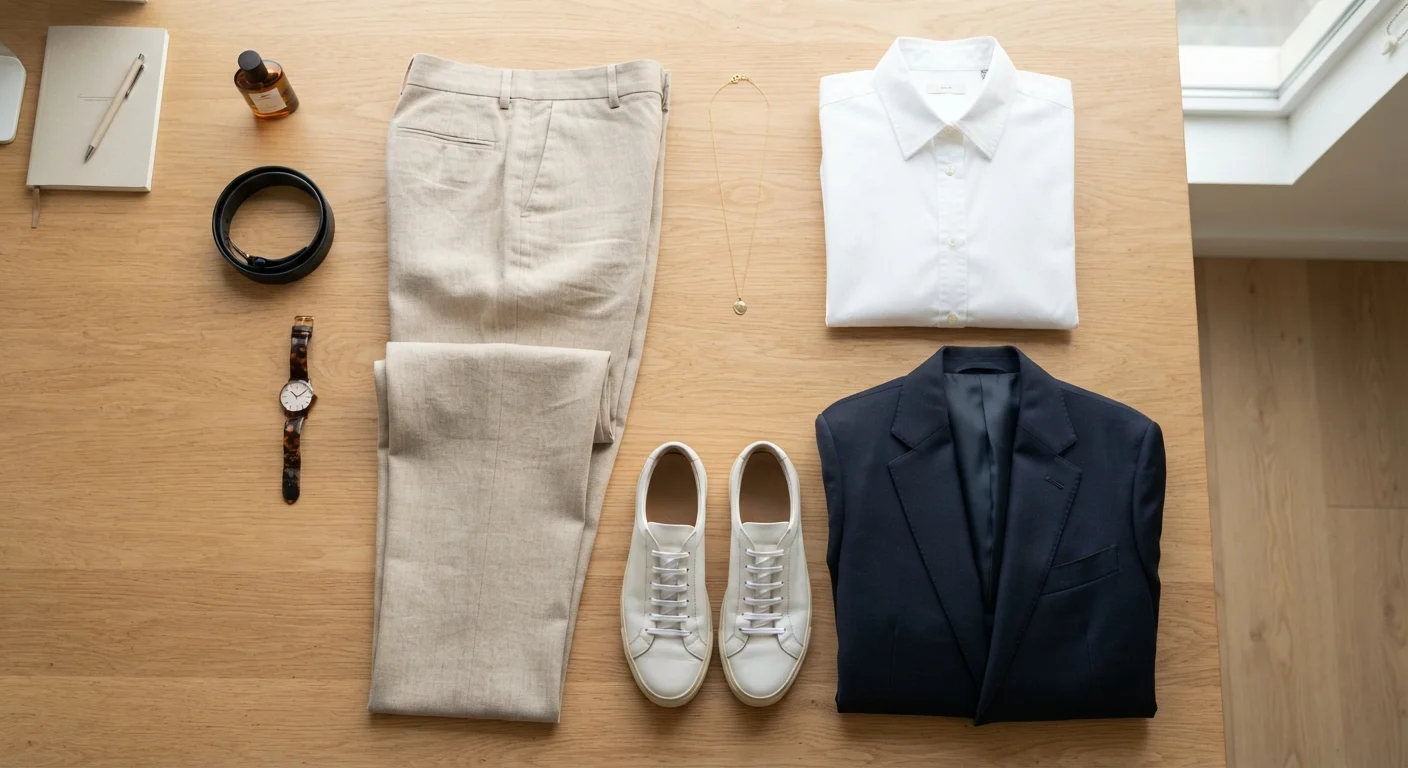
Anchor every outfit with a well-fitting bottom in a neutral color.
The bottom half sets the tone for proportion and polish. Neutral shades — navy, black, stone, or khaki — pair with virtually anything on top, making each piece exponentially more useful. A structured fit signals intention without requiring a designer label.
Use the 'third piece' rule to elevate every combination.
Adding a third layer — a blazer, cardigan, denim jacket, or structured overshirt — instantly makes any two-piece outfit look deliberate and complete. It's a styling trick that stylists use regardless of budget, because it adds visual depth and signals effort.
Build your formula library around one repeatable silhouette.
Trying to dress for every possible silhouette at once leads to a closet full of pieces that don't talk to each other. Committing to one or two shapes — say, relaxed top with slim bottom, or tailored top with wide-leg bottom — means your pieces mix and match naturally and coherently.
Invest your accessory budget in one or two high-visibility pieces.
Accessories are what people notice first and remember longest. A quality belt, a versatile bag, or a pair of simple earrings adds perceived value to an otherwise modest outfit. Strategic accessory spending lets your clothing budget stay flexible while your overall look stays sharp.
Design outfits around a consistent color story.
When your wardrobe shares a common color palette, almost every piece can pair with every other piece — dramatically multiplying your outfit options without adding new items. This is especially valuable when shopping on a limited budget, because each new piece earns its place immediately.
Prioritize fabric drape and structure over decoration or detail.
Clothes that drape well and hold their shape look elevated even when they're modestly priced. Embellishments, logos, and trendy details date quickly and communicate price point more loudly than a clean, structured silhouette in a quality-feeling fabric.
If you're starting from scratch or rethinking what you own, building a capsule wardrobe on a tight budget walks through how to choose pieces that fulfill multiple formula roles at once.
Fit Is the Real Game-Changer
Even the most thoughtfully chosen outfit formula falls flat if the clothes don't fit well. Simple, low-cost tailoring — like hemming trousers or taking in a waist — can transform an inexpensive piece into something that looks custom. See our guide on budget-friendly alterations for which fixes give you the most return on a small investment.
Start Using Your Formulas Today
The most effective outfit system is one you actually use. These quick actions will help you identify and activate the formulas hiding in your current wardrobe — no new purchases required.
Understanding the cost-per-wear principle can also change how you evaluate every piece you own or consider buying. Our article on cost-per-wear and smart clothing value explains how to apply this thinking to any budget. For more on building repeatable outfit systems that simplify daily dressing, outfit formulas that simplify daily dressing is a strong companion read.
“Style is a way to say who you are without having to speak. The clothes don't have to be expensive — they have to be chosen.”
— Rachel Zoe, Fashion designer and stylist