

Key Takeaways
- A handful of versatile, neutral pieces can cover most professional dress codes without a large spend.
- Fit matters more than price — a well-fitted inexpensive garment outperforms an ill-fitting expensive one.
- Thrift stores, consignment shops, and end-of-season sales are reliable sources for work-appropriate clothing.
- Accessories and grooming extend the perceived polish of a limited wardrobe significantly.
- Strategic shopping — buying intentionally rather than impulsively — prevents costly wardrobe do-overs.
What you will need
Why a Limited Budget Doesn't Have to Mean a Limited Impression
Looking credible and composed at work has surprisingly little to do with how much you spent getting dressed. Research on first impressions consistently points to fit, cleanliness, and coordination as the factors that register most strongly — not price tags or brand labels. That's genuinely good news if you're building or rebuilding a professional wardrobe on a tight budget.
The key is shifting from reactive shopping (grabbing whatever's on sale or feels urgent) to intentional building. Think of your work wardrobe as a small system of pieces that earn their place by combining with everything else you own. This approach is sometimes called a capsule wardrobe — you can explore it in more depth in our guide on building a capsule wardrobe on a tight budget.
What you will need
Step-by-Step: Building Your Professional Wardrobe on a Budget
Follow these steps in order. Each one builds on the last, so skipping ahead can lead to spending money on pieces that don't coordinate or fit your actual workplace needs.
Audit what you already own
Before spending a dollar, lay out every work-appropriate item you currently own. Identify what fits well, what needs a small repair, and what genuinely doesn't work. Many people discover they already have more usable pieces than they realized — they just haven't been combining them intentionally.
Define your core color palette
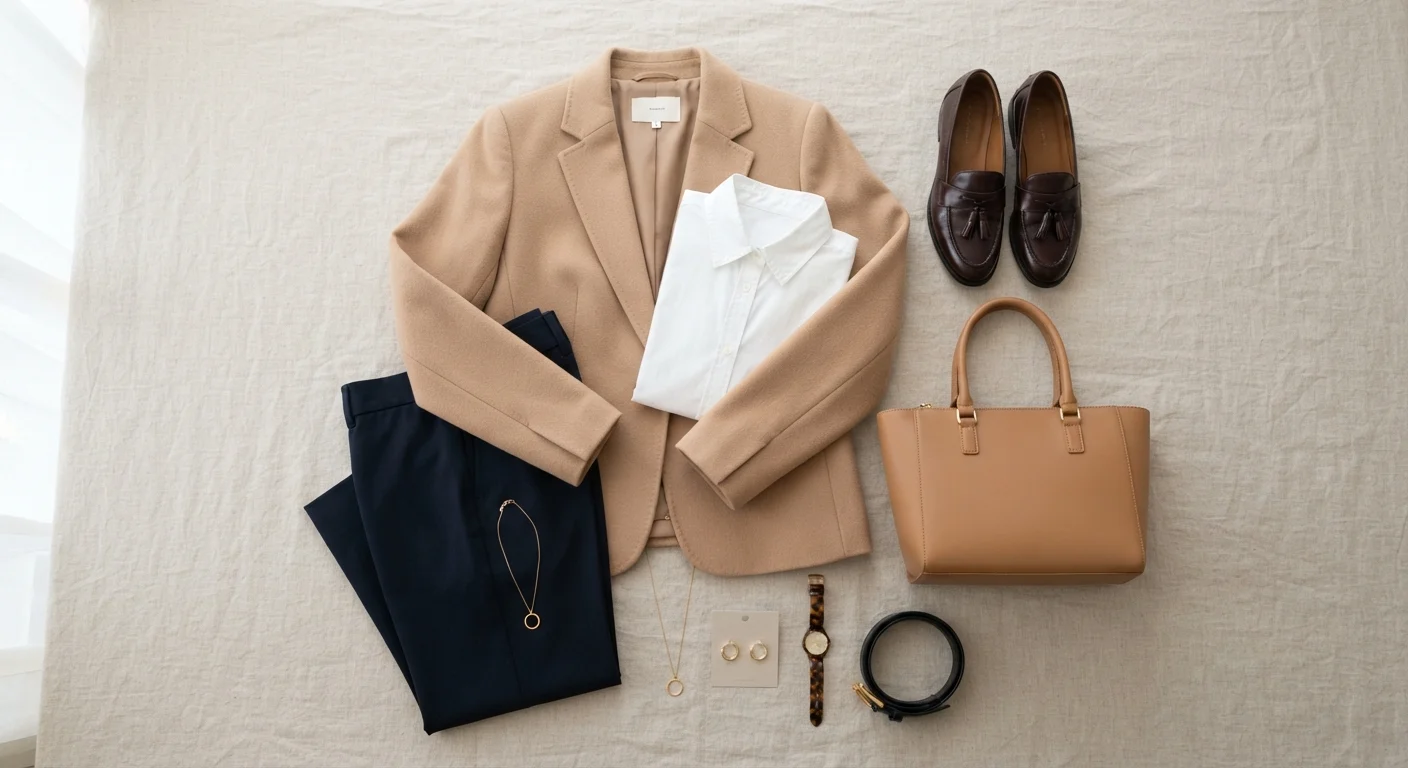
Choose two or three neutral base colors — navy, charcoal, black, camel, or grey are reliable options — and one or two accent colors that complement them. Every piece you buy should fit within this palette. This single constraint dramatically increases the number of outfits you can build from a small number of items.
Identify your highest-priority gaps
Based on your audit, list the specific items you're missing that would unlock the most outfit combinations. Common high-priority gaps include a well-fitted blazer or structured cardigan, a pair of tailored trousers or a straight-cut skirt, and one or two plain, tucked-in-ready tops. Rank these by how often you'd wear them.
Shop strategically for those gaps
Now shop with a specific list rather than browsing generally. Consignment and thrift stores in business districts often carry barely-worn professional clothing at a fraction of retail cost. End-of-season clearance sections at mainstream retailers are another reliable source. When evaluating an item, prioritize fabric quality and shoulder fit above all else — those two factors are the hardest and most expensive to fix later.
For budget planning support, the Smart Budgeting hub offers practical guidance on planning purchases without overspending.
Invest in fit adjustments where needed
Once you have your pieces, wear-test each one and note any fit issues. Hemming trousers, taking in a waistband, or shortening sleeves can each cost relatively little and transform how a garment reads. A clean, well-fitting $25 pair of trousers will consistently outperform a $100 pair that doesn't fit properly.
Add polish with accessories and grooming
Accessories — a simple belt, a structured bag, understated jewelry, or a clean watch — signal intentionality and care without requiring a large outlay. Similarly, well-maintained shoes in good repair elevate an otherwise modest outfit. Grooming and personal care complete the picture: neatness communicates professionalism as clearly as any garment does.
Mix Patterns Sparingly at First
When your wardrobe is small, keeping patterns minimal makes coordination much easier. Stick to one patterned piece per outfit at most, and let your neutral base pieces do the heavy lifting. As your wardrobe grows, you can experiment with texture and print mixing with more confidence.
Common Pitfalls and How to Avoid Them
Even budget-savvy shoppers fall into a few predictable traps when building a work wardrobe. The most common: buying something cheap that doesn't quite fit, assuming you'll fix it later. Fit issues rarely resolve themselves. If a garment's shoulders sit correctly and the fabric quality is decent, minor adjustments — a hem, a taken-in seam — are often affordable. Our article on small tailoring fixes that make inexpensive clothes look expensive walks through the highest-payoff alterations.
Another pitfall: buying trend-driven pieces because they're deeply discounted. A sharp price doesn't justify a purchase if the item won't work in six months or doesn't pair with anything you already own. Professionals who dress well on modest incomes tend to follow principles that have nothing to do with what's currently in stores — what stylists know about dressing well is a useful grounding read here.
Avoid Impulse Purchases — Even Cheap Ones
A low price is not a reason to buy something that doesn't fit your palette, doesn't fit your body, or duplicates what you already own. Impulse purchases — even inexpensive ones — accumulate into a cluttered wardrobe that still feels like it has nothing to wear. Shop from your gap list only.
Finally, don't overlook the value of a wardrobe that travels across contexts. Pieces that move from a client meeting to a casual Friday reduce the total number of items you need. See our guide on building a wardrobe that works across multiple occasions for practical strategies.