

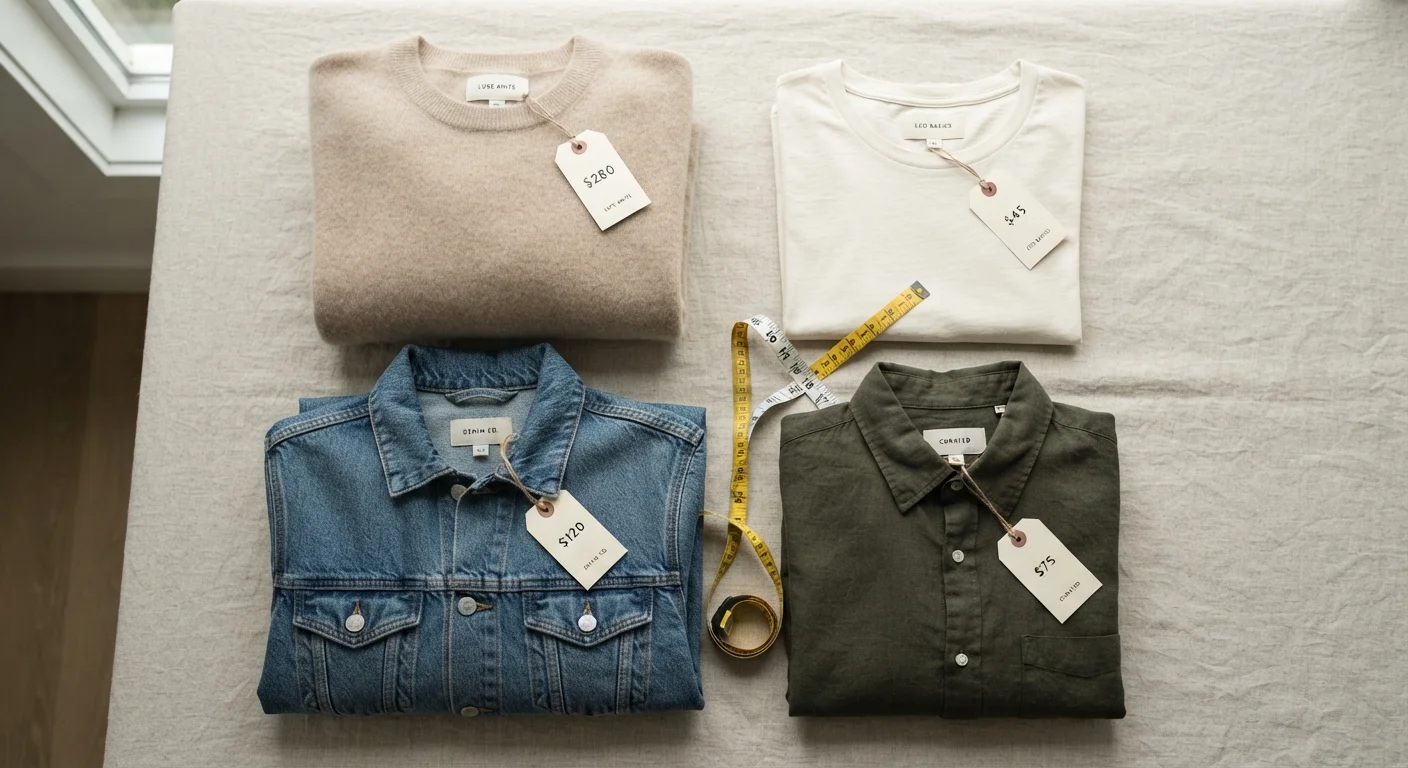
Key Takeaways
- Higher price does not automatically mean better quality or longer garment life.
- Certain wardrobe categories genuinely reward spending more — others rarely do.
- Cost-per-wear math helps identify where a higher upfront price makes sense.
- Construction details like seam allowances and fabric weight reveal true quality.
- Trend-driven and occasion-specific pieces are typically poor candidates for premium investment.
The 'Always Buy Quality' Rule Is Too Simple
You've heard it a hundred times: buy less, buy better. It's advice that sounds wise, and sometimes it genuinely is. But applied as a blanket rule across every purchase, it quietly pressure-tests your wallet without always delivering on its promise. The reality is more nuanced — and more empowering for budget-conscious shoppers who are willing to think strategically.
Quality in clothing is not a single thing. It involves fabric durability, construction technique, fit consistency, and how well a piece holds up through repeated wear and washing. A higher price covers some of those factors sometimes — and covers none of them other times. Knowing which situation you're in before you buy is the skill that actually builds a great wardrobe. For a practical framework on evaluating clothing value, the cost-per-wear principle is worth understanding before you head to checkout.
Myth
If a garment costs more, it's made better and will last longer.
Fact
Price reflects many factors beyond construction quality — including brand marketing, retail markup, and trend positioning.
Research into apparel pricing consistently shows that retail price has a weak correlation with objective construction quality in mass-market clothing. A significant portion of what you pay at a premium-priced retailer covers branding costs, store experience, and perceived prestige. Meanwhile, identical fabric and stitching techniques can appear across very different price tiers. Evaluating a garment's physical construction — seam strength, fabric weight, finishing details — is more reliable than using price as a shortcut.
Myth
Cheap clothes always cost you more in the long run because they fall apart.
Fact
Longevity depends on how often a garment is worn, how it's cared for, and what it's made of — not just its price.
A $15 basic T-shirt washed weekly may genuinely wear out in a year. But a $15 lightweight blouse worn twice a season and hand-washed could outlast a $60 version subjected to harsh machine cycles. The cost-per-wear calculation accounts for this: divide what you paid by how many times you actually wear the item. Low-price items worn frequently can score just as efficiently as high-price items worn rarely.
Myth
Investing in quality basics means spending a lot on every core wardrobe piece.
Fact
Many wardrobe basics are available at modest price points with construction quality that meets everyday demands.
The term "investment piece" is often used to justify premium pricing on items that don't genuinely require it. Plain crew-neck tees, cotton tank tops, and simple jersey knits are produced at enormous volume with fairly standardized construction. Significant quality improvements at higher price points for these items are often marginal. Reserve the concept of investment spending for items where construction complexity and frequency of use genuinely justify the cost — structured outerwear, quality footwear, and tailored pieces being the clearest examples.
Myth
Designer or luxury labels guarantee superior craftsmanship.
Fact
Luxury brand status is primarily a signal of exclusivity and heritage, not a verified quality standard.
Many luxury fashion houses outsource production to the same global manufacturing networks used by mid-range labels. What a luxury price tag reliably guarantees is access to a brand's cultural cachet and aesthetic identity — not a specific stitch count or fabric durability benchmark. For shoppers building a functional wardrobe on a realistic budget, paying for label prestige delivers social signaling value, which is a legitimate personal choice, but it should be understood as separate from utilitarian construction quality. Comparing this to how to evaluate big-ticket purchases reveals a similar dynamic across other shopping categories.
Where Spending More Actually Pays Off
Certain garment categories have a strong, documented relationship between construction quality and longevity. These are the areas where a higher upfront cost is most likely to translate into real value over time.
- Structured outerwear — Coats and jackets endure years of daily wear, dry cleaning, and seasonal storage. Reinforced seams, quality lining, and durable hardware make a measurable difference in how long they last.
- Footwear worn daily — Shoes carried through commutes, long workdays, or active routines take serious punishment. Solid construction and supportive materials hold up in ways that flimsy alternatives rarely can.
- Well-fitted trousers and blazers — Tailored-style pieces are heavily visible and worn repeatedly in professional or social settings. A good fit and stable fabric structure preserves both appearance and usefulness over many wearings.
~200
Average times a quality coat is worn over its lifespan
Industry estimates from apparel sustainability researchers suggest a well-constructed winter coat worn regularly can achieve roughly 200 wearings before significant degradation.
30%
Clothing items never worn after purchase
Sustainability-focused apparel research has repeatedly found that a significant share of purchased clothing — often estimated around 30% — is worn fewer than three times or never at all.
The common thread in these categories: high frequency of use plus high visibility plus a long expected lifespan. That combination is where the math tends to favor investment. If you're navigating bigger wardrobe decisions, exploring smart budgeting strategies can help you prioritize which upgrades to tackle first.
Where It Genuinely Doesn't Matter
Plenty of garment categories show little or no meaningful relationship between price and wear-life for the average shopper. Overspending here is one of the sneakiest ways fashion budgets spring a leak — as explored in detail in our piece on impulse buys and sale traps.
Don't Let 'Investment Piece' Language Override Your Judgment
Retailers and style influencers often use the phrase 'investment piece' to frame expensive items as financially responsible purchases. Before accepting that framing, ask yourself: How often will I realistically wear this? Does the construction quality visibly justify the price? If the honest answer to either question is uncertain, proceed with caution. A purchase that stretches your budget for an item worn rarely is a cost, not an investment.
- Trend-driven statement pieces — If you'll wear something for one or two seasons before it looks dated, a modest price point is almost always the smarter move.
- Occasion-specific clothing — A wedding guest dress or themed party outfit worn once or twice doesn't benefit from premium construction in any practical way.
- Sleepwear and lounge basics — These rarely need to impress anyone. Comfort matters; brand prestige doesn't.
- Kids' clothing — Children outgrow items faster than they wear them out. Budget options generally serve just as well.
For shoppers weighing secondhand options against newer lower-cost alternatives, the comparison is worth its own careful look — our secondhand vs. fast fashion breakdown covers exactly that.
How to Spot Real Quality Without a Premium Price Tag
Price is a poor standalone proxy for quality. Here are the physical details that actually tell you something useful when you're holding a garment:
- Seam allowance — Wider seam allowances (the fabric between the stitch line and the edge) allow for alterations and resist fraying. Narrow ones don't.
- Fabric weight and weave density — Hold the item up to light. Thin, loosely woven fabric pills and wears through faster, regardless of the tag price.
- Stitches per inch — More stitches per inch generally means stronger seams. Loose, widely spaced stitching is a durability red flag.
- Pattern matching at seams — On patterned fabric, aligned seams signal careful construction. Mismatched patterns at the shoulder or pocket signal cut corners.
- Hardware and closures — Metal zippers, reinforced buttonholes, and securely anchored buttons all outlast plastic alternatives under regular use.
Developing this hands-on evaluation habit lets you find genuine quality at a range of price points — and confidently skip the overpriced items that don't hold up to scrutiny. When timing a larger clothing purchase, it's also worth understanding why waiting to buy can sometimes cost more than acting decisively on a well-evaluated find.