
Lifestyle Creep: What It Is and Why Raises Don't Always Mean More Financial Breathing Room

Key Takeaways
- Lifestyle creep happens gradually, making it hard to detect until the pattern is well established.
- Higher income doesn't automatically produce better financial security if spending scales up at the same rate.
- Discretionary upgrades — dining, subscriptions, housing — are among the most common entry points for lifestyle inflation.
- Recognizing the pattern early gives you the most flexibility to redirect income toward savings or debt reduction.
- Budgeting frameworks that scale with income can help contain creep before it becomes the new normal.
Lifestyle Creep
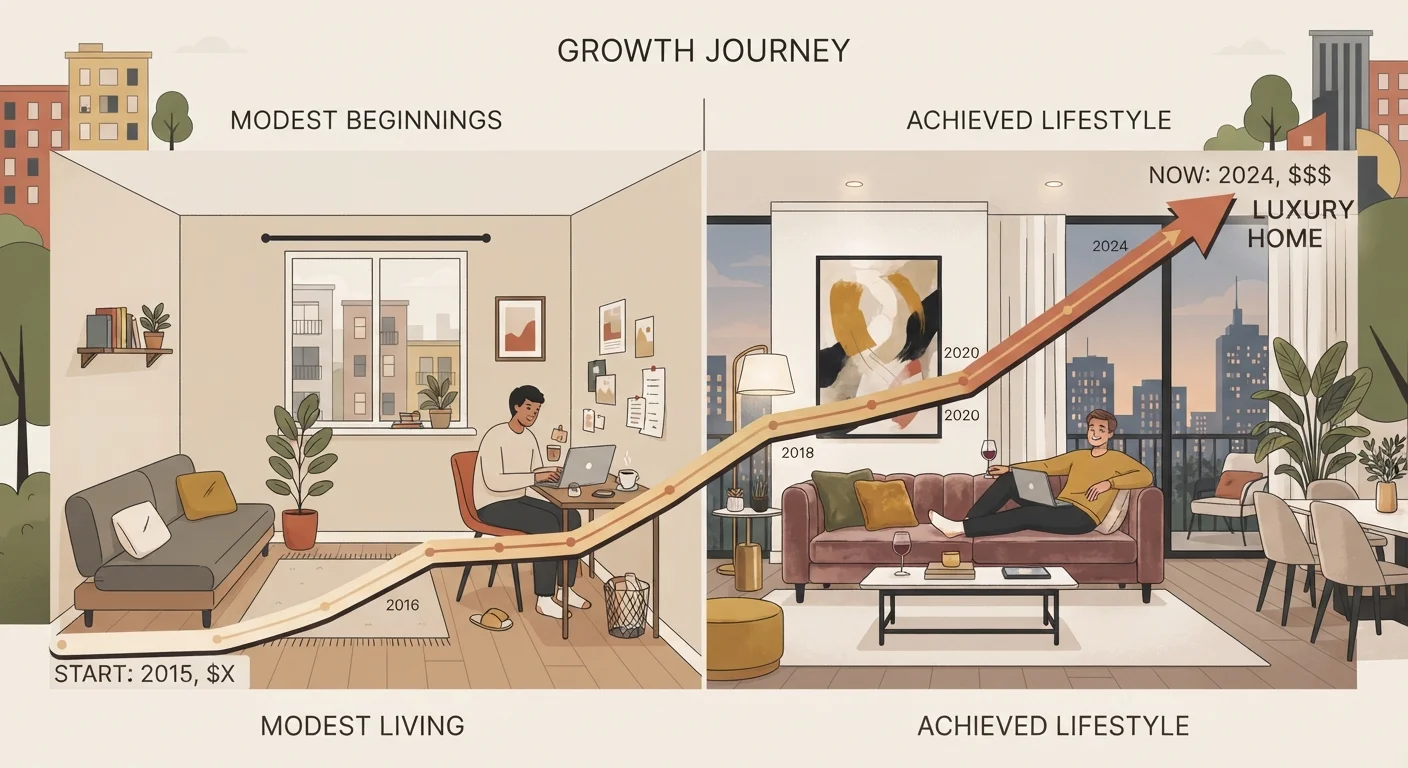
Lifestyle creep — sometimes called lifestyle inflation — is the gradual process by which a person's spending rises in step with their income. Each raise, bonus, or new job brings higher earnings, but instead of saving or investing the difference, the money gets absorbed into a higher standard of everyday spending. The result is that financial breathing room stays roughly the same even as income grows.
Economists sometimes describe this through the lens of the 'hedonic treadmill' — the tendency for people to quickly adapt to improved circumstances, resetting expectations upward and returning to a baseline level of satisfaction.
How Lifestyle Creep Works in Practice
The mechanics of lifestyle creep are straightforward, which is part of why it's so easy to miss. A pay increase arrives, and within a few months spending adjusts upward — a nicer gym membership, a slightly higher grocery budget, dinner out a few more times per month. None of these feel dramatic. Each feels like a reasonable reward for working harder or earning more.
The problem is cumulative. Individually, each upgrade is justifiable. Together, they can absorb an entire raise without a single deliberate decision being made. This is distinct from a conscious choice to improve your quality of life; lifestyle creep is largely unconscious, driven by social comparison, habit, and the simple availability of more money in an account.
~70%
Americans living paycheck to paycheck
Surveys consistently find that a substantial majority of U.S. adults — including many higher earners — report having little financial cushion, suggesting income alone doesn't determine financial stability.
1 in 3
Higher earners with no emergency fund
Research from financial wellness organizations has found that a significant share of households earning above median income still lack three months of expenses saved, a pattern consistent with income-linked spending growth.
This pattern is why people with significantly higher incomes than a decade ago sometimes report feeling no more financially secure. The relationship between earning more and saving more is less automatic than most people assume.
The Psychological Engine Behind Income-Linked Spending
Several well-documented psychological tendencies fuel lifestyle creep. Social comparison plays a significant role: as income rises, peer groups and reference points often shift, creating new norms for acceptable spending. A neighborhood, workplace, or social circle can quietly set expectations about cars, vacations, or clothing without anyone making an explicit demand.
Hedonic adaptation compounds the effect. Once a higher standard becomes the baseline, returning to less feels like deprivation — even if the previous standard was perfectly comfortable. The upgraded apartment becomes 'normal'; the old one becomes unthinkable.
“The real problem with lifestyle inflation isn't that people spend money on things they enjoy — it's that the spending becomes automatic and unconscious, happening by default rather than by choice.”
— Behavioral Economics Research Community, Widely cited framing in personal finance and behavioral economics literature
There's also a cognitive shortcut at work: when more money is available, spending decisions that once required deliberation start to feel automatic. The friction that previously slowed spending — checking the account balance, weighing necessity — decreases. This is why common budget myths often persist longest among people whose income is rising fastest.
Where Creep Enters the Budget Most Quietly
Certain spending categories are reliably more vulnerable to lifestyle inflation than others. Understanding where it typically enters makes it easier to spot early.
- Housing: Upgrading to a larger or more centrally located home or apartment after a raise is one of the single largest drivers of lifestyle creep because housing costs are recurring and substantial.
- Subscriptions and memberships: Each individual subscription seems minor, but the cumulative total of streaming services, apps, gym memberships, and delivery programs can grow significantly without attracting attention.
- Dining and convenience: Eating out more frequently or switching from cooking at home to meal-kit services adds up quickly across twelve months.
- Transportation: Upgrading a vehicle — or financing a more expensive one — often follows a significant income increase, locking in a higher fixed monthly cost.
These categories are explored in depth in resources on spending categories that most budgets overlook. The common thread is that each upgrade tends to become permanent, resetting the cost baseline upward.
Apply the 'Raise Rule' Before Spending Changes
When a salary increase takes effect, decide in advance what percentage will go directly to savings or debt before adjusting any spending habits. Even committing half of each raise to a savings goal — and allowing the other half to improve day-to-day life — keeps the savings rate from stagnating. Automating that transfer on payday removes the need for repeated willpower.
Recognizing and Recalibrating Before It Compounds
The most useful diagnostic is tracking your savings rate — the share of gross income directed to savings — rather than just the savings dollar amount. A higher salary producing the same savings percentage is a neutral outcome; a higher salary producing a lower savings percentage is lifestyle creep in progress.
Spending pattern analysis over time is equally revealing. Many people find it instructive to compare current monthly statements against those from two to three years prior, sorted by category rather than by individual transaction. Categories that have expanded significantly relative to income are likely candidates for review. The spending patterns that quietly undermine savings goals are rarely dramatic individually — their impact comes from consistency over time.
Structurally, allocating any new income before it reaches a checking account — whether to savings, retirement contributions, or debt reduction — removes much of the automatic spending pressure. This is general financial information; for guidance tailored to your circumstances, consider consulting a licensed financial professional.
This article is for general informational and educational purposes only and does not constitute personalized financial advice. Please consult a qualified financial professional before making decisions about your personal finances.