

Key Takeaways
- Lifestyle creep happens when spending grows proportionally — or faster — than income.
- It tends to occur gradually, through small and individually justifiable upgrades.
- A higher income does not automatically translate into more savings or financial security.
- Recurring subscription and service costs are among the most common drivers.
- Awareness is the first line of defense — tracking spending changes after raises helps.
Lifestyle Creep
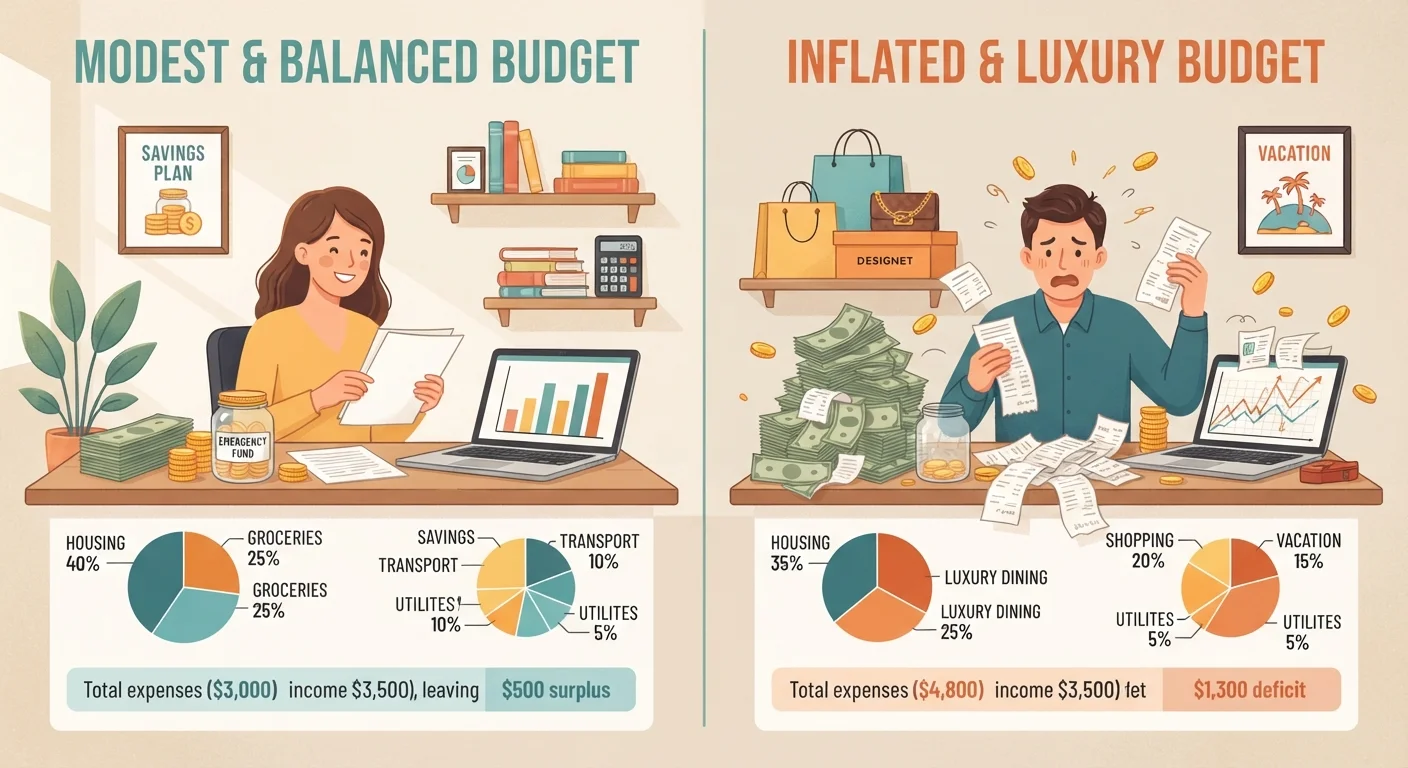
Lifestyle creep — sometimes called lifestyle inflation — happens when spending rises alongside income, leaving little or no improvement in actual savings or financial security. It often occurs gradually, through small upgrades to daily habits and recurring expenses that feel reasonable in the moment. The result is that people earning significantly more than they once did may find themselves no better prepared for financial emergencies or retirement.
Economists sometimes describe this through the concept of 'hedonic adaptation' — the tendency to quickly adjust to new comfort levels, making the upgraded standard feel like the new baseline rather than a luxury.
How Lifestyle Creep Works in Practice
The pattern is familiar: a raise comes through, and within a few months, the budget feels just as tight as before. The math is straightforward — spending expanded to meet the new income. But the mechanism is more nuanced than simple overspending.
Lifestyle creep typically operates through two channels. The first is upgrade inflation — replacing functional items with premium versions. A working phone becomes a flagship model. A gym membership gets added. Grocery hauls shift toward higher-cost options. Individually, each decision seems justified. Collectively, they absorb the raise.
The second channel is recurring cost accumulation. Streaming services, subscription boxes, delivery memberships, and software plans each cost relatively little monthly — but they stack. A household that adds several modest subscriptions in a year may add hundreds of dollars in annual fixed costs without noticing the cumulative effect. See how small daily spending decisions compound over a year for a concrete look at how quickly these amounts add up.
Lifestyle Creep vs. Intentional Spending
Not every spending increase after a raise is lifestyle creep. Investing in better nutrition, adequate housing, or professional development can have real long-term benefits. The distinction is whether the spending increase was a deliberate choice weighed against savings goals — or a passive drift that happened by default.
Lifestyle creep isn't a character flaw — it's partly a predictable psychological response to having more financial room. Recognizing the mechanism makes it easier to manage intentionally.
Why Raises Don't Automatically Build Wealth
A common belief is: I'll start saving more once I earn more. But income increases rarely trigger proportional savings increases on their own. This belief — and others like it — is explored in depth in savings myths that keep Americans from building financial cushions.
The reason is partly structural. When take-home pay rises, spending adjusts upward almost immediately — partly through conscious choices, partly through social comparison and the expectations that come with a new income level. Meanwhile, savings adjustments require deliberate action.
~36%
Americans with no emergency savings
A Bankrate survey found roughly 36% of U.S. adults had no emergency savings, suggesting that income alone doesn't guarantee a financial buffer.
57%
Workers spending all or more than they earn
The CFPB's Financial Well-Being in America data indicates a significant share of households report spending equal to or exceeding their monthly income, regardless of earnings level.
Without a plan to direct new income toward savings goals, the default is spending. This is why financial guidance often emphasizes automating savings increases as income rises — structuring the behavior rather than relying on willpower after the fact.
It's also worth noting that lifestyle creep intersects with spending patterns that quietly undermine savings goals — recurring behaviors that erode financial progress gradually, often below the threshold of conscious awareness.
Recognizing the Warning Signs Early
Lifestyle creep is easier to course-correct when caught early. A few practical indicators to watch for:
- Your savings rate hasn't improved despite income growth. If you're earning 15% more than two years ago but saving roughly the same dollar amount — or percentage — something absorbed the difference.
- Monthly fixed costs have grown significantly. Subscriptions, memberships, insurance upgrades, and service plans that didn't exist in your budget before represent committed spending that's hard to roll back.
- You've normalized expenses that once felt like treats. Regular restaurant dining, premium delivery options, or business-class domestic travel that once felt like splurges are now routine line items.
- An unexpected expense still feels stressful. Higher income paired with the same financial fragility is a signal that spending has kept pace with earnings.
Try the 'Raise Split' Approach
When income increases, consider directing a predetermined portion — such as half — directly to savings or debt repayment before adjusting any spending. This approach lets you benefit from higher earnings while ensuring savings progress keeps pace with lifestyle upgrades. Automating the transfer reduces the friction of making the right choice each time.
For context on how deal-seeking behavior can mask spending growth, overspending in the name of savings outlines the patterns most likely to backfire.
This article is for general informational and educational purposes only and does not constitute personalized financial advice. For guidance specific to your financial situation, consult a qualified financial professional.