
Marketplace Listings vs. Retailer Websites: Comparing the Same Item Across Platforms

Key Takeaways
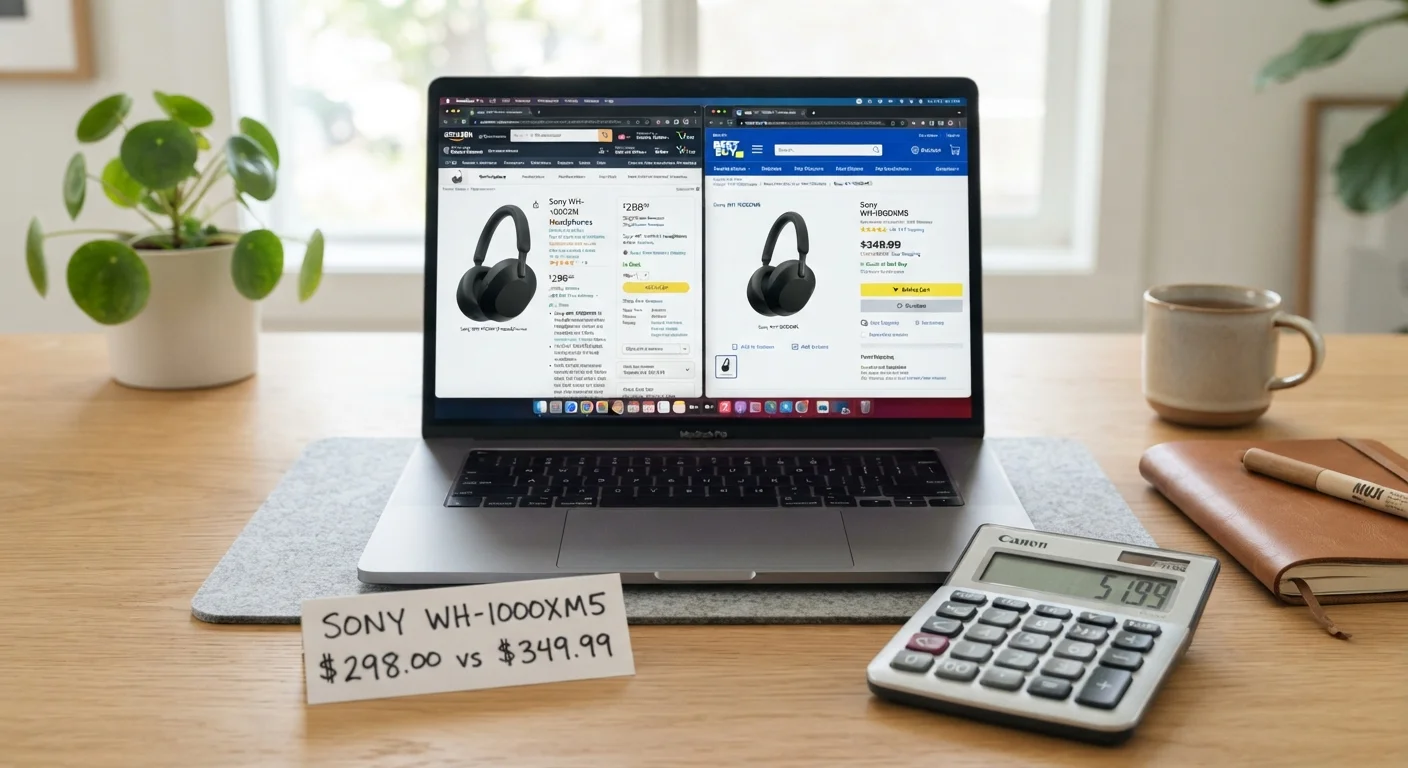
- Marketplace listings often show a lower sticker price but add fees, variable shipping, and third-party seller risk.
- Retailer websites may charge more upfront but offer predictable shipping, clearer return policies, and warranty support.
- Total cost — including tax, shipping, and fees — is the only fair number to compare across platforms.
- Seller reputation and return logistics differ significantly between platform types and affect real value.
- Dynamic pricing means the same item's price can shift hourly on both marketplaces and retailer sites.
Our Verdict
Neither marketplace listings nor retailer websites are universally cheaper or safer — it depends entirely on what the item is, who is selling it, and what the all-in cost looks like at checkout. Marketplace platforms give access to a wide range of sellers and prices, but require more due diligence. Retailer websites offer more consistency but less price variation. The smartest approach is to calculate total cost on both before committing to either.
| Best for | Recommended |
|---|---|
| Shoppers who prioritize price flexibility and seller variety | Marketplace platforms (with careful seller vetting) |
| Shoppers who prioritize predictable returns, warranties, and consistent fulfillment | Retailer websites |
| High-value or warranty-dependent purchases | Retailer websites |
| Hard-to-find or discontinued items | Marketplace platforms |
Why the Same Product Can Have a Different Price Everywhere
Search for almost any common product — a phone case, a kitchen appliance, a pair of headphones — and you'll typically find it listed on multiple platforms at different prices. That price gap isn't random. Marketplaces and retailer websites operate on fundamentally different business models, each of which shapes how prices are set, what costs are added, and how the transaction is handled.
On a marketplace (a platform where multiple third-party sellers list products alongside or instead of the platform itself), pricing is set by individual sellers competing for visibility. On a retailer website (where the retailer controls inventory and pricing directly), the price reflects a single seller's strategy. Understanding this structural difference is the foundation of any fair comparison. For a deeper look at why price comparisons matter in the first place, see what price comparison shopping really involves.
Breaking Down the True Cost on Each Platform
A listing price is not a total price. Before you can compare platforms fairly, you need to account for every cost that hits at checkout — and a few that arrive afterward.
| Criterion | Marketplace Listings | Retailer Websites | |
|---|---|---|---|
| Sticker price range | Varies widely by seller | Typically fixed by retailer | |
| Shipping cost predictability | Variable; seller-dependent | More consistent; often stated upfront | |
| Return process | Varies by seller; can be complex | Centralized; typically straightforward | |
| Seller accountability | Multiple sellers; varied reliability | Single seller; clear responsibility | |
| Authenticity risk | Higher with unknown third-party sellers | Lower when sold directly by retailer | |
| Availability of used/refurbished options | Common across many listings | Rare or limited on most retailer sites | |
| Warranty support | Depends on seller and product condition | Usually aligned with manufacturer terms |
Shipping: Retailer sites often build shipping into their pricing structure or offer free shipping above a spend threshold. Marketplace sellers set their own shipping rates, which can vary widely for the same item across different listings.
Taxes: Both platform types generally collect applicable sales tax, but the rate applied can vary based on the seller's location and the marketplace's tax-collection policies.
Return costs: Retailer websites typically have a centralized, clearly stated return policy. Marketplace returns depend on the individual seller's terms, which can mean paying return shipping or dealing with restocking fees. This connects directly to hidden costs that can flip a deal into a loss.
To make sure you're accounting for every variable before checkout, run through this practical checklist for comparing prices the right way.
Seller Accountability and Product Authenticity
One factor that doesn't appear on any price tag is seller accountability. On a retailer website, the retailer is the seller — you know exactly who is responsible if something goes wrong. On a marketplace, a product might be fulfilled by the platform, by a third-party seller, or some combination, and that distinction significantly affects what recourse you have.
Marketplace Fulfillment Labels Can Be Misleading
On many marketplaces, a product listed as 'fulfilled by platform' indicates the platform handles shipping and returns — but the item itself is still sourced from a third-party seller. This doesn't guarantee product authenticity or that the seller's listed description is accurate. Always check who the actual seller is, not just who handles shipping, before completing a purchase.
Product authenticity is a related concern. Counterfeit or misrepresented goods are more commonly reported through marketplace third-party sellers than through direct retailer storefronts, according to consumer protection agencies. This doesn't mean marketplaces are inherently unsafe — many have buyer protection programs — but it does mean the verification work falls on the shopper.
Before purchasing on a marketplace, check the seller's rating, review history, fulfillment method, and stated return window. On a retailer site, verify whether the product is sold and shipped directly by the retailer or through a marketplace-style third-party seller the retailer hosts.
When Each Platform Type Tends to Work in Your Favor
Context matters. Neither platform type has a blanket advantage — the better choice depends on what you're buying and what you're optimizing for.
- Marketplace platforms tend to offer more pricing variation, making them useful when you have time to compare multiple sellers, when the item is discontinued or hard to find, or when condition flexibility (used, refurbished, open-box) is acceptable.
- Retailer websites tend to be more reliable for high-value items where warranty support matters, for time-sensitive orders where delivery predictability is essential, or when returns might be needed.
It's also worth knowing that prices on both platform types shift constantly due to algorithmic pricing strategies. Dynamic pricing means a product's cost can change hour to hour — so a screenshot from yesterday may not reflect today's reality.
Add Up the Full Cart Before Comparing
When comparing the same item across platforms, add all costs — item price, shipping, estimated tax, and potential return shipping — before deciding. A product that looks $10 cheaper on a marketplace may cost the same or more once those variables are included. Many shoppers find it useful to keep a simple running total in a notes app or spreadsheet while browsing.
For a full breakdown of which price figure you should actually be comparing — unit price, sale price, or total cost — see unit price vs. sale price vs. total cost.