

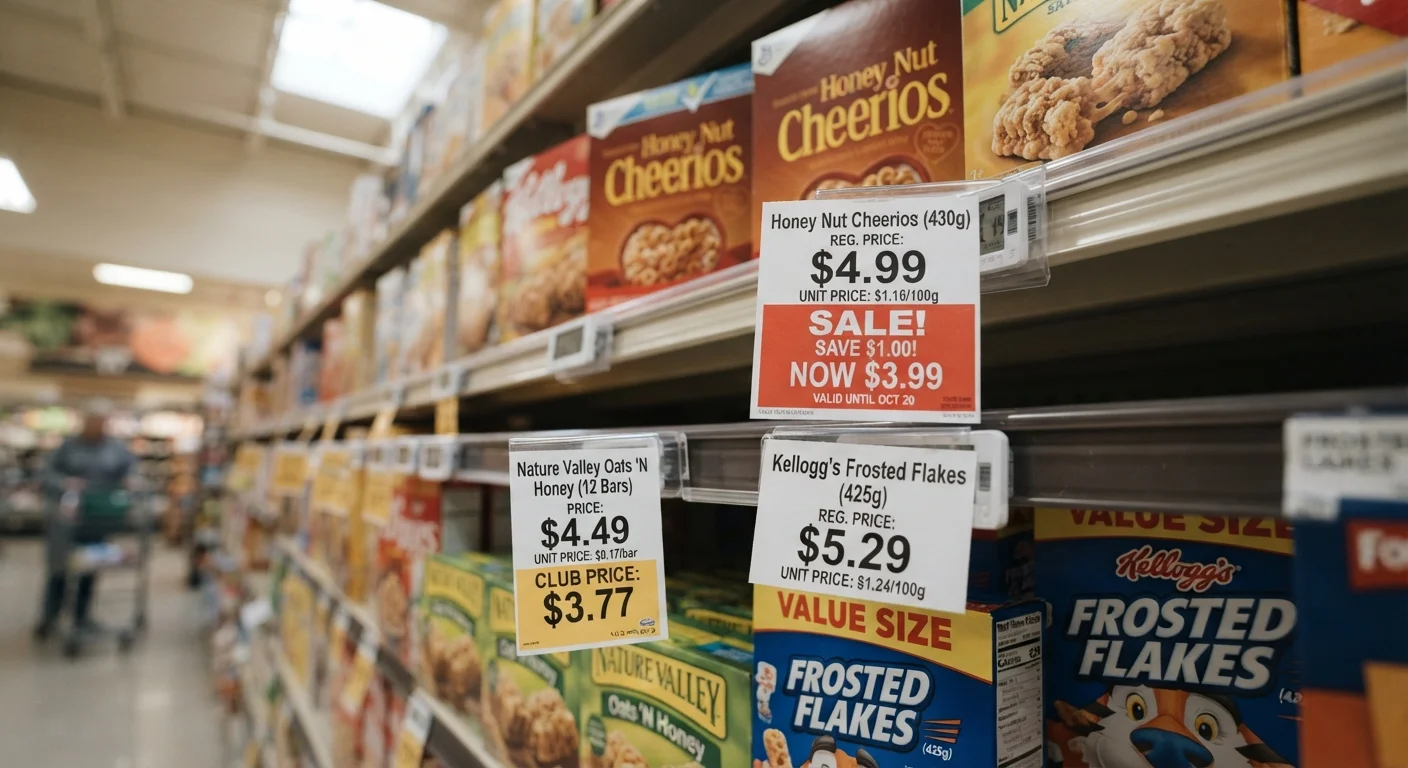
Why the Sticker Price Is Rarely the Full Story
Walk into any store — or scroll through any product listing — and you'll encounter at least three distinct numbers: the original price, the sale price, and sometimes a unit price. Each one measures something different, and treating them as interchangeable is one of the most common ways consumers end up paying more than they expected. Understanding what price comparison actually involves starts with knowing exactly what each pricing term measures.
A sale price tells you what a retailer is charging today. A unit price tells you how much you're paying per standard unit of measurement. A total cost tells you what you'll actually spend after every fee, tax, and required add-on is included. These three numbers can point in completely different directions — and the one that matters most depends on what you're buying.
How to Use Each Pricing Term
Below is a plain-language breakdown of each pricing concept and when to apply it.
Unit Price: The Great Equalizer for Consumables
Unit price is most valuable when comparing products that come in different sizes or quantities — paper towels, laundry detergent, canned goods, vitamins. A 32 oz bottle at $6.99 may look cheaper than a 16 oz bottle at $4.49, but the unit prices ($0.22/oz vs. $0.28/oz) tell a clearer story. Watch for shrinkflation too: a product's sticker price may stay flat while its package quietly shrinks, pushing the unit price higher without an obvious price change.
Sale Price: Useful, but Context-Dependent
A sale price is only meaningful when compared to a reliable reference point — ideally the same product at the same size from another retailer, or the same item's consistent historical price. Sale prices don't account for quantity differences, and a markdown on a larger-than-needed bundle isn't necessarily a better deal for your actual usage pattern.
Total Cost: The Number That Clears Your Account
For one-time or large purchases — electronics, appliances, furniture — total cost is the most important figure to compare. Add shipping fees, installation charges, required accessories, and applicable taxes to the listed price before drawing any conclusions. Two identical items listed at the same sale price can have significantly different total costs depending on where they're shipped from and what's required to make them functional. The pre-purchase checklist approach is designed precisely to catch these hidden additions before checkout.
Putting It Together: A Quick Decision Framework
Rather than defaulting to whichever number is most visible, apply this simple logic before committing to a purchase:
- Consumables and recurring purchases: Lead with unit price. Sale price is secondary unless quantities are identical.
- One-time or durable goods: Lead with total cost. Factor in delivery, taxes, and any necessary accessories.
- Comparing across retailers: Normalize to the same basis — same size, same quantity, same configuration — before placing any numbers side by side.
- Subscription or membership pricing: Calculate the annualized cost so you're comparing apples to apples.
For a thorough walkthrough of the full comparison process — from understanding pricing structures to timing decisions — the complete price comparison guide covers each stage in detail. If you're building the habit from scratch, this primer for new comparison shoppers is a useful starting point.
Price literacy also extends beyond retail. When evaluating insurance settlements, for instance, a similar kind of number scrutiny applies — knowing the difference between actual cash value and replacement cost can change a claim outcome significantly, much as knowing unit price versus sale price changes a shopping outcome. The underlying skill — reading the right number for the decision at hand — transfers across many consumer contexts. See more practical strategies in our deal hunting hub and smart budgeting hub.