

Key Takeaways
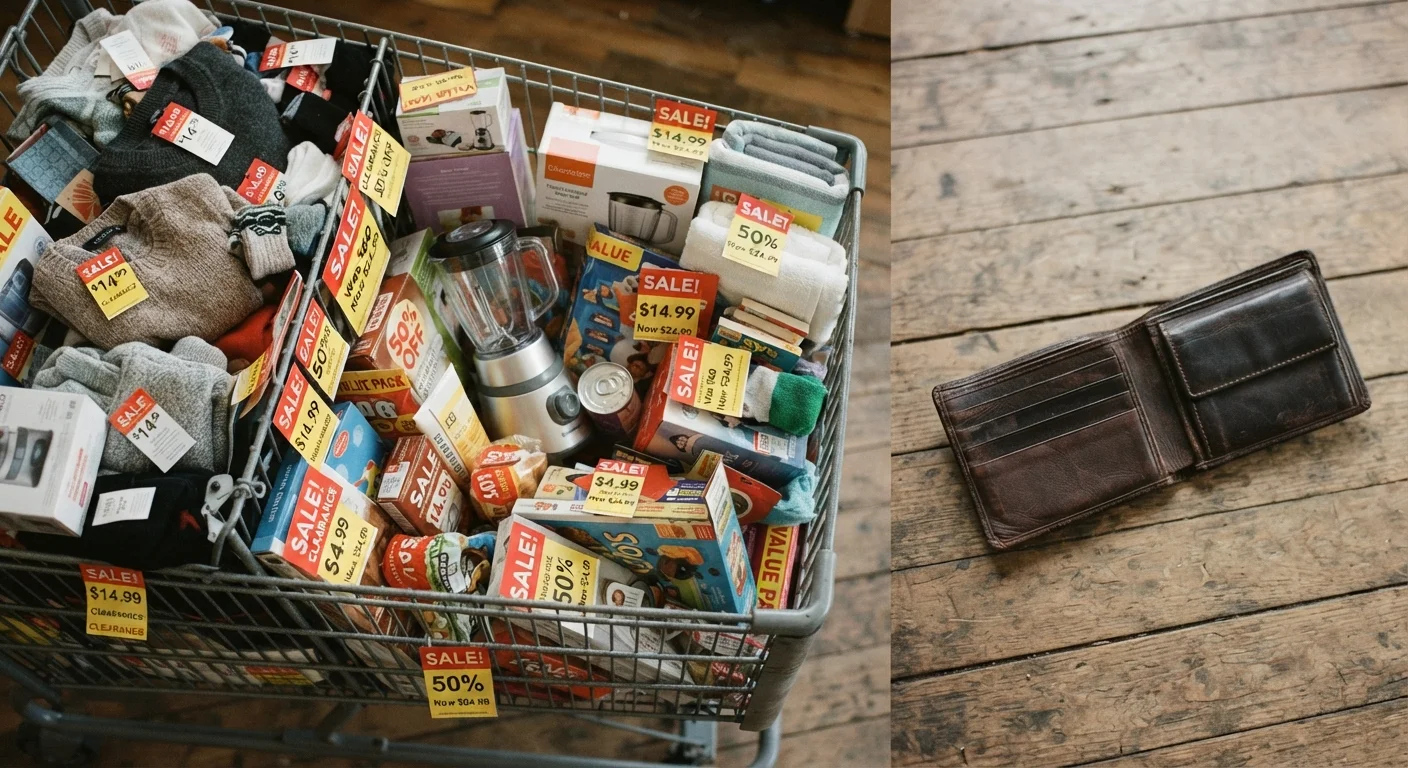
- Buying discounted items you wouldn't otherwise need is spending, not saving.
- Bulk buying perishables and rarely-used items often leads to waste, not savings.
- Free shipping thresholds and loyalty point chasing frequently trigger unnecessary purchases.
- Tracking what you actually spend — not just what you "saved" — reveals the real budget impact.
- Intentional shopping habits consistently outperform deal-chasing strategies.
When the Deal Becomes the Problem
Most budget-conscious shoppers know to avoid obvious traps like impulse buys at checkout. What's harder to see are the habits that feel like financial discipline but quietly work against you. These are the patterns built around the language of savings — percentages off, bulk discounts, reward points — that end up inflating spending rather than shrinking it.
The core problem is a mental accounting error: measuring success by how much was knocked off the sticker price rather than how much actually left your bank account. A $60 purchase that was "originally $100" still costs $60. If you didn't need the item, that's $60 spent, not $40 saved.
Understanding where this logic breaks down is the first step toward shopping that genuinely supports your budget. For a broader look at the behavioral patterns driving unplanned spending, see how impulse spending cycles work.
Buying something because it's on sale, not because you need it.
Why it happens: Discounts trigger a reward response — the brain registers a bargain as a gain, making the purchase feel financially responsible even when it isn't.
Over-buying in bulk on items that expire, spoil, or go unused.
Why it happens: The per-unit price on bulk items is almost always lower, which makes large quantities feel like an obvious win — even when the total volume far exceeds what you'll realistically use.
Padding a cart to hit a free shipping minimum, spending more than the shipping cost would have been.
Why it happens: Paying a shipping fee feels like a loss, so adding items to avoid it feels like a win — even when the added items cost more than the fee.
Stockpiling items during sales that you wouldn't have bought otherwise, then repeating the cycle.
Why it happens: Sale events create artificial urgency — the fear of missing a low price drives purchases that wouldn't survive a calm, need-based evaluation.
Chasing loyalty points or cashback rewards by spending more than planned.
Why it happens: Points and cashback percentages make additional spending feel productive — you're "earning" something. The framing obscures the net outflow.
Conflating "I saved X%" with "I spent less this month."
Why it happens: Retailers highlight savings amounts prominently on receipts and apps, reinforcing the habit of measuring shopping performance by discounts rather than total outflow.
Structural Habits That Make Overspending Feel Rational
Beyond individual purchases, certain shopping systems are designed — whether by retailers or by shoppers themselves — in ways that reliably produce more spending. Recognizing these structures helps you opt out before the damage accumulates.
~$5,400
Average annual U.S. household spending on apparel and services
According to U.S. Bureau of Labor Statistics Consumer Expenditure data, clothing consistently ranks among the categories most affected by sale-driven overspending.
40%
Share of grocery purchases made on impulse
A widely cited Food Marketing Institute study found a significant portion of in-store grocery purchases were unplanned, with promotions being a primary trigger.
The loyalty point trap is one of the most effective. Points programs create a sunk-cost feeling: you've accumulated rewards, so you keep buying to reach the next tier or avoid expiration. Research in behavioral economics consistently shows that reward structures shift focus from "do I need this?" to "what do I get for buying this?" — a subtle but costly reframe.
Free shipping thresholds operate similarly. Adding $15 worth of items to avoid a $6 shipping fee is a net loss, but it rarely feels that way in the moment. A simple fix: calculate the actual cost difference before padding your cart.
Sale calendar shopping — planning purchases around retail events rather than actual need — is another structural habit worth examining. Waiting for a sale on something you genuinely need is smart. Buying things because a sale is happening is a different behavior with a different outcome. The habits that keep spending intentional tend to anchor decisions in need, not timing.
These patterns also connect to a broader financial trend worth knowing: lifestyle creep often accelerates when savings-justified spending goes unchecked, making it harder to build any financial cushion regardless of income. For a reality check on what's genuinely working in your budget, spending patterns that undermine savings goals offers a useful audit framework.
This article is for general informational purposes only and does not constitute personalized financial advice. For guidance specific to your situation, consider consulting a qualified financial professional.