
Wellness Product Categories That Are Regulated Differently Than Most Shoppers Expect

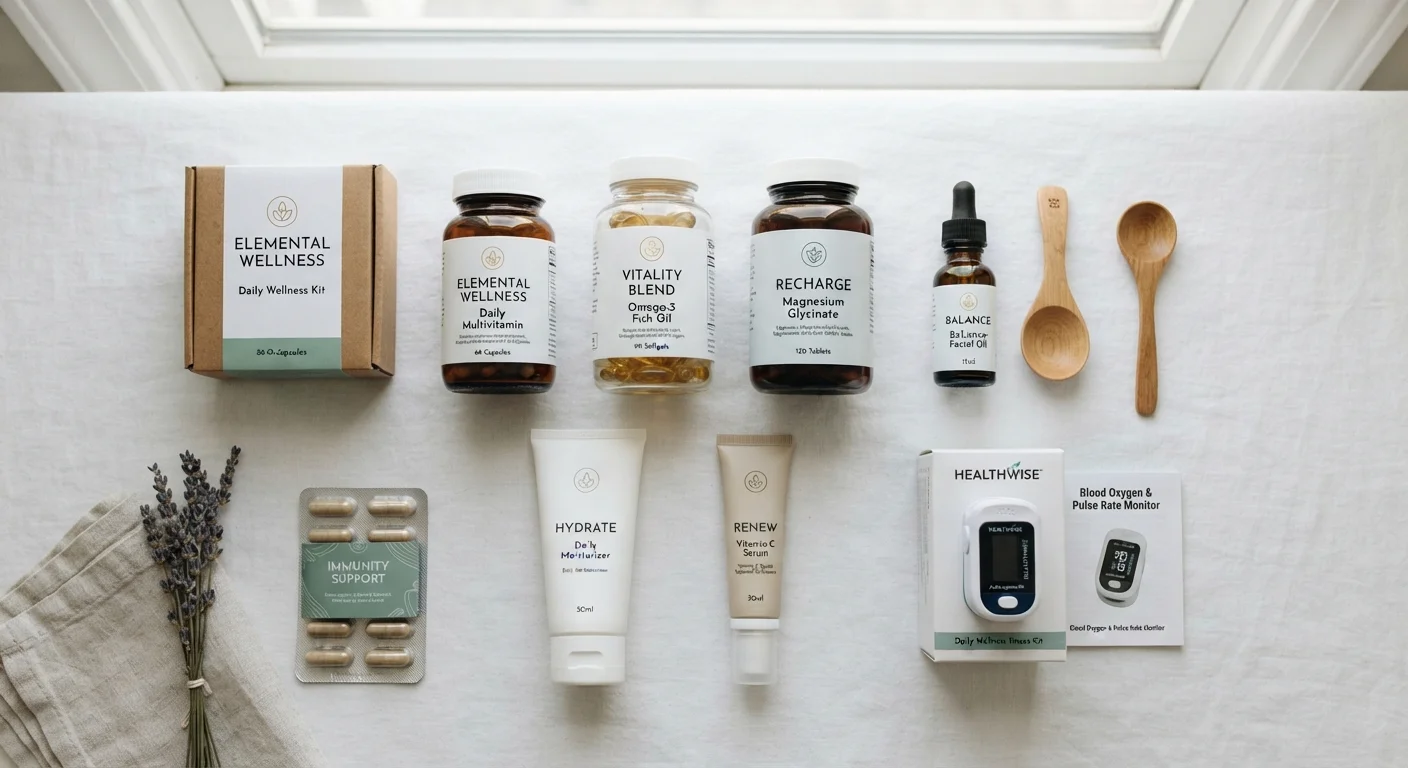
Why Regulatory Category Matters More Than You Might Think
When shoppers browse wellness products - whether supplements, skincare, or wellness devices - many assume a single government body has verified that each item is safe and effective before it reaches shelves. In reality, the U.S. regulatory framework divides these products into distinct categories, each with its own rules about what must be proven before sale, what claims are permitted, and how manufacturers are held accountable. Understanding these distinctions is one of the most practical things a consumer can do. For a broader look at what falls under the wellness umbrella, see this overview of the wellness product category.
Dietary Supplements: Post-Market Oversight, Not Pre-Market Approval
Dietary supplements - including vitamins, minerals, botanicals, and amino acids - are regulated under the Dietary Supplement Health and Education Act (DSHEA) of 1994. Under this law, manufacturers do not need to demonstrate a product's safety or effectiveness to the FDA before selling it. The burden falls on the FDA to prove a supplement is unsafe after it is already on the market.
Manufacturers must follow CGMPs and are responsible for ensuring their products are accurately labeled and not adulterated. However, the FDA does not independently verify label claims or ingredient potency before sale. This means two bottles labeled identically may contain meaningfully different amounts of an ingredient. For more on how supplement labels communicate - and sometimes obscure - information, see how product label claims work in practice.
Because pre-market review is not required, third-party testing can serve as a meaningful signal of quality. Programs such as USP, NSF International, and Informed Sport independently verify certain aspects of supplement contents. Learn what each actually verifies in this guide to third-party certifications.
DSHEA
The Dietary Supplement Health and Education Act of 1994. This U.S. law defines dietary supplements as a distinct product category and establishes that manufacturers, not the FDA, bear primary responsibility for safety before a product reaches market.
Structure/function claim
A label statement describing how a nutrient or ingredient affects normal body structure or function (e.g., "calcium builds strong bones"). These claims do not require FDA approval but must include a disclaimer that the FDA has not evaluated them.
510(k) clearance
An FDA pathway for medical devices that allows a manufacturer to demonstrate a new device is substantially equivalent to a legally marketed predicate device, rather than conducting independent clinical trials.
Current Good Manufacturing Practices (CGMPs)
FDA regulations that establish minimum standards for the design, monitoring, and control of manufacturing processes and facilities for supplements and other products, aimed at ensuring consistency and quality.
MoCRA
The Modernization of Cosmetics Regulation Act of 2022. It updated U.S. cosmetics law for the first time in decades, requiring facility registration, product listing, and adverse event reporting from cosmetics manufacturers.
Premarket approval (PMA)
The most rigorous FDA device review process, required for Class III (highest-risk) medical devices. It demands valid scientific evidence - typically clinical data - demonstrating the device is safe and effective.
Cosmetics and Personal Care Products: Minimal Pre-Market Requirements
Cosmetics - which include skin creams, serums, shampoos, and many topical wellness products - are regulated under the Federal Food, Drug, and Cosmetic Act. Like supplements, cosmetics generally do not require pre-market approval from the FDA. Manufacturers are responsible for ensuring their products are safe for use, but the FDA does not evaluate most cosmetics before they are sold.
A product's regulatory category can shift depending on how it is marketed. A moisturizer is a cosmetic; a moisturizer marketed to treat a skin condition may be classified as a drug, which carries stricter requirements. This boundary - between cosmetic and drug - is actively enforced by the FDA, but it means shoppers should be cautious when a personal care product makes claims that sound medical in nature.
The Modernization of Cosmetics Regulation Act of 2022 (MoCRA) introduced new requirements, including mandatory facility registration and adverse event reporting for cosmetics companies, strengthening oversight compared to prior decades. Still, the fundamental pre-market approval requirement that applies to drugs does not apply to most cosmetics.
Medical Devices and Wellness Devices: A Wide Regulatory Spectrum
The term "wellness device" covers a huge range of products - from fitness trackers to light therapy lamps to electrical muscle stimulators. The FDA regulates medical devices based on risk classification:
- Class I devices (lowest risk, e.g., bandages) are subject to general controls only.
- Class II devices (moderate risk, e.g., many diagnostic tools) typically require a 510(k) clearance, demonstrating substantial equivalence to an already-approved device - not independent proof of effectiveness.
- Class III devices (highest risk, e.g., implantable devices) require full premarket approval with clinical evidence.
Many consumer wellness devices marketed for relaxation, fitness tracking, or general well-being are positioned to avoid FDA classification as medical devices entirely - meaning they may not have been evaluated by the FDA at all. If a device claims to diagnose, treat, cure, or prevent a condition, it is subject to FDA oversight as a medical device. Claims that stop short of those thresholds may allow a product to avoid that level of scrutiny.
~50,000+
Dietary supplement products on U.S. market
The FDA has estimated tens of thousands of dietary supplement products are available to U.S. consumers, none requiring pre-market approval.
3 tiers
FDA medical device risk classifications
The FDA classifies medical devices into three classes based on risk level, each with different regulatory requirements before and after market entry.
Before adding any wellness product or device to your routine, these questions can help you evaluate fit and risk. As always, consult a qualified healthcare professional for guidance specific to your health situation.
This article is for general informational and educational purposes only and does not constitute medical, legal, or regulatory advice. Regulations change over time; consult FDA.gov and a licensed professional for current, personalized guidance.