

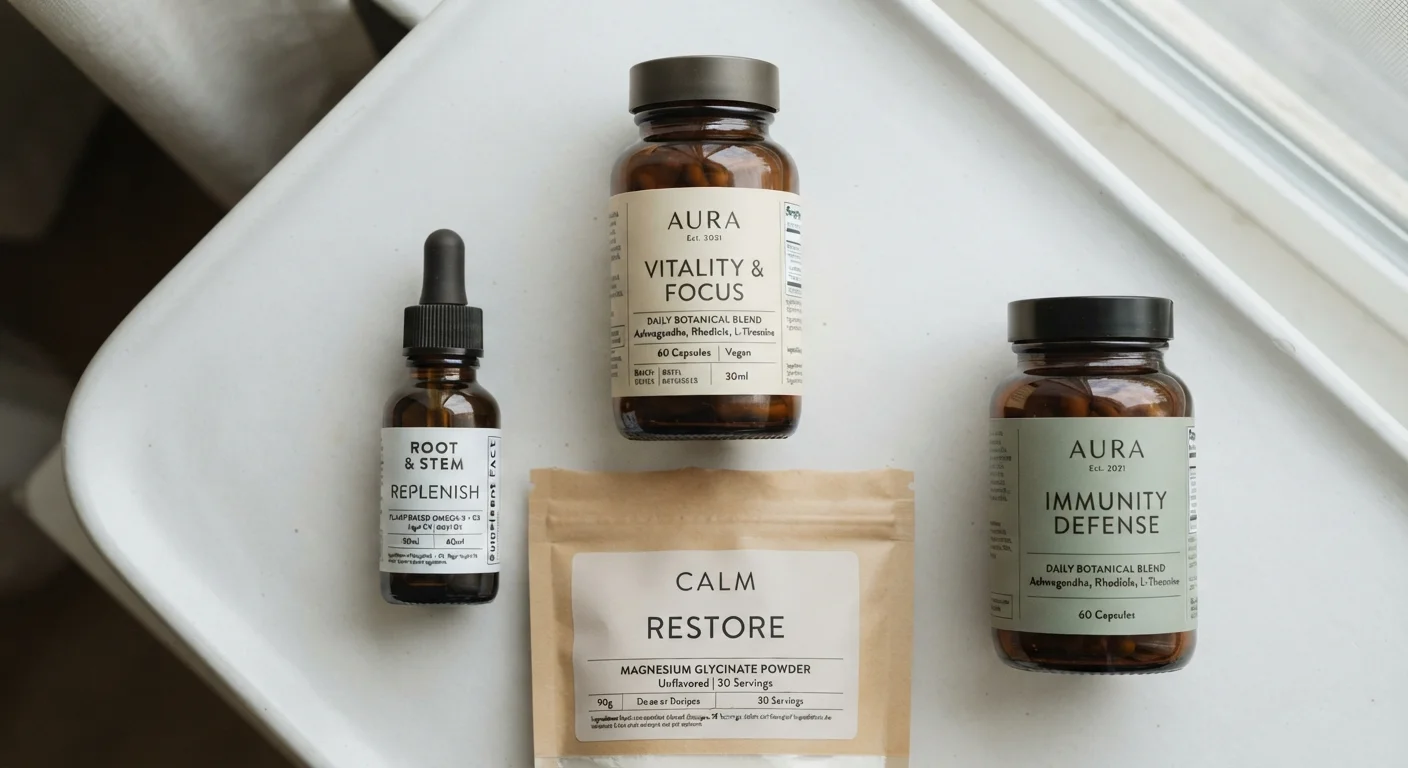
Key Takeaways
- Phrases like 'supports immunity' are structure/function claims that do not require FDA pre-approval.
- 'Clinically studied' does not guarantee a product works - the study design and dosage matter enormously.
- 'Natural' has no standardized legal definition for most wellness and supplement products in the U.S.
- Third-party certifications verify specific things like purity, not effectiveness - they are not the same as drug approval.
- Supplements are regulated differently than prescription drugs; manufacturers do not need to prove efficacy before selling.
Why Label Language Deserves Closer Attention
Walk the wellness aisle of any pharmacy or scroll through an online supplement store, and you'll encounter a familiar vocabulary: immune support, clinically proven, detoxifying, natural formula. These phrases are persuasive by design - they borrow the authority of medicine without necessarily carrying its regulatory requirements.
Understanding what these terms actually signal - and what they don't - is one of the most practical skills a wellness shopper can develop. This article breaks down some of the most common label claims, corrects persistent misconceptions, and explains what to look for instead. For a broader look at how different wellness product categories are overseen, see how wellness products are regulated differently than most shoppers expect.
Myth
A product that 'supports immunity' has been proven to strengthen your immune system.
Fact
'Supports immunity' is a structure/function claim that does not require FDA pre-approval or proof of effectiveness before it appears on a label.
Under U.S. law, dietary supplements can carry structure/function claims - statements about how a nutrient or ingredient may affect a normal body function - without the manufacturer needing to demonstrate efficacy to the FDA beforehand. Manufacturers are required to notify the FDA and include a disclaimer stating the claim has not been evaluated by the agency. This means 'supports immune health' on a label is a marketing statement, not a clinically verified outcome. Look for the small disclaimer text (often in fine print) that confirms this distinction.
Myth
'Clinically studied' means the product itself has been proven to work.
Fact
The phrase 'clinically studied' often refers to research on an ingredient - not the specific product, dose, or formulation being sold.
A study may have examined a particular compound at a specific dose in a controlled setting, but that finding doesn't automatically transfer to every product containing that ingredient. The amount used in the study may differ from what's in the product, the population studied may not match your own profile, and the study may have been small, short, or funded by the manufacturer. When you see 'clinically studied,' it's worth asking: what was studied, at what dose, by whom, and published where? Many nutrition claims borrow scientific-sounding language without the evidence to fully support it.
Myth
'Natural' ingredients are inherently safe, especially compared to synthetic ones.
Fact
The term 'natural' has no standardized legal definition for most wellness products in the U.S., and natural origin does not determine safety.
Arsenic, lead, and many potent plant toxins are entirely natural. Conversely, many synthetic compounds have well-established safety profiles. The FDA has not formally defined 'natural' for dietary supplements, meaning manufacturers apply the term broadly. An ingredient's safety depends on its specific chemistry, dose, and how it interacts with an individual's body and other substances - not its origin. The assumption that 'natural' means safe is one of the most persistent misconceptions in wellness shopping.
Myth
If a product is sold in a pharmacy or health store, it has been approved for safety and effectiveness.
Fact
Dietary supplements reach store shelves without pre-market FDA approval for safety or effectiveness; manufacturers are responsible for compliance.
Unlike prescription or over-the-counter drugs, dietary supplements in the U.S. are regulated under a framework established by the Dietary Supplement Health and Education Act (DSHEA) of 1994. Under this law, the FDA does not evaluate or approve supplements before they are sold. The burden falls on the manufacturer to ensure their product is safe, and the FDA can take action only after a product is already on the market and a problem has been identified. This is a meaningful regulatory difference that many shoppers don't realize. Understanding what each supplement type actually is can help frame realistic expectations.
Myth
'Detox' or 'cleanse' products remove harmful toxins from the body.
Fact
The human body has its own highly effective detoxification systems - the liver and kidneys - and no supplement has been shown to meaningfully enhance these processes in healthy individuals.
The term 'detox' is widely used in wellness marketing but lacks a precise medical definition in this context. The liver filters blood and processes metabolic waste; the kidneys excrete waste through urine; the digestive system moves material through the gut. These systems function continuously. No credible clinical evidence supports the claim that commercial 'detox' or 'cleanse' supplements accelerate or improve this process in people without organ disease. If you're concerned about your body's detoxification function, that's a conversation to have with a healthcare provider, not a product label.
What to Actually Look For Instead
Rather than relying on front-of-package claims, a few concrete habits can help you evaluate wellness products more effectively.
Front-of-Package Claims Are Not FDA-Approved Statements
Most health-related phrases on supplement packaging - including 'supports energy,' 'promotes relaxation,' and 'immune support' - are structure/function claims that do not require FDA review or approval before use. By law, these claims must be accompanied by a disclaimer, but that disclaimer is often in small print. If you rely primarily on headline claims to make purchasing decisions, you may be missing important context about what the product has and hasn't been tested to do.
- Check the Supplement Facts panel. Serving size, ingredient amounts, and the percent daily value (where applicable) tell you far more than headline claims. Learn to read a Supplement Facts panel to decode what's actually inside.
- Look for third-party seals - and understand their scope. Certifications from organizations like NSF International or USP verify identity, purity, and potency of ingredients. They do not certify that the product produces specific health outcomes. Understand what third-party certifications actually verify before treating a seal as a health endorsement.
- Ask a qualified professional. A pharmacist, registered dietitian, or physician can help you assess whether a product is appropriate for your individual situation - especially if you take medications or have underlying health conditions.
Developing a habit of reading past the marketing copy is a simple way to make more confident choices. For a practical checklist, see questions worth asking before adding any wellness product to your routine.
This article is for general informational and educational purposes only and does not constitute medical or professional health advice. Always consult a qualified healthcare provider before making decisions about supplements, treatments, or changes to your health routine.