

Key Takeaways
- Serving size is the foundation of every number on the Supplement Facts panel - always check it first.
- Percent Daily Values are reference points, not personalized targets, and not all ingredients have them.
- The 'Other Ingredients' list reveals fillers, binders, allergens, and additives beyond the active nutrients.
- Third-party verification seals indicate independent quality testing, though they don't evaluate effectiveness.
- Marketing claims on the front label are regulated differently - and more loosely - than the Facts panel itself.
What you will need
Why the Supplement Facts Panel Matters
Walk down any supplement aisle and you'll encounter bold claims: supports energy, promotes calm, advanced formula. But the front of the package is marketing territory. The real information lives in the Supplement Facts panel - a standardized label format required by the U.S. Food and Drug Administration (FDA) for dietary supplements sold in the United States.
Unlike the Nutrition Facts panel on food products (which you can learn to read in our guide to Nutrition Facts labels), the Supplement Facts panel has its own structure and conventions. Once you know how to navigate it, you can cut through marketing noise and evaluate a product on what it actually contains. This guide walks you through each section in order.
What you will need
Step-by-Step: Reading Each Section of the Label
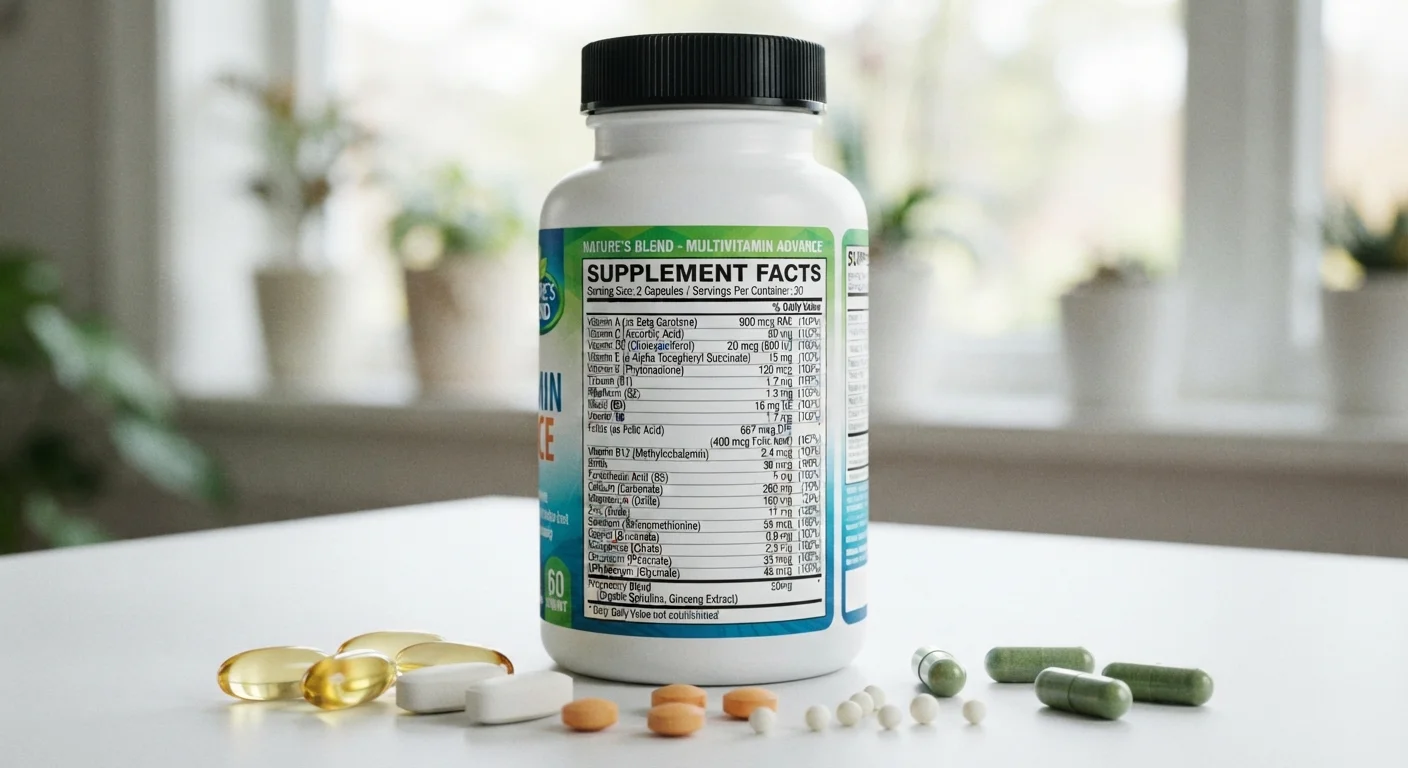
The sections below correspond directly to what you'll find on a standard Supplement Facts panel, from top to bottom. Follow along with a real label if you have one handy.
Find and Confirm the Serving Size
The very first line of the Supplement Facts panel lists the serving size - for example, '1 capsule', '2 tablets', or '1 scoop (10 g)'. Every number that follows is based on this amount. Immediately below, you'll see servings per container, which tells you how many doses the package provides.
Check whether the serving size matches how you plan to use the product. A bottle advertising '60 servings' based on one capsule per serving may only last 30 days if you take two capsules daily.
Read the Amount Per Serving Column
The main table lists each active ingredient alongside the amount per serving, expressed in weight units: milligrams (mg), micrograms (mcg), or international units (IU). This tells you exactly how much of each nutrient or botanical is present in one serving.
Pay attention to units - 500 mcg is dramatically different from 500 mg. Micrograms are one-thousandth of a milligram, so mixing them up can lead to significant misreading of a dose.
Interpret Percent Daily Value (%DV)
The % Daily Value column shows what percentage of a reference daily intake a single serving provides, based on established federal dietary reference values. A %DV of 100% means one serving delivers the full reference amount for an average adult.
Not every ingredient will have a %DV listed. Herbs, plant extracts, and many specialty compounds don't have established daily values, so you'll see a dagger symbol (†) instead, which refers to a footnote stating that no daily value has been established. This is normal and expected - it doesn't indicate a problem with the ingredient.
Check for Proprietary Blends
Some products list a proprietary blend - a group of ingredients combined under a single umbrella name with one total weight for the blend. Individual ingredient amounts within the blend are not required to be disclosed separately.
This means you may see '500 mg Herbal Complex (ingredient A, ingredient B, ingredient C)' without knowing whether ingredient A makes up 490 mg or just 10 mg of that blend. If the specific amount of an individual ingredient matters to your decision, a proprietary blend limits your visibility.
Review the Other Ingredients List
Below the main table, you'll find Other Ingredients - the inactive components used to manufacture the supplement, such as binders, fillers, capsule materials, colorants, and preservatives. Common examples include microcrystalline cellulose, magnesium stearate, silicon dioxide, and gelatin.
This section is especially important if you have food allergies, follow a specific diet (such as vegan or gluten-free), or have sensitivities to dyes or certain excipients. Allergen statements, when present, typically appear here or directly below this list.
Compare Labels Side by Side
When evaluating multiple products with the same ingredient, standardize your comparison to the same serving size before comparing amounts. A product with a smaller serving size may appear to contain less, but the daily totals could be equivalent. Always do the math based on how many servings you'd actually take per day.
After reading the Facts panel, it's also worth scrutinizing any health claims on the front label. Our article on wellness claims that deserve a second look explains what terms like 'clinically studied' actually - and don't - mean.
What the Label Can't Tell You
Even a well-read Supplement Facts panel has limits. The FDA regulates dietary supplements differently from prescription drugs - manufacturers do not need to prove a supplement is effective before selling it. The label tells you what a product contains, not whether it will work for you personally.
Supplements Are Not FDA-Approved for Efficacy
Unlike prescription medications, dietary supplements do not require FDA approval before going to market. The FDA can take action against unsafe products after the fact, but it does not pre-screen supplements for effectiveness. This makes independent label literacy - and consulting a healthcare provider - especially important.
Third-party verification seals (such as those from USP, NSF International, or ConsumerLab) signal that an independent organization has tested the product for accuracy of ingredient amounts and absence of certain contaminants - but these seals do not evaluate whether a supplement is effective or appropriate for your health needs.
If you're navigating ingredient lists on other product categories, the same skills apply: see how label-reading translates to decoding skincare ingredient labels for another practical example.
This article is for general informational purposes only and does not constitute medical advice. Before starting, stopping, or changing any supplement regimen, consult a qualified healthcare professional who can consider your individual health circumstances.