
Essential Oils as Wellness Products: Separating Established Uses from Overstated Claims

Key Takeaways
- Aromatherapy with essential oils has some research support for relaxation and mood, but evidence varies by oil and use.
- No essential oil is proven to cure, treat, or prevent any disease - regulatory agencies do not approve them as medicines.
- Essential oils must be diluted before skin contact; undiluted application can cause burns or allergic reactions.
- Ingesting essential oils is not safe without direct supervision from a qualified health professional.
- Marketing language around essential oils often far exceeds what the science actually demonstrates.
What Essential Oils Actually Are
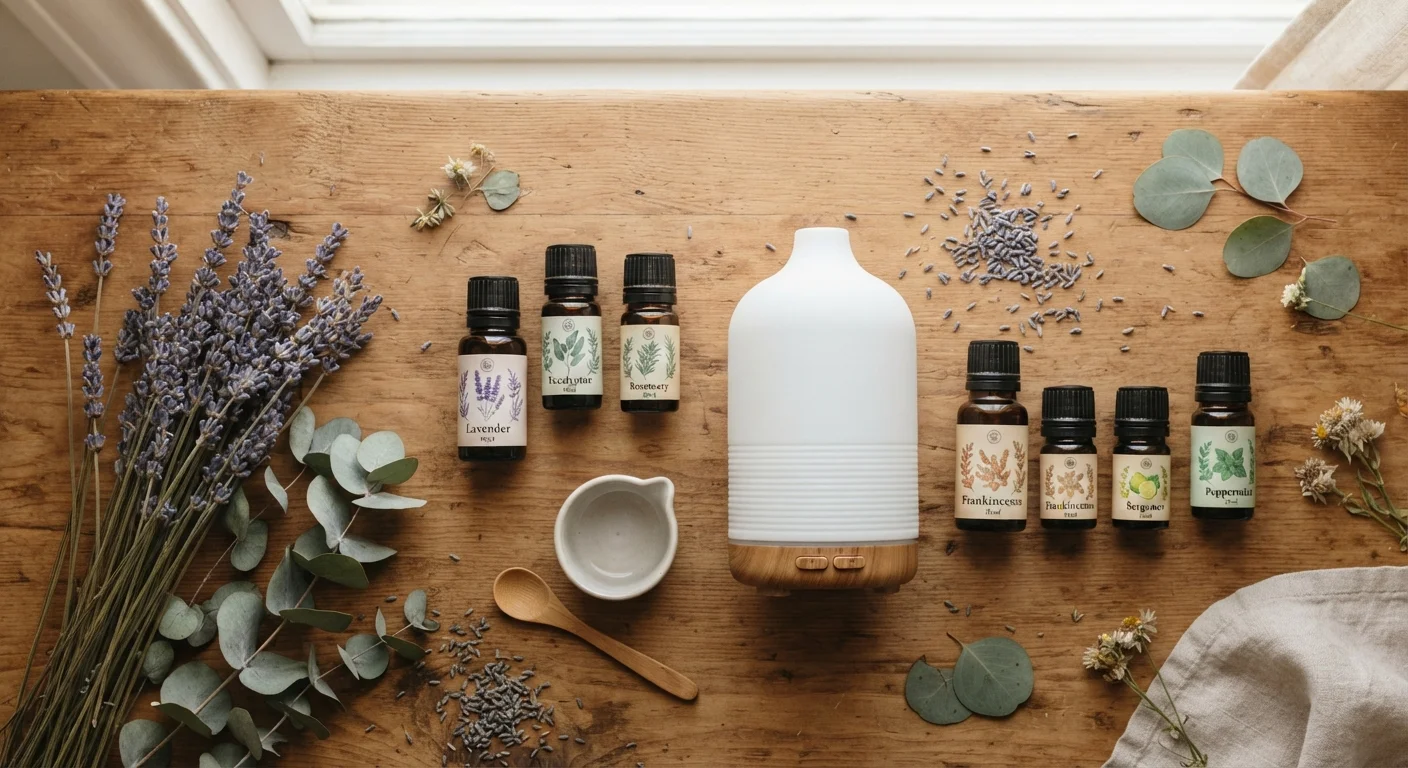
Essential oils are concentrated plant extracts obtained through steam distillation, cold pressing, or solvent extraction. They capture the volatile aromatic compounds from flowers, bark, leaves, rinds, and roots. The word "essential" refers to the plant's essence or fragrance - not to any biological necessity for human health.
They are widely sold as wellness products and are used in diffusers, massage oils, bath products, and skincare formulations. Understanding what the category genuinely includes is a useful starting point - the overview of wellness product categories offers helpful context on how this segment fits the broader landscape.
In the United States, essential oils sold without drug claims are regulated as cosmetics or general consumer products by the FDA - not as drugs. That means they are not evaluated for efficacy before reaching store shelves. When a product label claims to "support" a body function, it's worth knowing what that language actually signals, as explored in our look at wellness label claims that deserve a second look.
Common Myths and What the Evidence Actually Shows
The essential oils market is full of enthusiastic claims - some grounded in real research, others dramatically overstated. The myth-and-fact pairs below address the most common misconceptions consumers encounter.
Myth
Essential oils are completely natural, so they're automatically safe to use any way you like.
Fact
Natural origin does not equal safe or side-effect-free. Many essential oils can cause skin irritation, burns, allergic reactions, or toxicity if misused.
Poison ivy is natural. So is arsenic. "Natural" describes origin, not safety. Essential oils are highly concentrated - one drop of peppermint oil can be the equivalent of 28 cups of peppermint tea. Undiluted application of oils like cinnamon bark, clove, or oregano can cause chemical burns. Sensitization reactions are also possible with repeated undiluted exposure, even to milder oils. Safe use always requires appropriate dilution and attention to individual tolerance.
Myth
Diffusing essential oils can treat respiratory infections or kill airborne viruses.
Fact
There is no credible clinical evidence that diffusing essential oils treats infections or eliminates pathogens in a room at concentrations safe for human inhalation.
Some essential oil compounds - such as eucalyptol (found in eucalyptus) - have demonstrated antimicrobial properties in laboratory settings. However, lab results do not automatically translate to real-world therapeutic effects. The concentrations needed to kill pathogens in a room would be far higher than those safe for continuous human inhalation. Diffusing oils may make a space smell pleasant and could support a sense of relaxation, but it is not a substitute for evidence-based prevention or treatment of illness.
Myth
You can ingest essential oils to get stronger internal benefits.
Fact
Ingesting essential oils can be dangerous and is not recommended without direct oversight from a qualified healthcare professional trained in clinical aromatherapy.
Some essential oils are acutely toxic when swallowed - including eucalyptus, tea tree, camphor, and pennyroyal - and even generally recognized-as-safe oils can cause gastrointestinal distress, liver stress, or drug interactions at oral doses. Poison control centers receive calls each year about essential oil ingestion, including from children. The FDA has not approved any essential oil as a drug for internal use. "Food grade" on a label refers to flavoring use in tiny, regulated amounts - not therapeutic ingestion.
Myth
Lavender oil is proven to relieve anxiety just as effectively as medication.
Fact
Some studies suggest lavender aromatherapy may help reduce situational anxiety or improve sleep quality, but it is not a proven equivalent to evaluated anxiety treatments.
Research on lavender is more developed than for many other oils. A standardized oral lavender oil preparation (Silexan) has been studied in clinical trials for anxiety with some positive results - but that product is a regulated pharmaceutical formulation, not a typical aromatherapy oil. Aromatherapy inhalation studies show modest effects on perceived stress and sleep in certain populations. These findings are real but limited: study sizes are often small, methodologies vary, and effects are generally short-term and situational. Anyone managing a clinical anxiety disorder should work with a licensed mental health or medical professional. Comparing essential oils to medication without clinical supervision can lead to undertreatment of serious conditions.
Myth
More expensive essential oils are purer and more effective.
Fact
Price is not a reliable indicator of purity or therapeutic quality; there is no independent regulatory certification system for essential oil grades in the U.S.
Terms like "therapeutic grade" or "certified pure" are marketing language - not designations assigned by the FDA or any federal body. Some price differences do reflect genuine quality factors such as sourcing, extraction method, or third-party testing for adulteration. But high price alone guarantees nothing. Consumers interested in quality indicators can look for oils that come with GC/MS (gas chromatography/mass spectrometry) test results, which verify chemical composition and detect adulteration. No grade label on a bottle substitutes for this kind of documentation.
Safe Use: What Consumers Should Know Before Buying
Even where essential oils have plausible or documented benefits, safe use requires basic knowledge that marketing materials rarely emphasize.
Essential Oils Are Not Risk-Free Wellness Products
Because essential oils are widely sold without a prescription and marketed with soft wellness language, it's easy to assume they carry minimal risk. In reality, undiluted use, ingestion, and use around children or pets can cause real harm. Always read product guidance carefully, research the specific oil you're using, and consult a healthcare provider if you have any medical conditions or take medications before introducing essential oils into your routine.
- Always dilute before skin contact. Essential oils should be mixed with a carrier oil (such as jojoba, coconut, or almond oil) before topical application. Typical guidance from aromatherapy practitioners is a 1-3% dilution for adults, though individual sensitivity varies.
- Patch-test first. Apply a small diluted amount to a small area of skin and wait 24 hours before broader use, especially if you have sensitive skin or known allergies.
- Keep away from children, pets, and mucous membranes. Many oils that are tolerated by adults can be toxic to cats, dogs, or young children at concentrations safe for adults.
- Consult a healthcare provider if you are pregnant, nursing, managing a chronic condition, or taking medications. Some oils can interact with medications or are contraindicated in pregnancy.
For a structured way to evaluate any wellness product before purchase, the checklist of questions to ask before adding a wellness product is a practical resource.
$11B+
U.S. essential oils market size (estimated)
Industry analysts have estimated the U.S. essential oils market at over $11 billion, reflecting strong consumer demand despite limited regulatory oversight of health claims.
~1-3%
Recommended dilution range for adult topical use
Aromatherapy professional organizations generally recommend diluting essential oils to 1-3% in a carrier oil for safe adult skin application, with lower concentrations for sensitive individuals.
This article is for general informational purposes only and does not constitute medical advice. Consult a qualified healthcare professional before using essential oils for any health-related purpose, particularly if you have existing health conditions or take medications.