

Key Takeaways
- Filling half your plate with vegetables and fruit covers a wide range of micronutrient needs.
- Pairing a lean protein with a whole grain at each meal supports sustained energy and satiety.
- Healthy fats from sources like nuts, seeds, and oils are essential - not optional - for nutrient absorption.
- Flexibility, not perfection, is the foundation of sustainable, balanced eating.
- Hydration directly affects how your body uses the nutrients you consume.
What you will need
Why Proportions Matter More Than Rules
Most people associate eating well with following a specific diet - counting macros, eliminating food groups, or sticking to a rigid meal plan. In practice, nutrition science consistently points to something simpler: what you put on your plate, and in what proportions, matters far more than any single dietary rule.
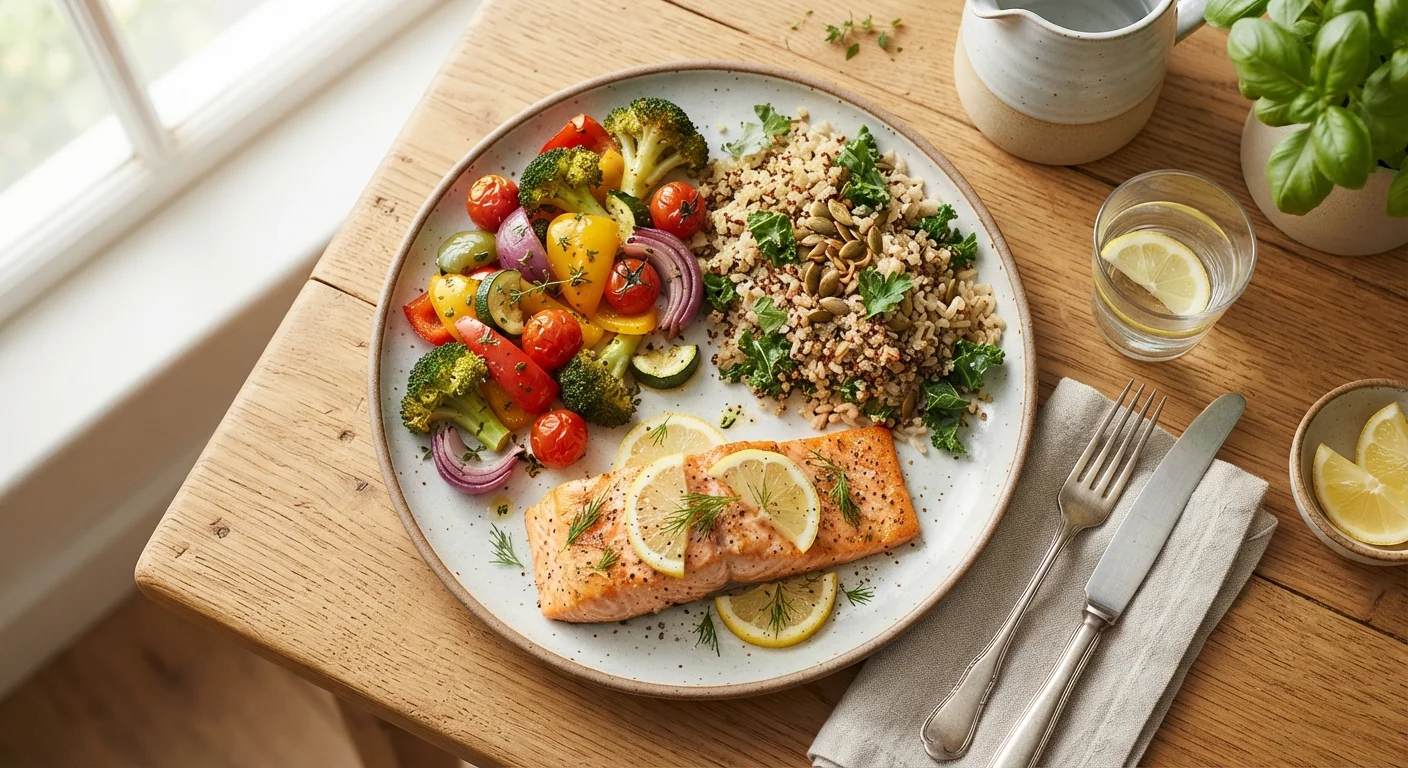
The USDA's MyPlate framework offers a straightforward starting point. It suggests that roughly half of each meal should consist of vegetables and fruits, about a quarter should be whole grains, and the remaining quarter should feature a protein source. A small portion of dairy or a calcium-rich alternative rounds out the picture. This isn't a prescription - it's a flexible guide you can adapt to your food preferences, budget, and lifestyle.
For a deeper look at dietary patterns that research consistently backs, see our article on eating patterns nutrition research supports.
What you will need
Step-by-Step: Assembling a Balanced Plate
The following steps walk you through building a nutritionally sound meal at any occasion - breakfast, lunch, or dinner - without needing a specialized plan or calorie tracker.
Fill Half the Plate With Vegetables and Fruit
Start by dedicating at least half your plate to non-starchy vegetables and, to a lesser extent, whole fruits. This single habit delivers fiber, vitamins, minerals, and antioxidants efficiently. Variety counts: rotating colors - dark leafy greens, orange root vegetables, red peppers, purple cabbage - helps cover a broader spectrum of micronutrients.
Frozen vegetables are nutritionally comparable to fresh and are often more affordable. Canned vegetables (low-sodium options when available) also count.
Choose a Whole Grain for One Quarter of the Plate
Whole grains - brown rice, quinoa, whole-wheat pasta, oats, farro, or whole-grain bread - retain the bran and germ layers that refining removes. These layers contain B vitamins, iron, magnesium, and dietary fiber. Aim for this section to be roughly one quarter of your total plate volume.
If whole grains are new to your routine, mixing them with familiar refined grains (half white rice, half brown rice) is a practical transition strategy.
Add a Quality Protein Source to the Remaining Quarter
Protein supports muscle maintenance, immune function, and satiety. The remaining quarter of your plate should include a lean or plant-based protein source: skinless poultry, fish, eggs, legumes (beans, lentils, chickpeas), tofu, tempeh, or low-fat dairy products such as cottage cheese or Greek yogurt.
Plant proteins like lentils and beans do double duty - they also contribute significant fiber and complex carbohydrates, making them excellent for overall meal balance.
Incorporate a Small Amount of Healthy Fat
Fat is not the enemy of a balanced plate - it's a requirement. Fat-soluble vitamins (A, D, E, and K) depend on dietary fat for absorption, and healthy fats support heart and brain function. Add a moderate amount from sources such as olive oil, avocado, nuts, seeds, or fatty fish like salmon or sardines.
The key word is moderate: a tablespoon of olive oil used in cooking, a few slices of avocado, or a small handful of walnuts is sufficient alongside a meal.
Pair the Meal With a Hydrating Beverage
Water is the most practical beverage choice alongside a meal. It supports digestion and nutrient transport without adding sugar or excess calories. Unsweetened tea or sparkling water are reasonable alternatives. Sugary drinks - including fruit juices - can add significant sugar with limited nutritional benefit compared to whole fruit.
For more on how hydration connects to everyday nutrition, see our guide on how water fits into your daily eating habits.
Consistency Beats Perfection Every Time
A balanced plate doesn't need to be perfect at every single meal. Nutrition is cumulative - what you eat across days and weeks matters more than any one plate. If a meal skews heavy on one food group, the next meal is a natural opportunity to rebalance. Building flexible habits, rather than chasing a perfect formula, is what makes balanced eating sustainable long-term.
Common Gaps and How to Fill Them
Even well-intentioned meals can leave out key nutrients. The most frequently missed include fiber, calcium, vitamin D, and potassium. Here's how these gaps typically appear and what to do about them:
- Low fiber: Swap refined grains (white bread, white rice) for whole-grain versions. Add beans or lentils as a protein source a few times per week.
- Insufficient calcium: Include dairy, fortified plant milks, canned sardines with bones, or leafy greens like bok choy and kale regularly.
- Low potassium: Prioritize potassium-rich vegetables and fruits - sweet potatoes, bananas, avocados, and white beans are accessible options.
- Missing healthy fats: A drizzle of olive oil, a handful of nuts, or half an avocado adds fat-soluble vitamin absorption support to any meal.
Keep in mind that hydration plays a direct role in nutrient absorption - drinking adequate water throughout the day supports how your body processes what you eat.
Supplements Don't Replace Whole Foods
If you're concerned about nutrient gaps, a multivitamin may seem like an easy fix. While supplements can play a supporting role in some situations, they do not replicate the full nutritional complexity of whole foods - including fiber, phytonutrients, and the synergistic effects of eating varied, minimally processed ingredients. Discuss any supplementation with a registered dietitian or your healthcare provider before adding it to your routine.
This article is for general informational and educational purposes only and is not a substitute for personalized medical or nutritional advice. Speak with a qualified healthcare professional or registered dietitian about your individual health needs.