

Key Takeaways
- Wellness tracking can surface patterns in sleep, movement, and food that are hard to notice otherwise.
- Data from apps and wearables has real accuracy limitations that can mislead rather than inform.
- Obsessive monitoring can increase anxiety and undermine the healthy habits it aims to support.
- Low-tech methods like journaling can offer many of the same awareness benefits with fewer downsides.
- Tracking works best as a short-term awareness tool, not a permanent lifestyle requirement.
Reveals patterns invisible to memory alone
Humans are poor at accurately recalling behavior over time. Logging sleep duration across two weeks, for example, often exposes a chronic deficit that felt manageable day-to-day.
Supports goal-setting with concrete feedback
Seeing a specific number - steps, minutes of activity, glasses of water - gives you a clear baseline to build from, which can make gradual progress more motivating than vague intentions.
Can identify triggers for symptoms or energy dips
Tracking food alongside mood or energy levels over time may help people notice correlations - such as poor sleep following late caffeine intake - that inform practical adjustments.
Builds short-term accountability
During habit-formation periods, the act of logging itself creates a small moment of reflection that can reduce mindless or automatic behaviors.
Accessible at low or no cost
Many effective tracking tools - from free smartphone apps to paper notebooks - require little to no financial investment, making the approach available to most households.
Device accuracy has meaningful limitations
Consumer wearables and apps frequently miscount steps, misestimate calorie burn, and produce sleep stage data that diverges from clinical sleep studies. Acting on inaccurate data can lead to misguided conclusions.
Can trigger anxiety and obsessive checking
Research on health anxiety suggests that constant monitoring can heighten preoccupation with symptoms or metrics, a pattern sometimes called 'orthosomnia' when it applies specifically to sleep-score fixation.
May replace body awareness with data dependence
Over-relying on a number - rather than how you actually feel - can erode the ability to read your own body's signals, which are often more nuanced than any single metric.
Data privacy risks are real
Health and fitness data collected by apps and devices may be shared with third parties, sold, or vulnerable to breaches. Users should review privacy policies before adopting any platform.
Tracking fatigue leads to abandonment
Studies on self-monitoring tools show that many users stop logging within weeks. When quitting feels like failure, the experience can undermine motivation rather than build it.
Gamification can distort motivation
Streak rewards and badge systems built into many apps can shift focus from genuine well-being to hitting arbitrary in-app targets, sometimes at the expense of rest or recovery.
Our Verdict
Wellness tracking genuinely helps many people identify blind spots and build consistent habits - especially when used for a defined period with a clear goal. But when tracking becomes a source of stress, guilt, or rigid rule-following, the tool is working against you. The best approach treats data as one source of feedback, not the final word on how you're doing.
People who want to build awareness around a specific habit - such as sleep consistency or daily movement - and plan to use data as a guide rather than a grade.
What Wellness Tracking Actually Involves
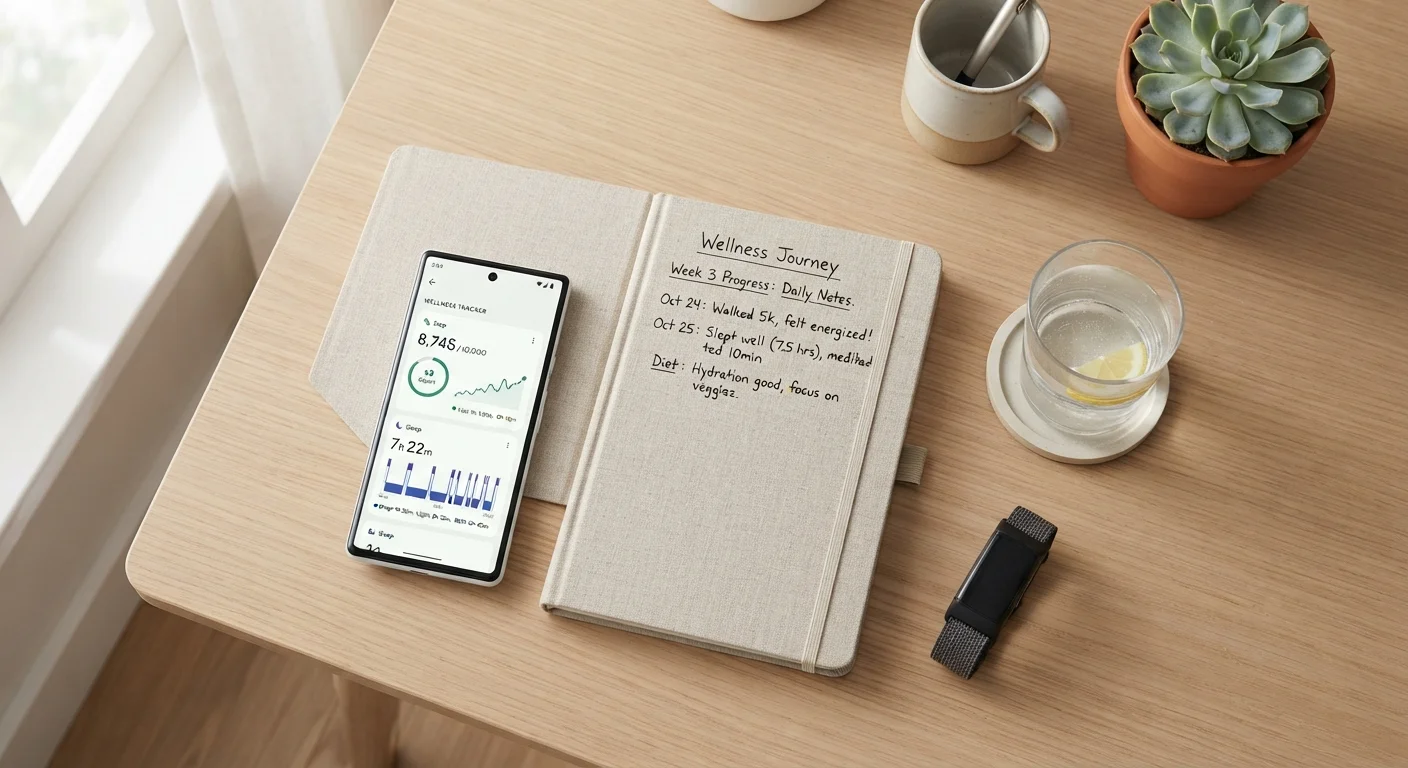
Wellness tracking is the practice of systematically recording health-related behaviors - steps walked, hours slept, meals eaten, heart rate, stress levels, and more. It can take many forms: a wearable device counting your steps automatically, a smartphone app prompting you to log meals, a paper journal where you note how you felt after workouts, or even a simple habit-check grid.
The goal, in most cases, is self-awareness. By capturing data over time, you create a record that reveals patterns your memory tends to smooth over. For a closer look at what wearable devices actually measure - and their technical limits - see our guide to wearable wellness devices.
Tracking tools vary widely in cost, from free phone apps to dedicated hardware. That range matters for everyday consumers - awareness doesn't require an expensive gadget.
The Real Benefits of Self-Tracking
When used thoughtfully, tracking provides genuine value that research and clinical practice support.
Reveals patterns invisible to memory alone
Humans are poor at accurately recalling behavior over time. Logging sleep duration across two weeks, for example, often exposes a chronic deficit that felt manageable day-to-day.
Supports goal-setting with concrete feedback
Seeing a specific number - steps, minutes of activity, glasses of water - gives you a clear baseline to build from, which can make gradual progress more motivating than vague intentions.
Can identify triggers for symptoms or energy dips
Tracking food alongside mood or energy levels over time may help people notice correlations - such as poor sleep following late caffeine intake - that inform practical adjustments.
Builds short-term accountability
During habit-formation periods, the act of logging itself creates a small moment of reflection that can reduce mindless or automatic behaviors.
Accessible at low or no cost
Many effective tracking tools - from free smartphone apps to paper notebooks - require little to no financial investment, making the approach available to most households.
~80%
Wearable users who stop within months
Industry analysts and academic researchers have repeatedly found that a large share of fitness wearable users abandon the devices within the first few months of ownership.
27%
Adults underestimating their sedentary time
Studies published in health behavior journals have found that self-reported sitting time frequently underestimates objectively measured sedentary behavior by roughly a quarter or more.
For movement specifically, logging daily steps or activity minutes can highlight how sedentary most routines actually are - something that's easy to underestimate. This connects directly to evidence on walking and everyday health, which suggests consistency matters more than intensity for many adults.
Where Tracking Can Work Against You
Self-monitoring has a well-documented flip side. For some people, attention to data creates more problems than it solves.
Device accuracy has meaningful limitations
Consumer wearables and apps frequently miscount steps, misestimate calorie burn, and produce sleep stage data that diverges from clinical sleep studies. Acting on inaccurate data can lead to misguided conclusions.
Can trigger anxiety and obsessive checking
Research on health anxiety suggests that constant monitoring can heighten preoccupation with symptoms or metrics, a pattern sometimes called 'orthosomnia' when it applies specifically to sleep-score fixation.
May replace body awareness with data dependence
Over-relying on a number - rather than how you actually feel - can erode the ability to read your own body's signals, which are often more nuanced than any single metric.
Data privacy risks are real
Health and fitness data collected by apps and devices may be shared with third parties, sold, or vulnerable to breaches. Users should review privacy policies before adopting any platform.
Tracking fatigue leads to abandonment
Studies on self-monitoring tools show that many users stop logging within weeks. When quitting feels like failure, the experience can undermine motivation rather than build it.
Gamification can distort motivation
Streak rewards and badge systems built into many apps can shift focus from genuine well-being to hitting arbitrary in-app targets, sometimes at the expense of rest or recovery.
When Tracking and Mental Health Intersect
For individuals with a history of disordered eating, obsessive-compulsive tendencies, or health anxiety, detailed self-monitoring can reinforce harmful thought patterns rather than support recovery. If tracking produces distress, guilt, or compulsive checking behaviors, it's worth discussing the habit with a mental health professional before continuing. This is general information, not a clinical assessment.
If you find that checking your stats is the first thing you do in the morning or that a low sleep score ruins your mood before the day starts, that's a signal the tool has shifted from helpful to harmful. Understanding what mental wellness actually involves can help you recognize when a habit is supporting versus straining your overall well-being.
Low-Tech Alternatives Worth Considering
Not everyone needs an app or device to benefit from self-awareness. A weekly self-check - noting sleep quality, energy, stress, and movement in plain language - can surface the same patterns with fewer side effects. A structured weekly wellness audit is one way to do this without any technology at all.
Journaling, habit calendars, and simple tally marks on paper carry no subscription fees and don't raise the data-privacy concerns that app-based tracking does. For many people, they're also more sustainable long-term.
Before adding any new tracking routine, it's also worth identifying habits that may already be working against your health goals - something this look at counterproductive wellness habits covers directly.
This article is for general informational purposes only and is not a substitute for professional medical advice. Consult a qualified healthcare provider before making significant changes to your health routines.