

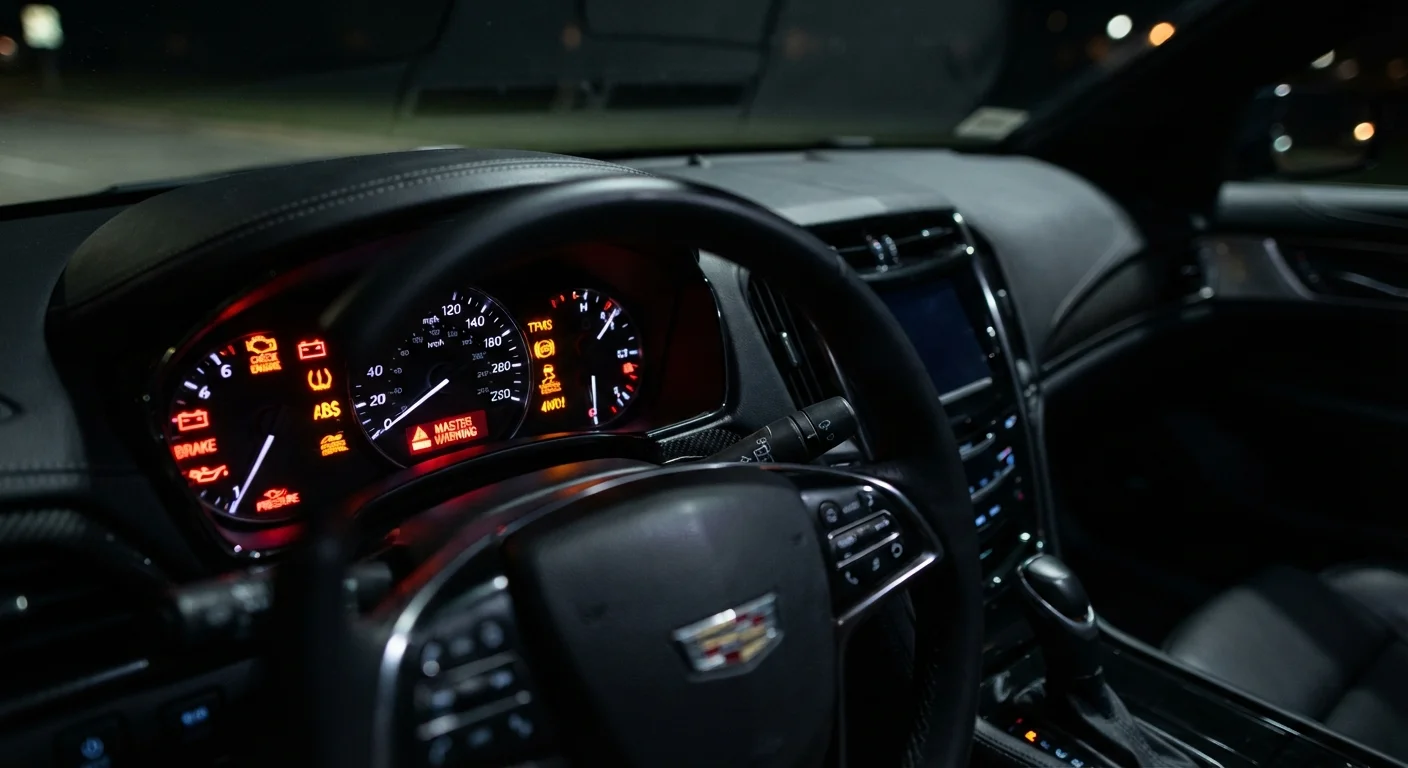
| Dashboard light colors | Red = stop now, Amber = service soon, Green/Blue = informational |
| OBD-II standard adopted | Required in all US cars from model year 1996 onward (U.S. Environmental Protection Agency) |
| Most common CEL trigger | Oxygen sensor failure (CarMD Vehicle Health Index, historical data) |
| TPMS required in US vehicles | All new passenger vehicles since model year 2008 (NHTSA TPMS rule, 49 CFR Part 571) |
| Flashing check engine light | Indicates active misfire - reduce speed and seek service promptly |
| OBD-II fault codes | Can be read with scanners available for under $30 or free at many auto parts retailers |
Why Warning Lights Exist (and Why Drivers Often Ignore Them)
Modern vehicles monitor dozens of systems simultaneously, from engine temperature to tire pressure to transmission fluid. When something falls outside acceptable parameters, the car communicates through dashboard warning lights. The problem: most drivers either panic unnecessarily or, more commonly, assume the light will go away on its own.
Neither response serves you well. Some lights signal genuine emergencies - driving another mile could mean serious engine damage or a safety failure. Others flag issues that are real but not immediately dangerous, giving you a reasonable window to schedule service. Knowing the difference is how you avoid both costly repairs and unnecessary shop visits.
| Dashboard light colors | Red = stop now, Amber = service soon, Green/Blue = informational |
| OBD-II standard adopted | Required in all US cars from model year 1996 onward (U.S. Environmental Protection Agency) |
| Most common CEL trigger | Oxygen sensor failure (CarMD Vehicle Health Index, historical data) |
| TPMS required in US vehicles | All new passenger vehicles since model year 2008 (NHTSA TPMS rule, 49 CFR Part 571) |
| Flashing check engine light | Indicates active misfire - reduce speed and seek service promptly |
| OBD-II fault codes | Can be read with scanners available for under $30 or free at many auto parts retailers |
The Warning Lights You Need to Know by Priority
Stop-Now Lights (Red)
Red lights signal conditions that can cause immediate mechanical damage or create a safety hazard. Pull over safely as soon as possible when you see these.
- Oil Pressure Warning: Low or no oil pressure means engine components aren't being lubricated. Continued driving can cause catastrophic engine damage within minutes. Stop and check the oil level; if it's normal, the pressure sensor or oil pump may be failing - either way, don't drive further without diagnosis.
- Engine Temperature (Coolant Temp): Your engine is overheating. Turn off the A/C, pull over, and shut the engine off. Opening the hood while the engine is hot can be dangerous - wait before checking coolant levels.
- Battery / Charging System: The alternator may have stopped charging. Your car is running on battery reserve only. Limit electrical use and get to a shop quickly - you may have 30 minutes or less before the car stalls.
- Brake Warning Light: Could indicate low brake fluid, a pressure imbalance, or that the parking brake is engaged. Confirm the parking brake is off first; if the light remains, test brakes cautiously and seek immediate service.
Address-Soon Lights (Yellow/Amber)
Amber lights typically mean a system needs attention but isn't immediately dangerous. You generally have days to a couple of weeks to schedule service - not months.
- Check Engine Light (CEL): One of the most misunderstood lights on the dash. It covers everything from a loose gas cap to a misfiring cylinder. A steady CEL usually allows short-term driving; a flashing CEL means active misfiring that can damage the catalytic converter - reduce speed and seek service promptly. An OBD-II scanner (available at many auto parts stores) can read the fault code and give you a starting point.
- Tire Pressure (TPMS): One or more tires is significantly under- or over-inflated. This affects braking distance, handling, and fuel economy. Check pressures manually - sensors can lag. See our guide to tire condition and safety for more detail.
- Transmission Temperature: Transmission fluid is overheating. Ease off load (avoid towing, reduce speed) and allow it to cool. Repeated overheating shortens transmission life significantly.
- ABS Warning: Anti-lock braking system has a fault. Standard braking still works, but ABS (which prevents wheel lock-up in hard stops) may not engage. Drive cautiously and avoid situations requiring panic braking until repaired.
OBD-II
On-Board Diagnostics II - a standardized system built into all US vehicles from 1996 onward that monitors emissions and engine performance. It stores fault codes that can be read with a compatible scanner.
TPMS
Tire Pressure Monitoring System - sensors in each wheel that alert the driver when tire pressure drops significantly below the recommended level.
Catalytic Converter
An exhaust system component that reduces harmful emissions. Engine misfires can overheat and permanently damage it, making repairs expensive.
Fault Code (DTC)
Diagnostic Trouble Code - an alphanumeric code stored by the vehicle's computer when a monitored system falls outside normal parameters. Mechanics use these codes as a starting point for diagnosis.
Alternator
A generator driven by the engine that recharges the battery and powers the car's electrical systems while the engine is running.
What to Do After a Light Comes On
Step one: don't assume. Consult your owner's manual - it contains the exact meaning of every light for your specific vehicle. Generic interpretations (including the ones above) cover common designs, but manufacturers vary.
Step two: assess severity using color and behavior. Red and flashing always warrant stopping or immediate service. Steady amber means schedule service, not someday. If a light appears and then disappears, it still logged a fault code - an OBD-II scan can retrieve it.
Step three: track patterns. If a light comes on only under specific conditions (cold starts, highway speeds, after rain), note that context and share it with your mechanic. It significantly speeds up diagnosis. Our routine maintenance intervals guide can also help you cross-reference whether a warning aligns with an overdue service.
For high-mileage vehicles, warning lights deserve extra attention - aging seals and sensors make false positives more common, but also make real failures more likely. Our article on keeping a high-mileage car running reliably covers which systems to prioritize. When in doubt about whether a repair is DIY-appropriate, see DIY car care vs. taking it to a mechanic.
A Note on Used Car Purchases
If you're evaluating a used vehicle, dashboard warning lights at startup that fail to go off after a few seconds - or lights that have been taped over or have burned-out bulbs - are red flags worth investigating. An independent pre-purchase inspection can surface hidden fault codes. Our used car verification checklist covers what to look for before signing anything.