

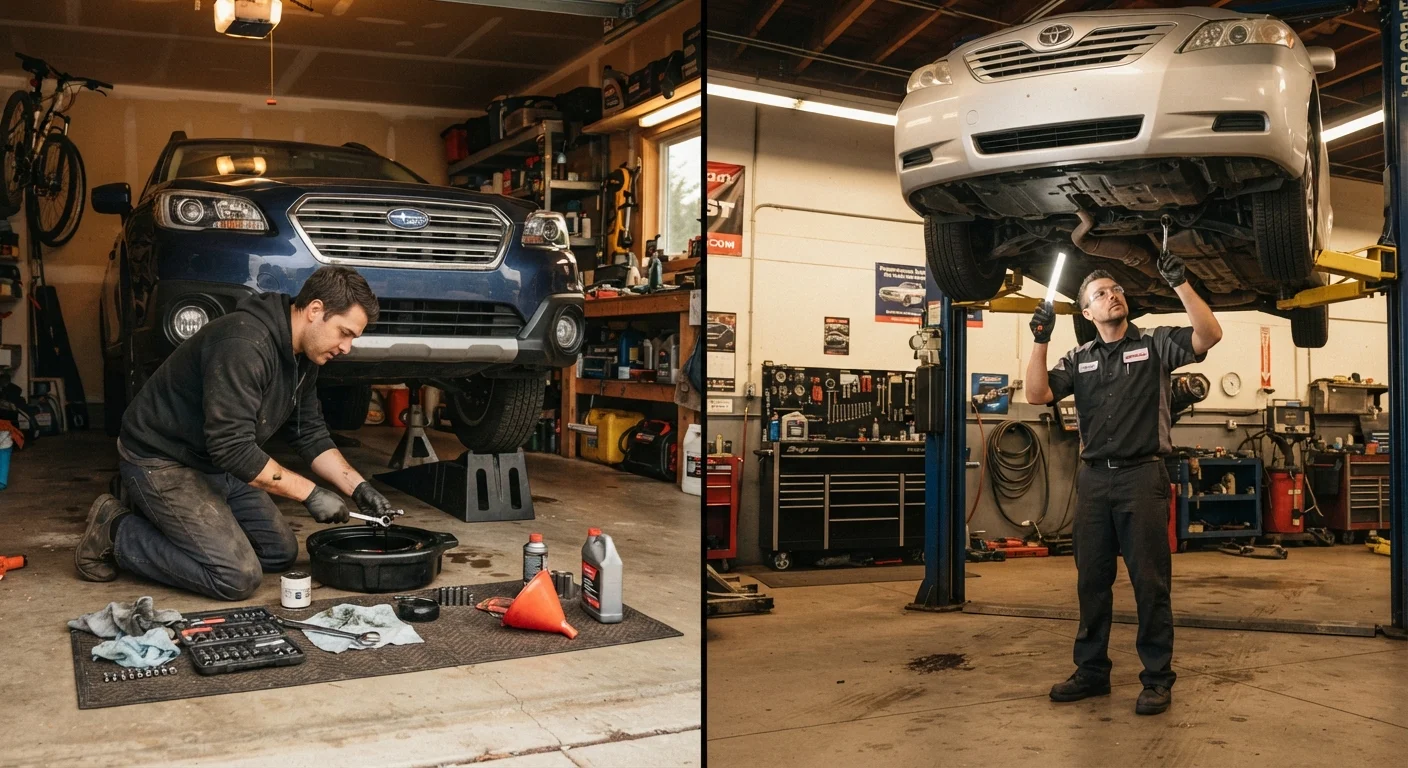
Key Takeaways
- Simple maintenance tasks like oil changes and air filter swaps are generally safe for informed DIYers.
- Brake systems, suspension work, and anything involving airbags or emissions controls should go to a qualified mechanic.
- Doing the wrong job yourself can void warranties and create safety risks that cost far more to fix.
- The decision hinges on three factors: your skill level, available tools, and the safety stakes involved.
- Keeping a maintenance log - whether you DIY or use a shop - protects vehicle value and helps diagnose future issues.
Our Verdict
DIY car care makes genuine sense for routine, low-stakes tasks that require basic tools and carry limited safety risk. However, anything involving braking, steering, structural components, or onboard electronics belongs in a professional shop. The smartest approach for most drivers is a hybrid: handle the easy stuff yourself and budget for professional service on anything where a mistake has serious consequences.
| Best for | Recommended |
|---|---|
| Budget-conscious drivers with basic mechanical aptitude | DIY for routine maintenance |
| Safety-critical repairs or complex diagnostics | Professional mechanic |
| Vehicles still under manufacturer warranty | Professional mechanic or authorized service center |
| Drivers who want cost savings without giving up reliability | Hybrid approach - DIY basics, shop for the rest |
Where the DIY Line Actually Is
Not every car task requires a lift, specialty tools, or years of training - but some absolutely do. The challenge most drivers face isn't motivation; it's knowing where the safe boundary sits. Getting that wrong in either direction costs money: either you overpay for jobs you could handle yourself, or you attempt a repair that leaves your vehicle less safe than before.
A useful starting framework involves three questions: Do you have the right tools? Do you understand the failure mode if something goes wrong? And does the task affect a safety-critical system? If the answer to any of those is uncertain, professional service is the default worth choosing.
For a full picture of which jobs come up most often and when they're due, see our guide to routine maintenance intervals.
Tasks That Are Reasonable to DIY
Several routine maintenance items are well within reach for a careful, informed driver with basic tools and a reliable repair manual or manufacturer's guide for their specific vehicle.
- Engine air filter replacement: Typically involves opening a housing, swapping the filter, and resealing it. No special tools required.
- Cabin air filter replacement: Usually accessible behind the glove box. Takes under 15 minutes in most vehicles.
- Wiper blade replacement: Straightforward clip-and-snap systems on most modern cars.
- Battery replacement: Manageable if you disconnect the negative terminal first and follow your vehicle's specific reset procedure for onboard electronics.
- Oil and oil filter changes: Feasible with the right drain pan, filter wrench, and disposal plan - but confirm the correct oil spec for your engine first.
- Tire pressure checks and top-offs: A basic skill every driver should have; tire condition directly affects braking and fuel economy.
Always Log Your DIY Work
Even on DIY jobs, document what you did and when. A simple notebook or phone note tracking dates, mileage, and parts used protects resale value and helps a mechanic diagnose future issues faster. Include the brand and spec of any fluids or filters you used - that detail matters when troubleshooting later.
Even on DIY jobs, document what you did and when. A simple notebook or phone note tracking dates, mileage, and parts used protects resale value and helps a mechanic diagnose future issues faster.
Jobs That Belong in a Shop
Some repairs require diagnostic equipment, calibrated torque specs, or technical training that goes beyond a YouTube tutorial and a socket set. Attempting these without the right background can create hazards that aren't immediately visible.
Don't Guess on Safety-Critical Systems
Brake, steering, and airbag systems have zero margin for installation error. If you're not certain a repair is within your skill level, the cost of professional service is almost always less than the cost of a mistake. When in doubt, get a diagnostic estimate before attempting any repair yourself.
- Brake system work: Pads, rotors, calipers, and brake lines involve precise measurements and hydraulic integrity. An error here has direct crash consequences.
- Suspension and steering components: Worn ball joints or tie rods can cause loss of vehicle control. These require proper alignment after any service.
- Transmission repairs: Highly complex, often requiring specialized software and equipment to recalibrate after service.
- Airbag system service: Accidental airbag deployment during DIY work causes serious injury. Always defer to a professional.
- Timing belt or chain replacement: An error in installation can cause catastrophic engine damage within minutes of startup.
- Emissions and onboard diagnostics (OBD) repairs: Modern vehicles use interconnected sensor networks; improperly cleared codes or misdiagnosed faults lead to compounding failures.
If you're managing an older, higher-mileage vehicle, the stakes on deferred repairs get higher. Our high-mileage car reliability guide covers which systems to prioritize as vehicles age.
The Hidden Costs of Getting It Wrong
DIY mistakes don't just fail to fix the original problem - they often create new ones. A cross-threaded drain plug can strip an oil pan, turning a low-cost oil change into a several-hundred-dollar repair. Improperly torqued lug nuts after a DIY tire rotation can lead to wheel separation at highway speed.
There's also a warranty dimension. Vehicles still under a manufacturer's powertrain or bumper-to-bumper warranty may have coverage conditions tied to documented professional service. Consult your warranty terms before DIYing anything beyond the most basic maintenance.
| DIY | Professional Mechanic | |
|---|---|---|
| Typical tasks | Filters, wipers, battery, oil changes | Brakes, suspension, transmission, timing belt |
| Upfront cost | Lower (parts only) | Higher (labor + parts) |
| Tools required | Basic hand tools | Specialized diagnostic and shop equipment |
| Safety risk if done wrong | Low to moderate on routine tasks | High on complex or safety-critical jobs |
| Warranty impact | Possible risk if warranty terms require documented service | Generally preserves warranty coverage |
| Skill level needed | Beginner to intermediate | Trained technician |
| Time investment | Varies; can be longer without experience | Usually faster with proper equipment |
And small problems that go unaddressed - whether the DIY attempt failed or the issue was noticed and ignored - tend to compound. That's the core finding behind why deferred maintenance leads to bigger bills.
This article is for general informational purposes only. Always consult a qualified, licensed mechanic before performing vehicle repairs, particularly those involving safety-critical systems. Repair procedures vary by vehicle make, model, and year.