

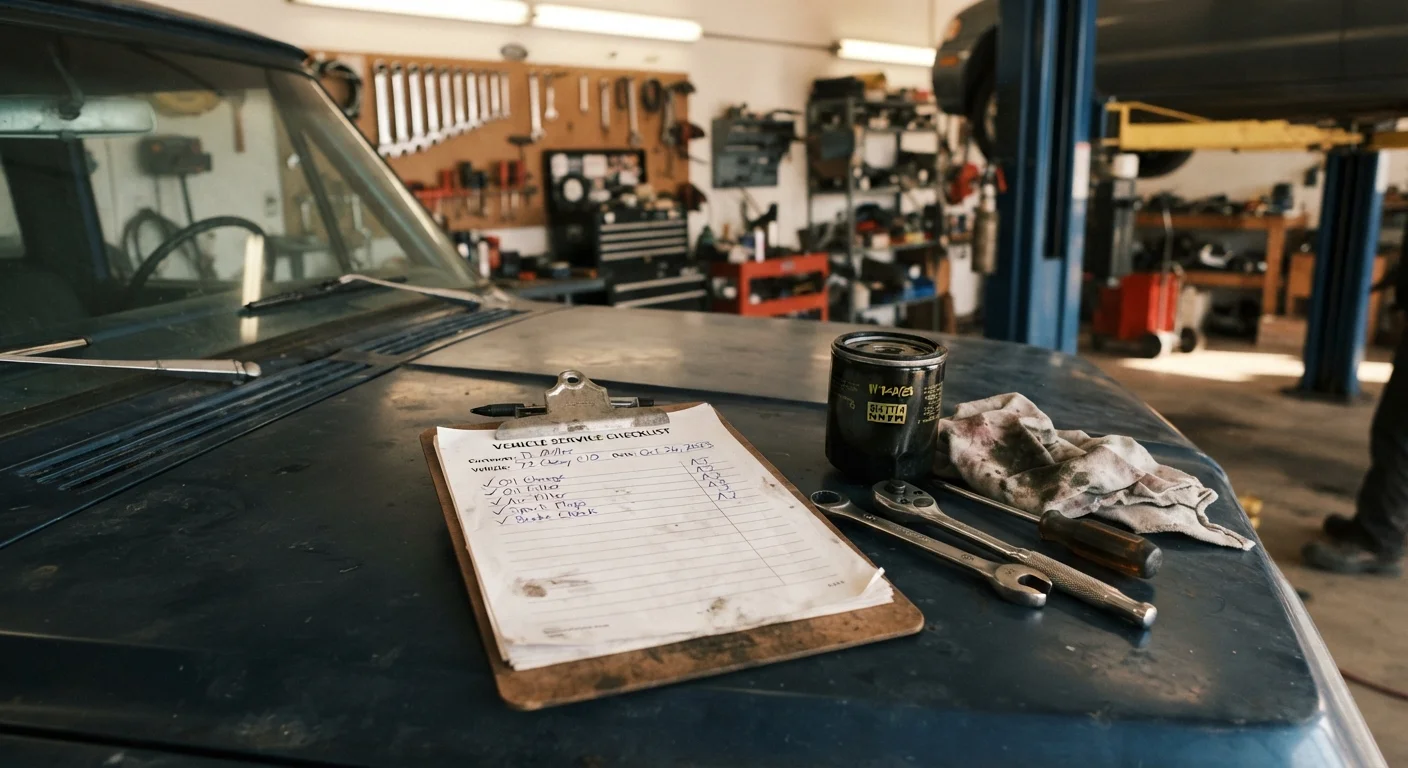
Why Maintenance Intervals Exist
Every vehicle rolls off the line with an owner's manual containing a maintenance schedule - a timetable built from engineering data, not guesswork. Intervals exist because mechanical components wear at predictable rates depending on heat, friction, mileage, and time. Following them keeps small problems from snowballing. As our editorial team explains in Why Skipping Small Repairs Leads to Big Bills, the cost curve on neglected vehicles rises sharply once wear crosses a threshold.
Two factors shape every interval: mileage and time. A car driven 5,000 miles per year still needs certain fluids and seals checked on a calendar basis - rubber degrades even when the odometer barely moves. Always apply whichever trigger comes first.
Core Service Intervals at a Glance
The intervals below represent general industry guidance. Always cross-reference your owner's manual, because manufacturer specifications can differ meaningfully by vehicle age, engine type, and driving conditions.
Oil and Filter
Conventional oil is typically changed every 3,000-5,000 miles; full synthetic oil extends that range to 7,500-10,000 miles or more for many modern engines. Follow the oil-life monitor on newer vehicles - it calculates change intervals using actual driving data rather than a fixed mileage counter.
Tire Rotation
Most manufacturers recommend rotating tires every 5,000-7,500 miles to even out wear patterns. Uneven wear shortens tire life and can mask alignment problems. For a deeper look, see How Tire Condition Affects Safety, Fuel Economy, and Repair Costs.
Brake Inspection
Brake pads generally last 25,000-65,000 miles depending on driving style and pad material. A visual inspection is worthwhile at every tire rotation. Rotors and fluid should be evaluated by a qualified mechanic at least annually, especially for city drivers who brake frequently.
Air Filter
Engine air filters are typically replaced every 15,000-30,000 miles, though dusty environments shorten that interval. A clogged filter reduces engine efficiency and can affect fuel economy.
Coolant Flush
Most vehicles call for a coolant flush every 30,000-50,000 miles or every 2-5 years. Old coolant loses its corrosion-inhibiting properties and can damage the radiator and water pump.
Transmission Fluid
Automatic transmission fluid is often overlooked. Many manufacturers recommend a change every 30,000-60,000 miles, though some sealed transmissions are rated for longer intervals. Check your manual - transmission repairs rank among the most expensive on any vehicle.
Oil-life monitor
An onboard system that calculates remaining oil life based on driving conditions, temperature, and engine cycles - rather than a fixed mileage counter. It is more accurate than a generic 3,000-mile rule for many modern vehicles.
Severe driving conditions
A category defined in most owner's manuals covering short trips, stop-and-go traffic, towing, extreme temperatures, and dusty environments. Vehicles driven under these conditions require more frequent service intervals.
Coolant flush
A service that drains old engine coolant, flushes the cooling system, and refills it with fresh fluid. Over time, coolant loses its corrosion inhibitors, which can damage the radiator, water pump, and heater core.
Brake rotor
The metal disc that brake pads clamp against to slow the vehicle. Rotors wear and can warp over time; a mechanic should inspect their thickness and surface condition during regular brake checks.
Transmission fluid
A specialized oil that lubricates and cools the transmission's internal components. Degraded fluid is a leading contributor to costly transmission failures.
Severe vs. Normal Driving Conditions
Owner's manuals often define two maintenance schedules: normal and severe. Severe isn't reserved for off-roaders - it applies to short trips under 5 miles, frequent stop-and-go traffic, towing, dusty or extreme-temperature environments, and extended idling. If any of these describe your commute, use the severe schedule. Ignoring this distinction is a common mistake that accelerates wear on oil, brakes, and transmission components.
Short Trips Age Oil Faster Than Miles Suggest
Engines that rarely reach full operating temperature - common with short daily commutes - don't fully burn off moisture and combustion byproducts that accumulate in the oil. This means a driver logging 8,000 miles mostly in 3-mile trips may need oil changes more frequently than one driving 8,000 highway miles. Time-based intervals matter in these cases, not just mileage.
For vehicles that have already accumulated significant mileage, the maintenance calculus shifts. See Keeping a High-Mileage Car Running Reliably for interval adjustments and warning signs specific to older vehicles.
Building Your Personal Maintenance Log
A simple maintenance log - whether a notebook in the glove box or a free smartphone app - pays dividends in two ways. First, it removes guesswork: you know exactly when each service was last performed. Second, it adds resale value. A documented service history signals to future buyers that the vehicle was cared for.
Record the date, odometer reading, service performed, and who did the work. If you're weighing which tasks to handle yourself versus delegating to a shop, DIY Car Care vs. Taking It to a Mechanic can help you draw that line confidently.
$0.09/mile
Estimated average maintenance cost per mile
AAA's annual driving cost studies consistently find that routine maintenance accounts for a small fraction of total vehicle operating costs when kept current.
Up to 33%
Fuel economy loss from neglected maintenance
The U.S. Department of Energy has noted that poorly maintained vehicles - including clogged filters and underinflated tires - can reduce fuel efficiency by meaningful margins.
Routine maintenance is ultimately a budget tool. Spending modestly and consistently on scheduled services is far less disruptive than absorbing a large, unplanned repair bill - a principle that applies well beyond car ownership, as explored in Everyday Money Tips.