

Key Takeaways
- Smart TV built-in platforms are convenient but often receive software updates less frequently than dedicated streaming devices.
- Streaming sticks and boxes typically run on faster, more dedicated processors, resulting in snappier navigation.
- Dedicated streaming devices let you bring your preferred platform to any TV, regardless of brand.
- Smart TV platforms can become outdated as the hardware ages, while a streaming device is independently replaceable.
- Neither option is universally superior — the right choice depends on your TV's age, your app needs, and how often you upgrade hardware.
Our Verdict
Smart TV built-in platforms are a reasonable starting point for newer televisions with capable processors and consistent update support. However, dedicated streaming devices generally offer better long-term performance, faster interfaces, and more predictable software updates — making them a practical upgrade for older sets or households with diverse streaming needs.
| Best for | Recommended |
|---|---|
| Those who want simplicity with a newer, well-supported smart TV | Smart TV built-in platform |
| Those with older TVs or those who want faster, more consistent performance | Dedicated streaming device |
| Households who frequently switch between multiple streaming services | Dedicated streaming device |
| Budget-conscious viewers who already own a recent smart TV | Smart TV built-in platform |
What Each Option Actually Is
A smart TV built-in platform is the operating system that comes pre-installed on your television. Manufacturers license or build their own software — such as Roku TV, Google TV, webOS, or Tizen — and it runs on the hardware embedded inside the set itself. You access streaming apps directly from the TV's home screen without plugging in any extra hardware.
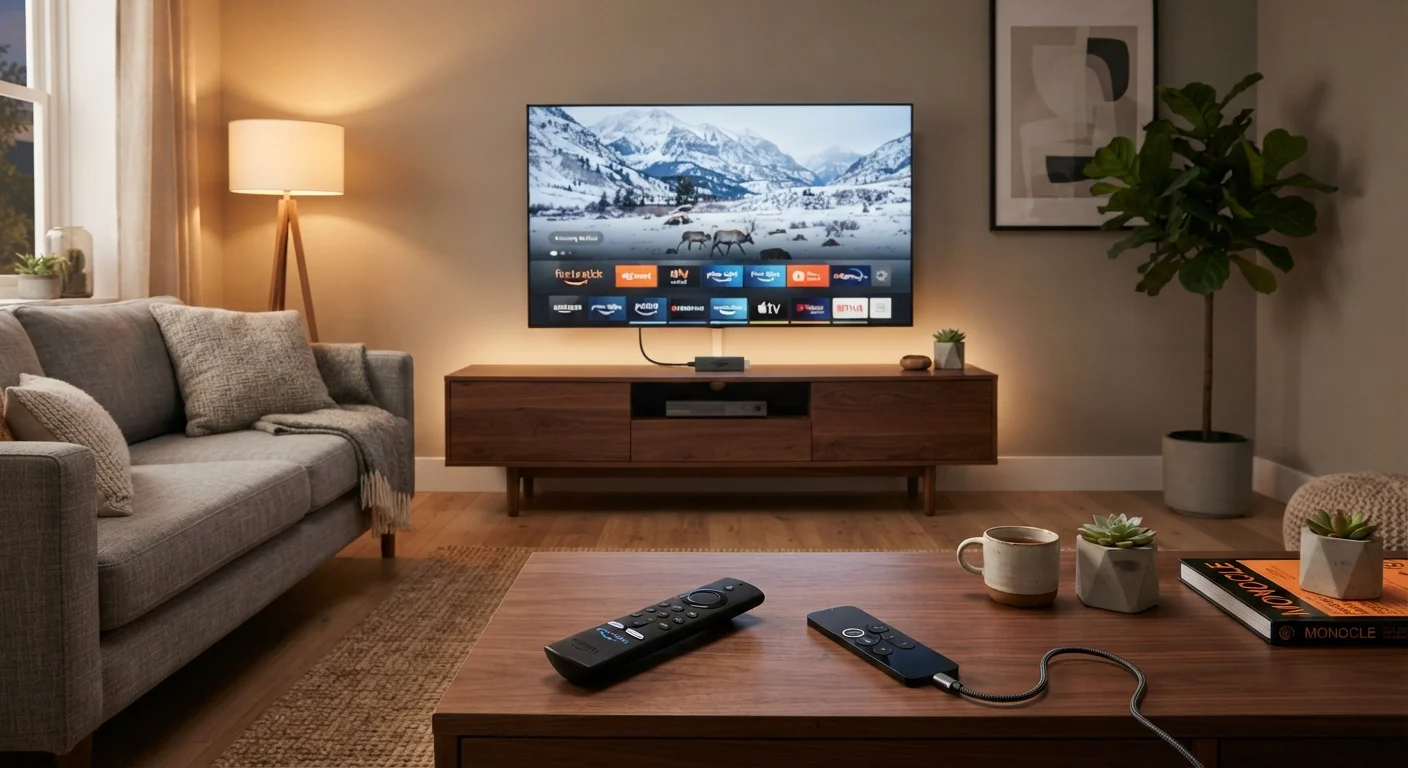
A dedicated streaming device (often called a streaming stick, dongle, or box) is a separate piece of hardware that plugs into your TV's HDMI port. It runs its own operating system independently of the TV and handles all processing tasks on its own chip. Examples of the category include small thumb-drive-style sticks and compact set-top boxes.
Both approaches ultimately serve the same goal — getting you to streaming content — but the underlying architecture creates meaningful differences in everyday use. For a deeper look at how platform ecosystems affect software experience more broadly, see how Android and iOS differ in everyday use.
Performance and Interface Speed
The most immediately noticeable difference is responsiveness. Smart TVs allocate their internal processing power across multiple tasks — managing the display panel, processing picture settings, and running the smart platform simultaneously. Entry- and mid-range televisions often pair capable display hardware with modest processors to keep costs down, which can result in sluggish menu navigation and slow app launches.
Dedicated streaming devices concentrate their hardware entirely on the software experience. Because the display processing happens in the TV itself, the streaming device's chip handles only the interface, app execution, and network tasks. This focused design often delivers noticeably faster navigation, quicker search results, and smoother app switching — even when the connected TV is a budget model.
| Smart TV Built-In Platform | Dedicated Streaming Device | |
|---|---|---|
| Setup complexity | None — works out of the box | Minor — HDMI plug-in required |
| Interface speed | Varies with TV hardware quality | Consistently fast, focused hardware |
| Software update frequency | Varies by manufacturer, often slower | Typically frequent, platform-focused |
| Long-term support | Tied to TV's hardware lifespan | Replaceable independently of TV |
| App availability | May lag on newer services | Usually among first to receive new apps |
| Portability | Fixed to the TV | Moves between any HDMI display |
| Additional cost | Included with TV purchase | Separate purchase required |
Performance gaps tend to widen over time. As streaming apps grow more complex, older smart TV hardware can struggle to keep up, while a streaming device can be swapped out independently without replacing the television.
Software Updates and Long-Term Support
Software longevity is where the two approaches diverge most sharply. Television manufacturers face a different commercial incentive than streaming device makers: once a TV is sold, the primary revenue relationship is largely complete. This can translate into shorter update windows and less frequent platform improvements compared to standalone streaming hardware companies, whose entire product value depends on keeping the software current.
Dedicated streaming device platforms typically push updates more regularly and maintain support for a wider range of apps over time. Because the device is inexpensive and independently replaceable, the update lifecycle is also easier to manage — when support ends, upgrading does not require purchasing a new television.
Check Before You Assume Support Continues
Before relying on a smart TV's built-in platform long-term, look up the manufacturer's stated support window for that model. Some platforms receive major OS updates for only two to three years post-launch. Knowing the timeline helps you decide whether adding a streaming device now — or planning to later — makes sense for your setup.
It's worth checking a TV manufacturer's published update policy before assuming a built-in platform will remain fully functional for the life of the set. Some manufacturers have improved their track records here, but policies vary significantly by brand and product tier.
App Availability and Ecosystem Flexibility
Both platforms generally cover the major streaming services, but gaps do exist — and they tend to appear on smart TV platforms first. When a new streaming service launches, dedicated device platforms often receive the app before smart TV app stores do, simply because streaming device makers maintain closer developer relationships and publish more frequently.
Streaming devices also offer portability: you can move your configured device between TVs, take it to a hotel, or connect it to any display with an HDMI input. Your login state, preferences, and app library travel with the device. A smart TV's built-in platform is fixed to that screen.
If you're evaluating a television purchase and weighing built-in features alongside picture quality specs, our plain-English TV spec reference can help clarify the display-side tradeoffs separately from the platform question.
Setup Complexity and Practical Considerations
Smart TV platforms win on setup simplicity — there's nothing to plug in, no extra remote to manage, and no additional device drawing power. For viewers who want a clean, minimal setup and own a relatively recent television with a capable processor, the built-in option is genuinely practical.
Dedicated streaming devices add a small layer of setup: connecting to HDMI, supplying power via USB, and pairing a remote. Some require a separate power adapter depending on the model. In return, you gain a more consistently updated, typically faster experience that's independent of TV hardware decisions.
When weighing the cost of adding a streaming device against other tech purchases, the same disciplined comparison logic applies as with any electronics decision. Comparing prices on bigger-ticket electronics follows slightly different rules than everyday goods — understanding those nuances helps ensure you're evaluating true value, not just sticker price.