

Key Takeaways
- A three-step routine — cleanse, moisturize, SPF — covers the essentials for most beginners.
- Knowing your basic skin type helps you choose products that work with your skin, not against it.
- Consistency matters far more than the number of products you use.
- Introduce new products one at a time so you can identify what's helping or causing a reaction.
- Sunscreen is the single most impactful step for long-term skin health.
Start here
Why Skincare Feels So Complicated
Foundation
The Core Three: Cleanse, Moisturize, Protect
Know yourself
Understanding Your Skin Type
Put it together
Building Your AM and PM Routines
Level up
When to Add More Steps
Why Skincare Feels So Complicated
Walk down any beauty aisle — or open any social media app — and you'll be greeted by a wall of serums, essences, acids, and mists, each promising transformation. It's a lot, and feeling overwhelmed is completely reasonable. The truth is, most of that noise is marketing. A solid skincare routine can be stripped down to three steps, and the science largely backs that up.
The confusion also comes from how individualized skin can be. What works beautifully for one person may not do much for another, which is why generic ten-step routines feel hit-or-miss. This guide cuts through the clutter and focuses on what actually moves the needle for beginners — no intimidating ingredient lists, no pressure to spend big.
Moisture barrier
The outermost layer of skin that acts as a protective seal, keeping hydration in and environmental irritants out. Keeping it intact is central to healthy-looking skin.
Broad-spectrum SPF
A sunscreen rating indicating protection against both UVA rays (linked to aging) and UVB rays (linked to burning). Both types contribute to skin damage.
Hyaluronic acid
A humectant — a substance that draws moisture from the environment into the skin. It's a common, well-tolerated ingredient found in many moisturizers and serums.
Double cleanse
A two-step cleansing method where an oil-based cleanser removes sunscreen and makeup first, followed by a water-based cleanser to clean the skin itself.
T-zone
The forehead, nose, and chin region of the face, which tends to produce more oil than the cheeks in many people.
Niacinamide
A form of vitamin B3 used in skincare for its ability to help with oiliness, enlarged pores, and uneven skin tone. It's generally well tolerated by most skin types.
The Core Three: Cleanse, Moisturize, Protect
If you do nothing else, do these three things consistently:
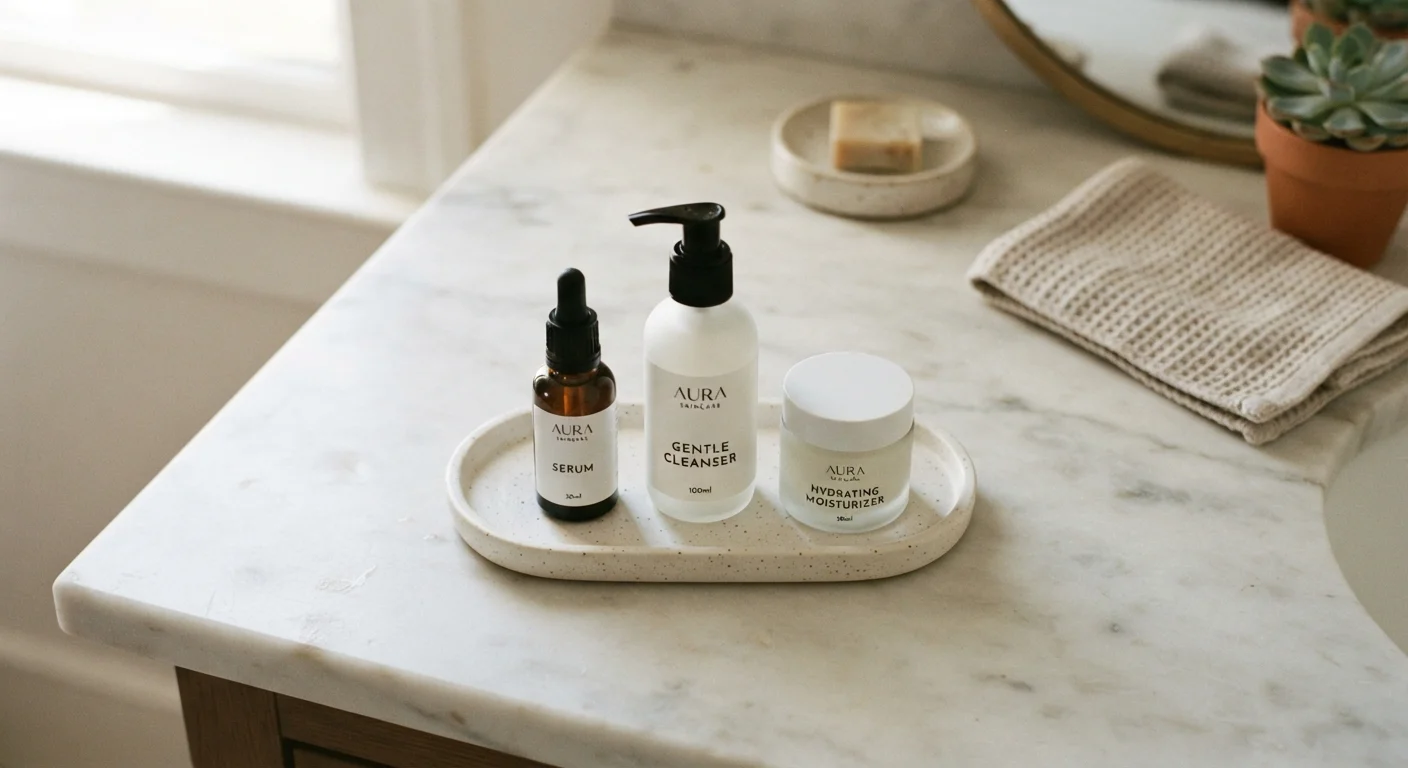
- Cleanser: Removes dirt, oil, makeup, and pollution that accumulate on skin throughout the day. Choose a gentle, non-stripping formula — if your face feels tight or squeaky-clean after washing, the cleanser is likely too harsh.
- Moisturizer: Replenishes the skin's moisture barrier, which keeps hydration in and irritants out. Even oily skin benefits from a lightweight moisturizer. A compromised barrier is behind many common skin complaints, including sensitivity and excess oil production.
- Sunscreen (AM only): Broad-spectrum SPF is arguably the single most impactful thing you can do for long-term skin health. UV exposure contributes to premature aging, uneven tone, and more serious concerns. SPF 30 or higher, applied every morning — rain or shine — is the standard recommendation from dermatology organizations.
That's it. Start here, stay consistent for a few weeks, and you'll have a real foundation before adding anything else.
Start With What You'll Actually Use
The most effective skincare routine is the one you do every day. If a three-step routine feels manageable, lock that in before chasing a more elaborate one. Consistency over weeks and months produces far better results than occasional use of a ten-product lineup.
Understanding Your Skin Type
Choosing products that suit your skin type helps you avoid common frustrations like breakouts or persistent dryness. The main types are:
- Oily: Skin appears shiny, especially in the T-zone (forehead, nose, chin). Pores may look enlarged. Lightweight, gel-based, or oil-free formulas tend to work well.
- Dry: Skin feels tight, rough, or flaky. Richer creams and hydrating ingredients like hyaluronic acid or glycerin are generally helpful.
- Combination: Oily in some areas, normal or dry in others. This is actually one of the most common types. A balanced, moderate moisturizer is usually a good starting point.
- Sensitive: Skin reacts easily — redness, stinging, or itching in response to new products or environmental changes. Fragrance-free, minimal-ingredient formulas reduce the risk of flare-ups.
- Normal: Relatively balanced — neither overly oily nor dry, minimal sensitivity. Most basic formulas work fine.
Your skin type can also shift with seasons, hormonal changes, and age, so it's worth checking in with how your skin is behaving rather than locking into a label.
Don't Self-Diagnose Skin Conditions
While understanding your general skin type is helpful for choosing everyday products, persistent issues like severe acne, eczema, rosacea, or unusual changes in skin appearance are worth discussing with a dermatologist. General skincare advice is not a substitute for professional evaluation of a skin condition.
Building Your AM and PM Routines
Once you have your three core products, structure matters. Here's how a simple beginner routine looks in practice:
Morning
- Gentle cleanser (or just water if skin is not oily)
- Moisturizer
- Sunscreen
Evening
- Cleanser (double-cleanse with an oil-based first step if you wear SPF or makeup)
- Moisturizer
That's a complete, functional routine. Product order matters more as you add steps — lighter textures before heavier ones is the guiding principle. For a full breakdown of why sequence affects results, see our article on layering skincare products in the right order.
If budget is a consideration — and for most of us, it is — a simple routine doesn't have to be an expensive one. Our guide to building a beauty routine on a tight budget shows how accessible ingredients can deliver real results.
When to Add More Steps
Once your core routine feels comfortable and consistent — usually after four to six weeks — you may want to address a specific concern. Common additions include:
- Exfoliation: Helps with texture, dullness, or clogged pores. Chemical exfoliants (like AHAs or BHAs) and physical scrubs work differently, and choosing the right approach for your skin type matters. Our explainer on chemical exfoliants vs. physical scrubs covers the tradeoffs clearly.
- Serums: Concentrated formulas targeting specific concerns like hydration (hyaluronic acid), brightness (vitamin C), or acne (niacinamide). Introduce only one at a time.
- Eye cream: Optional. The skin around the eyes is thinner, so some people find a dedicated product gentler than their regular moisturizer — but it isn't required.
The golden rule when adding anything new: one product at a time, one week apart. This makes it easy to pinpoint what's helping or what might be causing irritation. More products is not automatically better — a routine you actually stick to, with a handful of products that work, will always outperform an elaborate shelf you abandon after two weeks.
If you're building out a broader beauty approach alongside your skincare, our guide to minimalist makeup for everyday wear pairs well with a simple skincare foundation.
This article is for general informational and educational purposes only. It is not medical or dermatological advice. If you have a skin condition, persistent irritation, or specific health concerns, consult a qualified healthcare professional.