

Key Takeaways
- Comprehensive covers non-collision events like theft, weather, fire, and animal strikes.
- Collision covers damage to your vehicle from hitting another car, object, or rolling over.
- Both coverages are subject to a deductible you choose when setting up the policy.
- Lenders typically require both coverages on financed or leased vehicles.
- Neither comprehensive nor collision covers injuries or damage to another person's vehicle.
Option A
Comprehensive Coverage
Protection for events outside your control.
Best for: Drivers worried about theft, weather damage, animal strikes, and other non-collision hazards.
Option B
Collision Coverage
Protection for damage caused by impact.
Best for: Drivers who want their own insurer to pay for repairs after an accident, regardless of fault.
If you finance or lease your vehicle
Both Comprehensive and Collision
Most lenders require both coverages to protect their financial interest in the vehicle until it's paid off.
If you own an older, low-value vehicle outright
Neither may be cost-effective
When annual premiums approach the car's market value, the financial case for either coverage weakens significantly.
If you live in an area prone to hail, flooding, or high vehicle theft
Comprehensive Coverage
Comprehensive is the only standard coverage that protects against weather events, natural disasters, and theft.
If you frequently drive in heavy traffic or have a long daily commute
Collision Coverage
More time on the road raises accident exposure; collision coverage ensures your insurer helps with repairs regardless of fault.
What Comprehensive Coverage Actually Covers
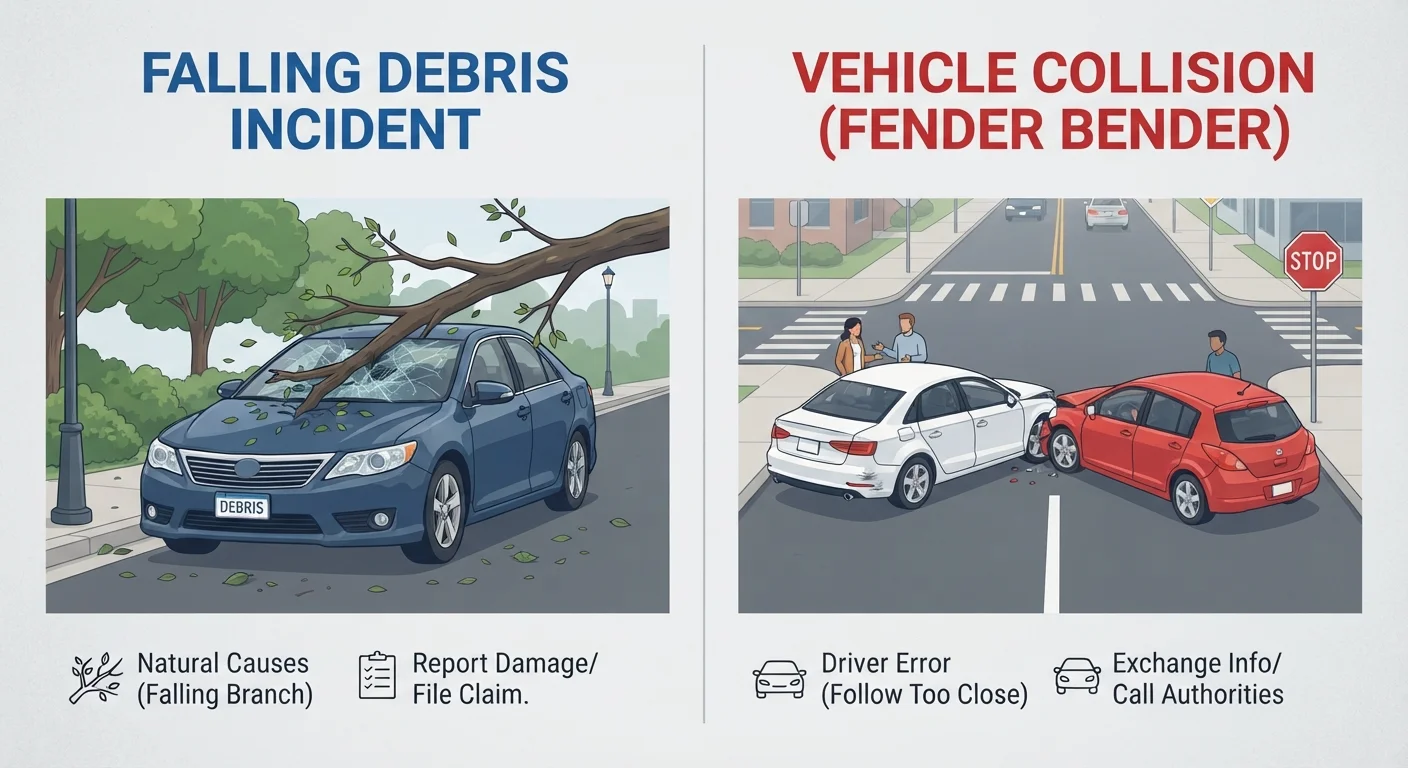
Comprehensive coverage - sometimes called "other than collision" coverage - pays to repair or replace your vehicle when it's damaged by events that don't involve a crash with another car or object. Think of it as protection against the unpredictable.
Common events covered under a comprehensive policy include:
- Theft or attempted theft
- Vandalism
- Fire
- Hail, flooding, or other weather-related damage
- Falling objects (tree branches, debris)
- Animal strikes (hitting a deer, for example)
- Earthquakes or civil disturbances
If a storm drops a tree on your parked car tonight, comprehensive is what responds - not collision. Similarly, if your vehicle is stolen, comprehensive is the coverage that would pay out, up to your vehicle's actual cash value (ACV), which accounts for depreciation. To understand exactly how that payout is calculated, see how ACV differs from replacement cost.
Comprehensive applies a deductible - an amount you pay out of pocket before the insurer covers the rest. You typically select this amount when you buy the policy.
Comprehensive Doesn't Mean "Everything"
Despite its name, comprehensive coverage has its own exclusions and limits. It is not a catch-all policy - it covers a defined list of non-collision events. Always check the specific language in your policy declarations page and endorsements to know exactly what's included and what isn't.
What Collision Coverage Actually Covers
Collision coverage pays to repair or replace your vehicle when it's damaged by physical impact - regardless of who caused the accident.
Situations where collision applies include:
- Hitting another vehicle
- Striking a stationary object (guardrail, pole, parked car)
- Your vehicle rolling over
- A single-car accident caused by road conditions
The critical phrase is regardless of fault. If you rear-end another driver, your collision coverage pays for your car's repairs. If someone runs a red light and hits you, collision still steps in for your vehicle - though in that case, the at-fault driver's liability insurance should also be a potential source of recovery.
Like comprehensive, collision carries a deductible. Choosing a higher deductible generally lowers your premium; choosing a lower deductible means more out-of-pocket if you file a claim.
It's worth knowing what collision does not cover: damage to another person's vehicle (that's what liability coverage is for), and injuries to you or others. For a fuller picture of coverage categories, see how all standard auto coverage types fit together.
| Criterion | Comprehensive | Collision |
|---|---|---|
| What triggers it | Non-collision events (theft, weather, fire, animals) | Impact with another vehicle or object |
| Fault requirement | Not applicable - no collision involved | Pays regardless of fault |
| Deductible applies | Yes | Yes |
| Covers theft | Yes | No |
| Covers weather damage | Yes | No |
| Covers your car in a crash | No | Yes |
| Required by lenders | Typically yes | Typically yes |
| Covers injuries | No | No |
When Each Coverage Applies - and When Neither Does
The easiest way to tell these two apart: ask what caused the damage. If it's a crash or impact, look to collision. If it's almost anything else - weather, theft, fire, an animal - look to comprehensive.
There are gaps both coverages share. Neither pays for:
- Mechanical breakdowns or normal wear and tear
- Personal belongings stolen from the vehicle (that may fall under renters or homeowners insurance)
- Medical bills for you or your passengers
- Injuries or property damage you cause to others
Understanding where these coverages stop is just as important as knowing where they start. Coverage gaps that catch policyholders off guard is worth reviewing before you assume a claim will be paid.
If you owe more on your car loan than the vehicle is currently worth, also look into gap insurance. When a car is totaled, both comprehensive and collision pay only the ACV - not the loan balance. Gap insurance covers that difference.
~78%
Insured drivers carrying comprehensive coverage
According to the Insurance Information Institute, roughly 78% of insured U.S. drivers carry comprehensive coverage as part of their auto policy.
~72%
Insured drivers carrying collision coverage
The Insurance Information Institute reports that approximately 72% of insured U.S. drivers include collision coverage in their auto policies.
How to Decide What Makes Sense for Your Situation
This article provides general information only and is not personalized insurance or financial advice. Coverage decisions depend on your specific circumstances, your insurer's policy terms, and applicable state regulations. Always read your policy documents carefully and consult a licensed insurance agent with questions about your situation.
A few practical factors worth thinking through:
- Your vehicle's value
- If your car's market value is low, the maximum payout under either coverage may not justify the ongoing premium cost plus the deductible. Research your vehicle's approximate ACV before deciding.
- Whether you have a loan or lease
- Lenders and lessors almost always require both comprehensive and collision. You generally don't have a choice in this case until the vehicle is paid off.
- Where you park and drive
- High-theft areas or regions with severe weather increase the value of comprehensive. Long daily commutes or dense urban driving raise accident exposure and strengthen the case for collision.
- Your deductible tolerance
- Your deductible is the amount you pay before insurance covers the rest. Higher deductibles mean lower premiums but more out of pocket at claim time.
For broader context on how coverage terms shape what you're actually protected against, understanding named perils vs. open perils adds useful perspective. And if an accident does happen, smart claims tips can help you navigate the process effectively.
This article is for general informational and educational purposes only and does not constitute personalized insurance, financial, or legal advice. Coverage terms, exclusions, and availability vary by insurer and state. Read your actual policy documents and speak with a licensed insurance professional before making coverage decisions.