
Protein Powders, Collagen Peptides, and Amino Acids: Understanding the Differences

Key Takeaways
- Protein powders provide complete or near-complete protein for general muscle support and satiety.
- Collagen peptides are a specialized, incomplete protein targeting connective tissue like skin, joints, and tendons.
- Amino acid supplements offer isolated building blocks, often used by athletes for targeted recovery goals.
- None of these supplements are required if dietary protein needs are already met through whole foods.
- Consult a healthcare provider before adding any supplement to your routine, especially if you have a medical condition.
Our Verdict
Protein powders, collagen peptides, and amino acids occupy different niches despite sharing a protein-based origin. Most people seeking general protein support will find conventional protein powder most versatile, while those focused on joint or skin health may explore collagen peptides. Amino acid supplements are typically the most targeted option, suited to specific athletic or recovery contexts rather than everyday use.
| Best for | Recommended |
|---|---|
| General protein intake and muscle support | Protein Powders |
| Skin, joint, and connective tissue health | Collagen Peptides |
| Targeted athletic recovery and performance | Amino Acid Supplements |
| Those already meeting protein needs through diet | Whole Food Protein Sources |
What Each Category Actually Is
All three supplement types are derived from protein, but they differ in structure, source, and intended function. Understanding these distinctions helps you evaluate whether a product fits a genuine need - or simply fills a marketing niche.
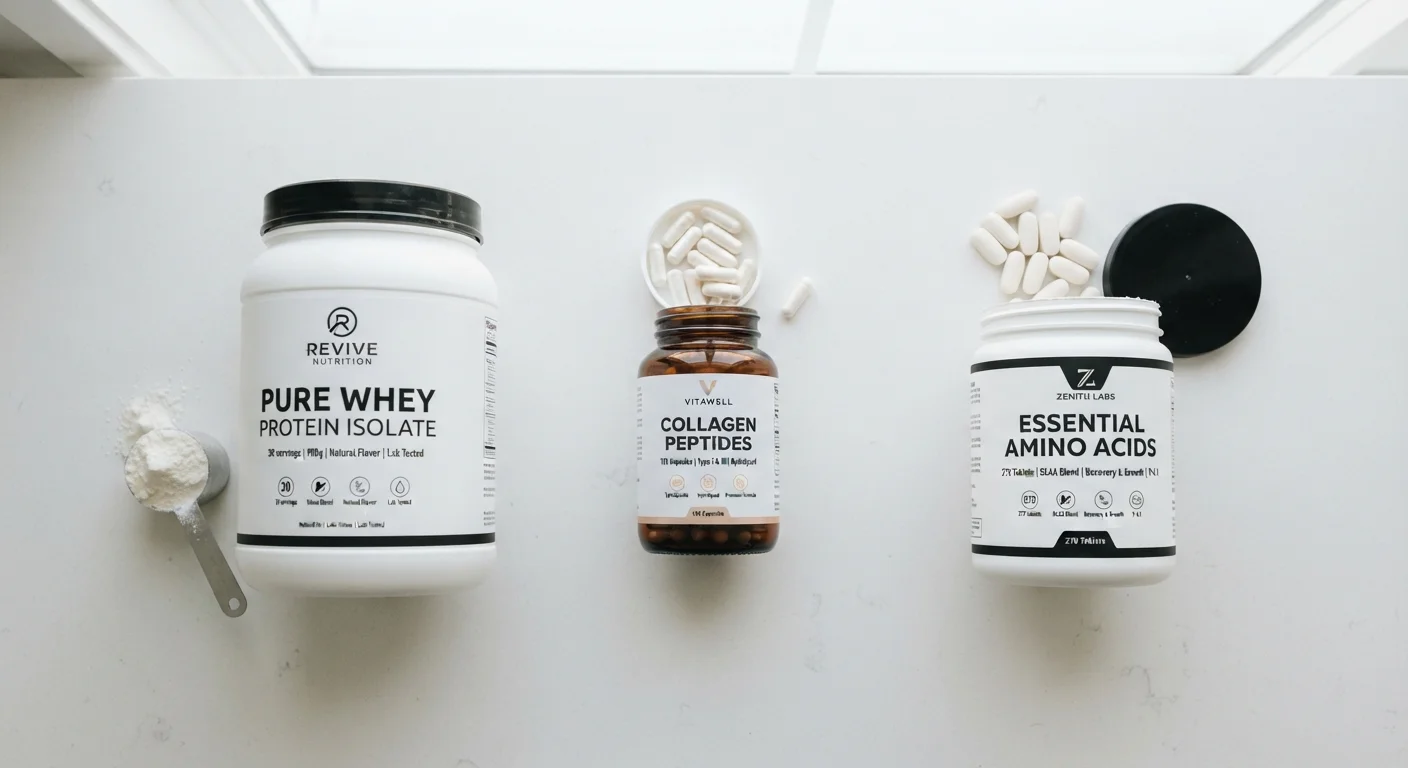
Protein powders are concentrated protein sources derived from whole foods - commonly whey (from dairy), casein, soy, pea, or egg white. They are processed to isolate protein from fat and carbohydrates, leaving a high-protein powder that mixes into liquids. Most protein powders are complete proteins, meaning they contain all nine essential amino acids the body cannot produce on its own.
Collagen peptides are derived primarily from animal connective tissue - bovine hide, fish skin, or chicken cartilage. During processing, collagen protein is broken down (hydrolyzed) into shorter chains called peptides, making them more readily absorbed. Collagen is an incomplete protein: it lacks the essential amino acid tryptophan, so it cannot substitute for a complete protein source. Its unique amino acid profile - rich in glycine, proline, and hydroxyproline - is specifically relevant to connective tissue, skin, and joint health.
Amino acid supplements take the breakdown one step further. Rather than intact protein or peptide chains, these products deliver individual amino acids or small groups - such as branched-chain amino acids (BCAAs: leucine, isoleucine, and valine) or essential amino acid (EAA) blends. They are typically used in athletic contexts where rapid delivery of specific amino acids is the goal. For a broader look at supplement categories, see our guide to dietary supplement types.
How Their Uses and Evidence Compare
The research behind each category varies considerably in strength and scope.
Protein powders have the most robust evidence base. Adequate dietary protein - from any source, food or supplement - supports muscle protein synthesis, satiety, and tissue repair. Research consistently shows that protein intake meeting individual needs supports lean mass maintenance alongside resistance training. The USDA Dietary Guidelines note that most Americans already meet protein needs through food, making supplementation unnecessary for the general population.
Collagen peptides have an emerging but more limited evidence base. Some studies suggest that supplementing with hydrolyzed collagen may support skin elasticity and reduce joint discomfort in certain populations, though effect sizes are modest and research is ongoing. It is important to note that consuming collagen does not directly translate into new collagen in the body - digested collagen is broken down into amino acids and peptides before being absorbed, and the body then uses those building blocks as it sees fit. For context on how protein source quality varies more broadly, see protein sources across different eating styles.
Amino acid supplements, particularly BCAAs, are widely marketed for muscle recovery. Evidence suggests leucine in particular plays a role in triggering muscle protein synthesis. However, if total protein and calorie intake are already adequate, isolated BCAA supplements offer limited additional benefit over whole protein sources, according to current sports nutrition research.
| Protein Powders | Collagen Peptides | Amino Acid Supplements | |
|---|---|---|---|
| Protein completeness | Complete protein (all 9 essential AAs) | Incomplete (lacks tryptophan) | Varies by formulation |
| Primary source | Whey, casein, soy, pea, egg | Bovine, fish, or chicken tissue | Synthetic or fermented |
| Main use case | General protein intake, muscle support | Skin, joint, connective tissue health | Targeted athletic recovery |
| Evidence strength | Strong (protein adequacy research) | Emerging, modest effect sizes | Moderate for specific contexts |
| Suitable for vegetarians/vegans | Depends on source (pea, soy: yes) | Generally no (animal-derived) | Often yes |
| Typical form | Powder (shakes, smoothies) | Powder or capsule | Powder, capsule, or drink |
Practical Considerations Before Choosing
Before reaching for any of these supplements, a few practical realities are worth weighing.
Food First Is Usually the Better Starting Point
Whole food protein sources - eggs, legumes, dairy, meat, fish - deliver amino acids alongside other nutrients like iron, zinc, and B vitamins that isolated supplements do not provide. If you're curious whether your diet already meets your protein needs, a registered dietitian can offer a straightforward assessment without requiring any supplements at all.
Dietary protein gaps: Most healthy adults get sufficient protein from food. Supplements become more relevant when caloric intake is restricted, food access is limited, or protein needs are elevated - such as during intense athletic training, recovery from illness, or aging-related muscle loss. Even then, a registered dietitian can help determine whether supplementation is genuinely warranted.
Quality and labeling: The FDA does not approve dietary supplements for safety or efficacy before sale. Third-party testing certifications (such as those from NSF International or USP) can provide some assurance of label accuracy, but they do not confirm health claims. Reading ingredient lists critically matters - a related overview of what distinguishes whole from processed foods can help frame how processed these products actually are.
Special populations: Pregnant individuals, children, older adults, and those managing chronic conditions such as kidney disease should consult a healthcare provider before adding any protein-based supplement, as elevated protein intake may not be appropriate for everyone.
This article is for general informational purposes only and does not constitute medical or nutritional advice. Always consult a qualified healthcare professional before making changes to your supplement routine.