

Key Takeaways
- Water is essential for digesting food and absorbing nutrients from every meal.
- Many foods - especially fruits and vegetables - contribute meaningfully to your daily fluid intake.
- Mild dehydration can impair energy, focus, and digestion even before you feel thirsty.
- Hydration needs vary by activity level, climate, body size, and individual health factors.
- Pairing water intake with meals supports the body's natural digestive processes.
Hydration and Nutrition
Hydration refers to maintaining adequate fluid levels in the body, while nutrition covers the intake of nutrients from food. These two aren't separate concerns - water is directly involved in how your body digests food, absorbs nutrients, and carries them to cells. Without adequate hydration, even a nutrient-rich diet can't function at full capacity.
Water acts as the solvent for most biochemical reactions in the body, including enzymatic digestion and the transport of water-soluble vitamins like B and C.
Why Water Is a Nutritional Essential
Water is often treated as a background detail in conversations about eating well - something separate from food choices. In reality, it's a foundational nutrient in its own right. Every process your body uses to turn food into fuel depends on water being present in adequate amounts.
When you eat, water helps break down food in your digestive system, enabling enzymes to do their work efficiently. It also dissolves water-soluble nutrients - including B vitamins and vitamin C - so they can pass through the intestinal wall and enter your bloodstream. Without sufficient fluid, this absorption process is less effective.
Beyond digestion, water helps transport nutrients to cells, regulate body temperature, cushion joints, and flush waste products through the kidneys. Understanding these roles clarifies why hydration and nutrition are better understood as a single system rather than two separate habits. For a closer look at the vitamins water helps your body absorb, see our guide on essential vitamins and minerals.
Water Is Classified as a Nutrient
The Dietary Reference Intakes established by the National Academies of Sciences include water as an essential nutrient alongside vitamins, minerals, and macronutrients. This classification reflects water's indispensable role in nearly every physiological process, from temperature regulation to nutrient transport. It's not just a beverage - it's a core component of a nutritionally complete diet.
How Food Contributes to Your Fluid Intake
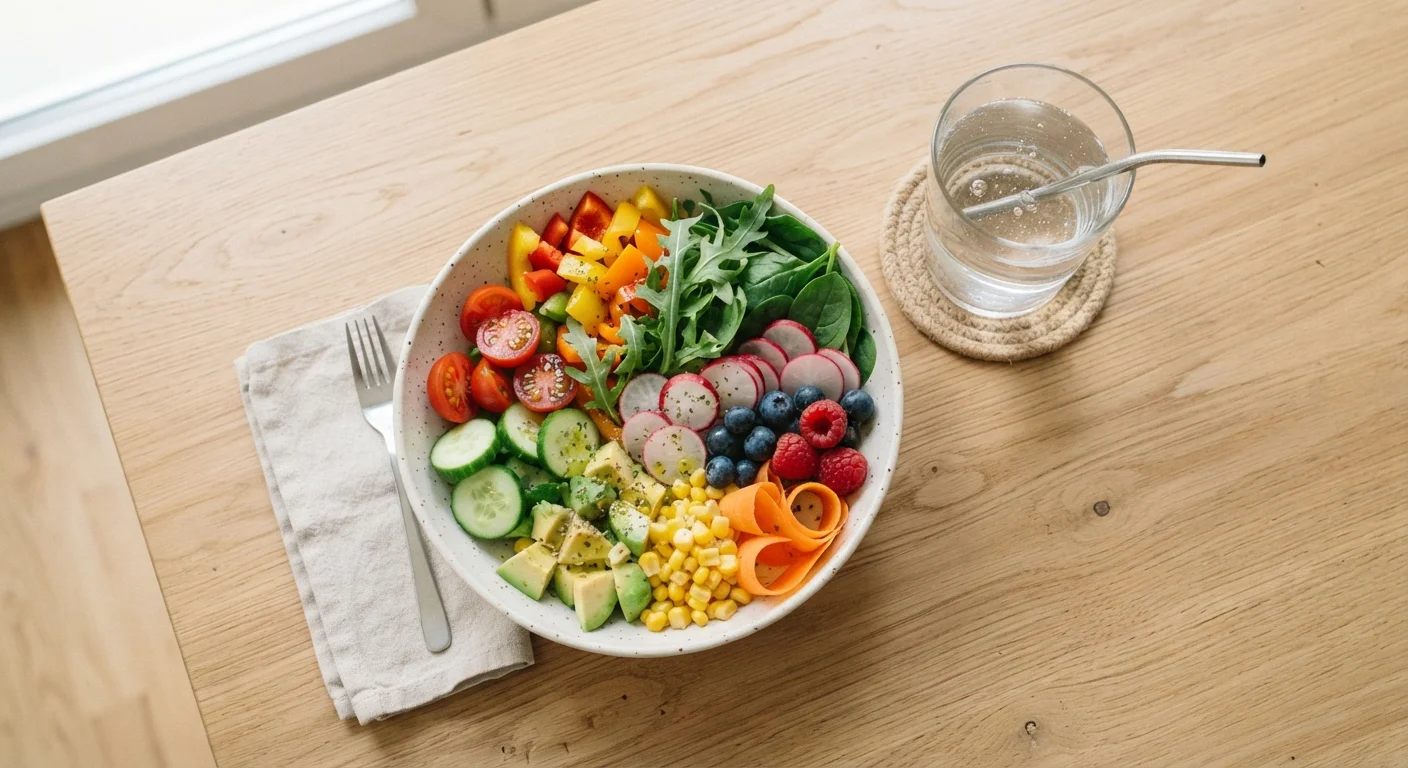
Many people underestimate how much water comes from food. Fruits and vegetables, in particular, are composed largely of water - cucumbers, lettuce, celery, oranges, and watermelon all contain over 90% water by weight. Soups, yogurt, oatmeal, and cooked grains also add meaningful fluid to your daily total.
Research from the Institute of Medicine suggests that food typically accounts for roughly 20% of total daily water intake for most adults. This means that building meals around whole, minimally processed foods - particularly produce - naturally supports hydration alongside providing fiber, vitamins, and minerals.
~20%
Daily water intake that comes from food
The National Academies of Sciences estimates that food contributes roughly 20% of total daily fluid intake for most adults.
1-2%
Body water loss linked to reduced concentration
Research suggests that losing as little as 1-2% of body water can be associated with measurable reductions in cognitive performance and energy.
>90%
Water content in many common vegetables
Foods like cucumber, celery, and lettuce are composed of more than 90% water by weight, making them significant contributors to daily fluid intake.
This connection reinforces why building a balanced plate isn't just about macronutrients and portions - water-rich whole foods quietly support your hydration throughout the day.
When Hydration Affects How You Feel After Eating
Mild dehydration - often defined as losing just 1-2% of body water - has been associated in research with reduced concentration, low energy, and headaches. These symptoms can easily be mistaken for hunger or post-meal fatigue, which makes hydration easy to overlook as a contributing factor.
Your body needs water to move digested material through the gastrointestinal tract. Inadequate fluid intake is a well-recognized contributing factor to constipation. Conversely, staying well-hydrated supports regularity and general digestive comfort.
It's also worth understanding that thirst isn't always a reliable early signal. Some research suggests that by the time you feel notably thirsty, your body has already begun responding to lower fluid levels. Drinking consistently across the day - rather than waiting for strong thirst - is a practical approach supported by general health guidance. For more on separating hydration fact from fiction, see hydration myths worth letting go.
Tie Hydration to Your Meal Routine
One of the simplest ways to build consistent hydration habits is to anchor them to meals you already eat. Pouring a glass of water when you sit down to breakfast, lunch, and dinner gives you three reliable hydration moments without requiring extra reminders. Over time, the habit becomes automatic and easy to maintain alongside your regular eating patterns.
Practical Ways to Connect Hydration and Eating Habits
Improving hydration doesn't require a dramatic overhaul of your routine. Small, consistent shifts tied to existing meal habits tend to work well for most people.
- Drink a glass of water before or during meals. This supports digestion and can help you tune in to hunger and fullness signals.
- Build meals around water-rich foods. Adding more fruits, vegetables, and broth-based soups naturally increases fluid intake without requiring extra drinks.
- Carry a reusable water bottle. Having water accessible throughout the day removes friction from the habit.
- Notice your urine color. Pale yellow generally indicates adequate hydration; darker yellow may suggest a need for more fluids.
Hydration needs also shift with activity level, heat, illness, and life stage. Pregnant and breastfeeding individuals, older adults, and those with certain health conditions may have different fluid requirements - a healthcare provider is the right resource for personalized guidance.
Pairing hydration awareness with attention to what your macronutrients do and eating patterns research consistently supports gives you a more complete picture of how everyday food decisions affect your health.
This article is for general informational and educational purposes only and is not a substitute for professional medical or dietary advice. Consult a qualified healthcare provider for guidance specific to your health needs.