

Key Takeaways
- Prolonged sitting is linked to reduced circulation, back discomfort, and lower energy levels.
- Breaking up sitting every 30-60 minutes can meaningfully counteract sedentary effects.
- No equipment or gym membership is needed to interrupt sedentary patterns effectively.
- Small, consistent movement breaks build lasting habits more reliably than occasional intense effort.
- Standing, walking, and simple stretches are all evidence-informed strategies for desk workers.
What you will need
What Prolonged Sitting Actually Does to Your Body
Sitting for extended periods isn't just uncomfortable - it places sustained, one-directional stress on multiple body systems. When you sit, the muscles in your lower body largely switch off, slowing the circulation of blood back toward the heart. This reduced blood flow is one reason legs feel heavy or swollen after a long desk stretch.
The spine also bears a disproportionate load in seated positions, particularly if posture drifts forward over a screen. Over time, this can contribute to tightness in the hip flexors and lower back - among the most common complaints reported by office workers. Additionally, periods of physical inactivity are associated with dips in alertness and mood, partly because movement stimulates the release of oxygen and nutrients to the brain.
The CDC and other public health agencies note that sedentary behavior - time spent sitting or reclining while awake - is distinct from simply not exercising. Even people who meet weekly physical activity recommendations can experience the effects of prolonged unbroken sitting during the workday. This is sometimes called the "active couch potato" effect in health research literature.
Don't Rely on One Long Walk to Offset All-Day Sitting
Research suggests that a single exercise session may not fully cancel out the effects of 8-10 hours of uninterrupted sitting. Frequent, shorter movement breaks distributed across the day appear more effective than one long bout of activity bookending a sedentary stretch.
The good news: research suggests that interrupting sitting - even with short, light movement - is enough to meaningfully reduce many of these effects. You don't need to transform your entire routine to see benefit.
How to Break Up Your Sitting Day: Step-by-Step
The steps below require no gym, no equipment purchase, and no significant time away from your desk. They're designed to fit into a standard office or home-office workday. Begin with the habits that may be quietly working against you before layering in new routines.
What you will need
Smartphone timer or alarm
Set recurring reminders every 30-60 minutes to prompt a movement break.
Desk or sturdy surface
Used for supported standing stretches and light balance exercises.
Supportive footwear
Wearing shoes or supportive slippers during standing breaks reduces foot fatigue.
Standing mat
Cushions feet during longer standing intervals; reduces lower-limb discomfort.
Understand your current sitting baseline
Before making changes, spend one typical workday noting roughly how often you stand or move. Most desk workers sit continuously for two or more hours between breaks without realizing it. A simple tally - jotting a mark each time you stand up - gives you a realistic picture to build from.
Set a recurring movement reminder
Use your phone, computer calendar, or a free timer app to trigger a short alert every 30 to 60 minutes. Research published in health and occupational medicine journals consistently identifies this interval as meaningful for reducing the physiological effects of sedentary behavior. Start with 60-minute intervals if more frequent prompts feel disruptive, then gradually shorten the gap.
Stand up and reset your posture
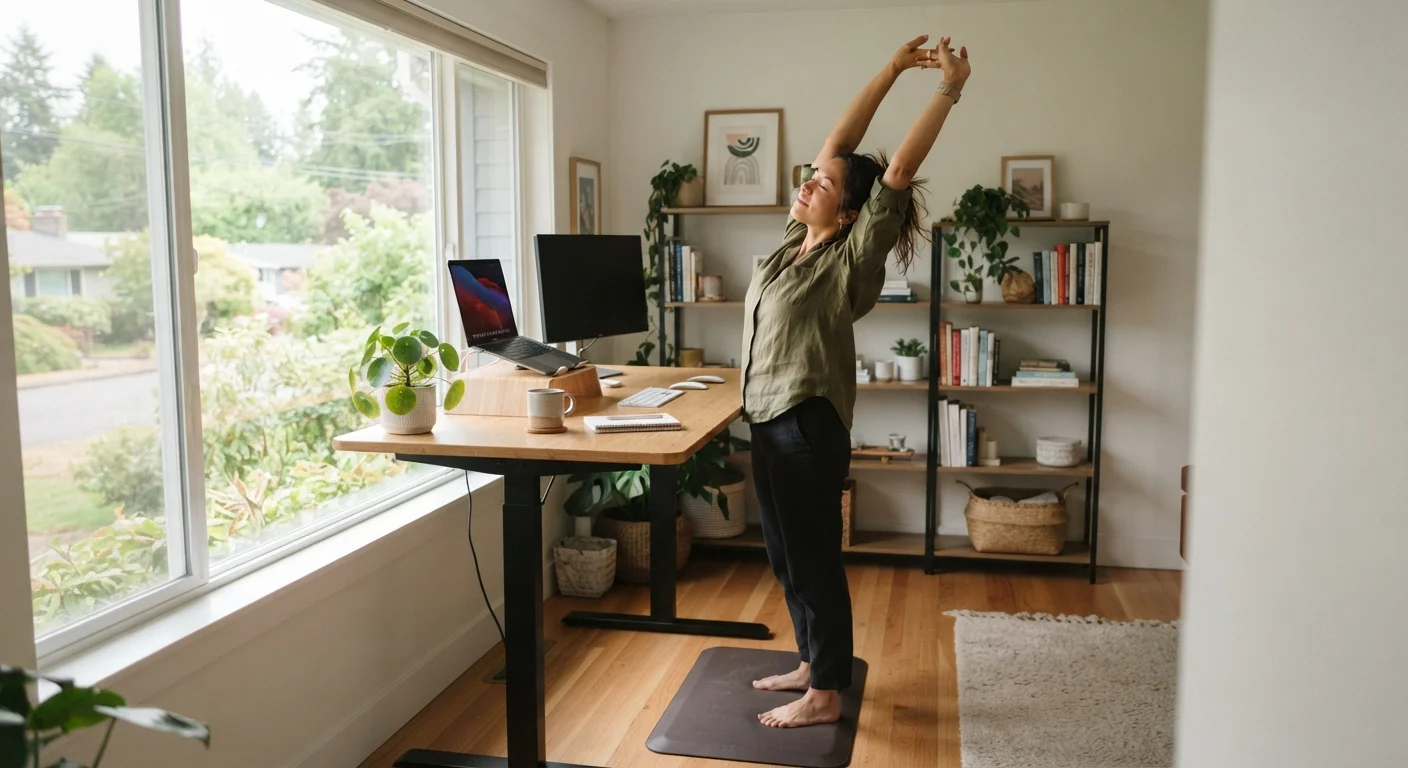
When the reminder triggers, simply stand up from your chair. Let your arms hang naturally, roll your shoulders back gently, and bring your chin slightly in to lengthen the back of your neck. Hold for 30-60 seconds. This resets compressed spinal discs and signals your body to shift out of the sustained static load that prolonged sitting creates.
Add a two-minute micro-movement routine
After standing, layer in light movement. Effective options that require no equipment include:
- Calf raises - rise onto your toes 10-15 times to stimulate circulation in your lower legs.
- Hip flexor stretch - step one foot forward into a gentle lunge position and hold 20-30 seconds per side. Prolonged sitting shortens hip flexors over time.
- Shoulder circles - rotate each shoulder forward and backward 5 times to release upper-back tension from keyboard work.
- Brief walk - even walking to a window, the kitchen, or the end of a hallway and back counts.
Two minutes is enough. The goal is interruption, not an exercise session.
Restructure your environment to nudge movement
Changing your space reduces the need for willpower. Practical adjustments include placing your water bottle across the room so you walk to refill it, taking phone calls while standing, or moving your printer to a location that requires you to get up. These environmental cues create natural movement prompts without relying on reminders alone.
Build consistency over several weeks
Aim to make movement breaks a non-negotiable part of your workday rather than something reserved for low-pressure afternoons. Consistency matters far more than duration. Missing one day or one reminder is not a failure - the pattern over weeks is what produces lasting change. Research in behavioral health consistently finds that regular, moderate habits outperform sporadic intense efforts for long-term outcomes.
Stack Movement Breaks onto Existing Cues
Pair a movement break with something you already do - standing up every time you take a phone call, or doing a brief stretch after each meeting ends. Habit-stacking makes it easier to stay consistent without relying on willpower alone. For more on this approach, see why small daily habits stick.
For a broader look at how to make these changes last, explore why consistency beats intensity in long-term wellness.
This article is for general informational and educational purposes only and does not constitute medical advice. Always consult a qualified healthcare professional regarding any health concerns or before making significant changes to your physical activity habits.