

Key Takeaways
- New vehicles typically lose a significant portion of their value within the first few years of ownership.
- Depreciation directly affects your loan equity, trade-in value, and insurance payout if your car is totaled.
- Being "underwater" on a loan means you owe more than the car is currently worth - depreciation is the primary cause.
- Vehicle type, mileage, condition, and market demand all influence how quickly a car depreciates.
- Understanding depreciation helps you make smarter decisions about financing terms, gap insurance, and when to sell.
Car Depreciation
Car depreciation is the gradual loss of a vehicle's market value over time. It begins the moment you take ownership and continues throughout the life of the vehicle, regardless of how well you maintain it. Depreciation is not a fee you pay directly - it's the difference between what you paid and what your car is worth today.
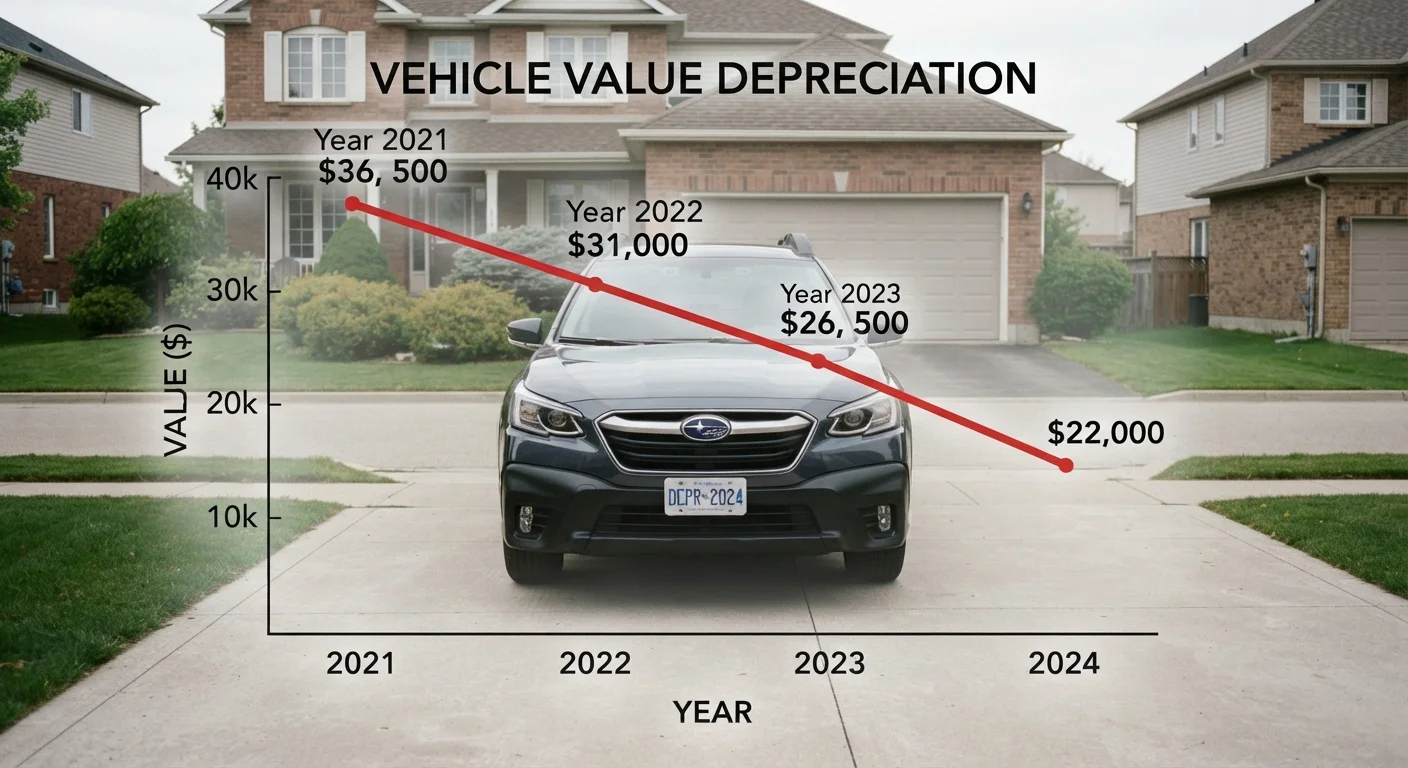
Depreciation is typically measured as a percentage of original value lost per year; industry data commonly shows new vehicles losing roughly 15-25% of value annually in the early years, though this varies by vehicle type and market conditions.
How Depreciation Actually Works
Depreciation isn't something that shows up on a monthly statement, but it affects your finances as surely as your loan payment does. The moment a vehicle changes from "new" to "used" - typically when it leaves the dealership lot - its resale value drops. From there, value continues to fall each year.
The steepest decline usually happens in the early years of ownership. After that, the rate of loss tends to slow, though it never fully stops. Factors that influence how fast a specific vehicle depreciates include:
- Mileage: Higher annual mileage accelerates value loss relative to similar vehicles driven less.
- Condition: Dents, worn interiors, or deferred maintenance reduce what a buyer or dealer will offer.
- Market demand: Popular vehicle segments - such as trucks and certain SUVs - often hold value better when consumer demand stays strong.
- Fuel type and technology: Vehicles with rapidly changing powertrain technology can depreciate faster as newer options enter the market.
For a broader look at how depreciation fits into the total cost of owning a vehicle, see the real costs of owning a car beyond the sticker price.
~20%
Average first-year value loss for new vehicles
Industry analysts commonly estimate new vehicles lose approximately 15-25% of their value in year one, with the range depending on make, model, and market demand.
~50%
Value remaining after five years of ownership
On average, many new vehicles retain roughly half their original value after five years, according to general automotive industry benchmarks - though this varies significantly by vehicle segment.
72-84 mo.
Loan terms most likely to create negative equity
Consumer financial data consistently shows that longer loan terms increase the period during which depreciation outpaces principal repayment, raising the risk of being underwater.
The Direct Impact on Your Loan and Equity
Depreciation and your auto loan don't move in sync - and that gap can become a serious financial problem. In the early months of a loan, most of your payment goes toward interest rather than principal. Meanwhile, the car's value is dropping fastest during exactly this period.
The result: many drivers find themselves "underwater," owing more on the loan than the vehicle is worth. This matters most in three situations:
- You want to sell or trade in early. If your trade-in value is less than your remaining loan balance, you'll need to cover the difference out of pocket or roll it into a new loan - which compounds the problem.
- Your car is totaled. Insurance pays the current market value, not your loan payoff amount. If you owe $18,000 but the car is worth $14,000, you're responsible for the $4,000 gap unless you carry gap insurance.
- You need to refinance. Lenders consider your loan-to-value ratio. Negative equity can limit your options.
Longer loan terms - 72 or 84 months - increase the risk of negative equity because the loan pays down more slowly. Understanding this tradeoff is part of what's covered in comparing financing options from dealers and outside lenders.
Reduce Negative Equity Risk From the Start
A larger down payment and a shorter loan term both help keep your loan balance closer to your vehicle's actual market value throughout ownership. Even an additional few thousand dollars down at purchase can make the difference between having equity and being underwater in year two. Run the numbers on total interest paid - not just the monthly payment - before committing to any loan term.
Depreciation's Role in Insurance and Trade-In Negotiations
Most drivers don't think about depreciation until they're sitting at a trade-in counter or filing an insurance claim - and by then, the math is already set. Knowing how it works beforehand puts you in a stronger position.
Insurance and actual cash value: Standard auto insurance policies pay "actual cash value" (ACV) for a total loss - meaning the vehicle's depreciated worth at the time of the claim. A car you bought for $30,000 three years ago might have an ACV of $18,000. Gap insurance (often available through lenders or insurers) is designed to bridge the difference between ACV and your remaining loan balance, though coverage details vary by policy.
Trade-in leverage: Dealers price trade-ins based on current market value. Checking independent vehicle valuation sources before visiting a dealership gives you a realistic baseline. Arriving without a sense of your car's current worth makes it easy to accept less than it's worth.
Depreciation is one piece of a larger financial picture. The complete picture of car ownership from purchase to trade-in covers how all these costs interact from the day you buy to the day you sell. For guidance on everyday financial decisions beyond the car itself, the Everyday Money Tips hub offers practical frameworks.
“Depreciation is the single largest cost of owning a new vehicle for most drivers - larger than fuel, insurance, or maintenance in the early years. Yet it's the cost most people never see on a bill.”
— Consumer Financial Education Research, General principle cited across automotive cost-of-ownership analyses