

Key Takeaways
- Hair porosity — low, medium, or high — controls how well your strands absorb and hold moisture.
- Low porosity hair repels moisture at first; high porosity hair absorbs quickly but loses moisture just as fast.
- Using products mismatched to your porosity is a leading cause of dryness, buildup, and frizz.
- A simple float test at home can give you a rough starting point for identifying your porosity level.
- Heat damage and chemical processing can raise porosity over time, even if your natural baseline is low.
Hair Porosity
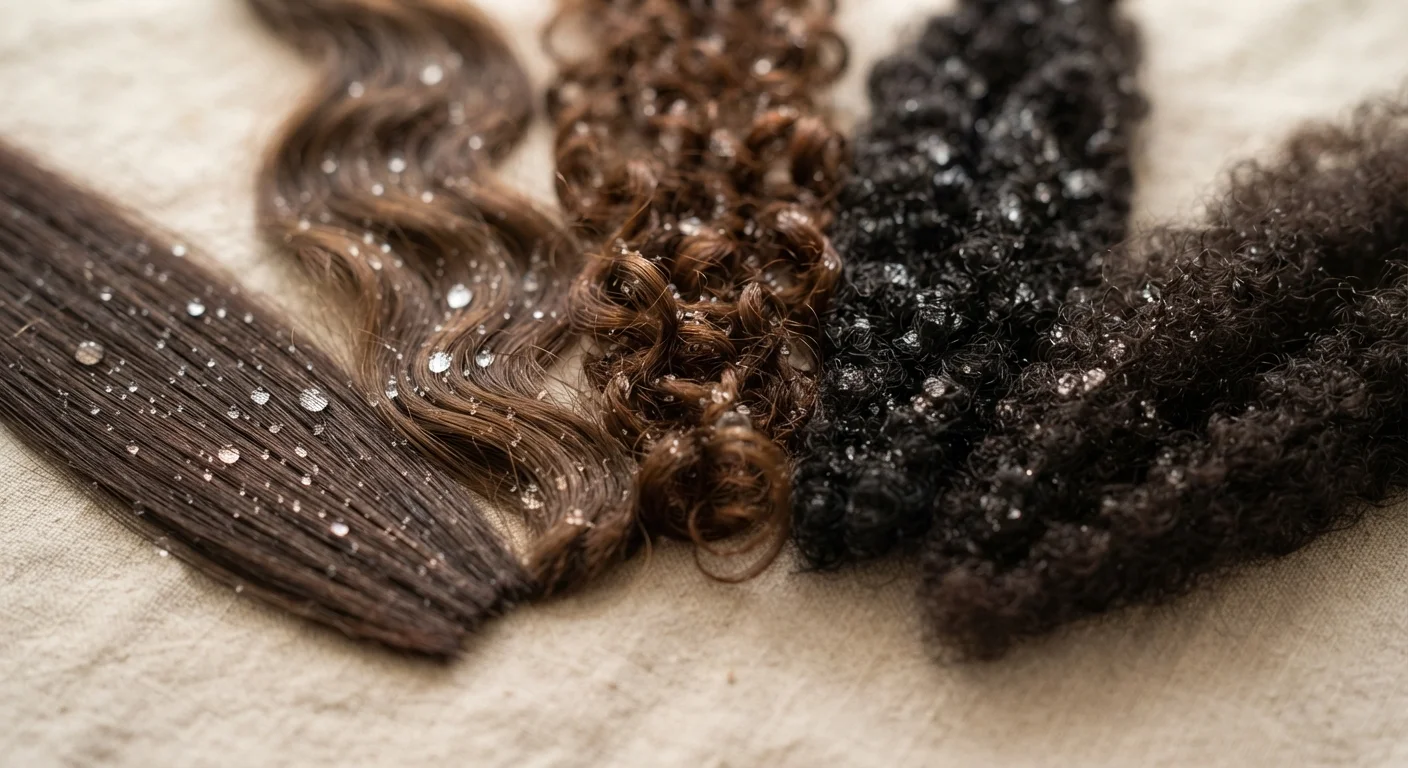
Hair porosity refers to your hair's ability to absorb and retain moisture. It's determined by the condition of the cuticle — the outermost layer of each strand — and whether those tiny scales lie flat, lift open, or have gaps. Understanding your porosity helps explain why some products seem to sit on your hair without absorbing, while others vanish in minutes but leave strands dry by afternoon.
Porosity is influenced by both genetics and external damage from heat, chemical processing, and UV exposure; a single person's hair can have varying porosity levels along the same strand.
Why Porosity Matters More Than You Might Think
You've followed every step of a haircare routine — deep conditioning, leave-ins, regular trims — and your hair still feels dry, limp, or weighed down. Before blaming the products, consider this: if you don't know your hair's porosity level, you may be applying the right ingredients in entirely the wrong way.
Porosity is essentially how open or closed your hair cuticle is. Think of each strand like a roof with overlapping shingles. When those shingles lie flat and tight (low porosity), water and product struggle to get inside. When they're raised or uneven (high porosity), moisture rushes in — but escapes just as quickly. Medium porosity sits in the sweet spot, with cuticles that open and close with reasonable consistency.
This single characteristic explains an enormous range of haircare frustrations, from frizz that won't quit to conditioner that seems to do nothing. It's the kind of foundational knowledge that can make your entire routine — and your budget — work harder for you. For a useful parallel in skincare, see our piece on the difference between moisturizer and hydration — understanding what a product is actually doing versus what you hope it's doing changes everything.
The Three Porosity Types — and What They Feel Like
Low porosity hair has tightly packed cuticles that resist moisture absorption. Products tend to bead up or take a long time to soak in. Once moisture is inside, though, low porosity hair actually holds it well. Common signs: water rolls off when your hair is dry, hair takes forever to get fully wet in the shower, and products leave white residue or flaking.
High porosity hair — whether naturally occurring or caused by chemical processing, heat damage, or environmental stress — has gaps or raised cuticles that absorb moisture rapidly but can't hold it. Hair may feel soft and hydrated right after washing, then brittle within hours. Frizz in humidity is a classic high porosity calling card, since hair absorbs ambient moisture erratically.
Medium (or normal) porosity hair absorbs and retains moisture without much fuss. It tends to respond predictably to most products, hold styles well, and require less trial-and-error. If you have medium porosity hair, your main goal is keeping it that way — which means being mindful about heat and chemical exposure.
Adapting Your Routine to Your Porosity
Once you identify your porosity type, adjusting your approach becomes more intuitive than overwhelming.
For low porosity hair, the goal is getting moisture past that stubborn cuticle. Applying conditioner or treatments to hair that's already warm and damp — right after a shower — gives you the best window of opportunity. Lightweight, liquid-based products absorb more readily than thick creams or butters, which tend to sit on the surface. Clarifying shampoos used occasionally help remove the product buildup that low porosity hair is prone to.
For high porosity hair, the priority shifts to sealing moisture in after you've applied it. Layering products — a water-based leave-in followed by a heavier cream or oil to lock it down — follows the logic of the "LOC" method (Liquid, Oil, Cream) that many naturals swear by. Protein treatments can temporarily fill gaps in the cuticle, though frequency matters: too much protein on high porosity hair can cause brittleness.
It's also worth noting that your scalp's condition affects the overall health of your hair. Our guide to scalp health and hair growth explains how what's happening at the root influences what you see at the ends.
Ingredients, Labels, and Porosity
Haircare labels can feel like a maze, especially when marketing terms like "deeply nourishing" or "moisture-rich" don't tell you whether a product suits your cuticle structure. A few general patterns are worth knowing.
Humectants — ingredients like glycerin and aloe vera — draw water from the air into the hair shaft. They work beautifully for low porosity hair in moderate-humidity environments but can cause high porosity hair to absorb too much moisture erratically in humid conditions. Emollients like plant-based oils help smooth the cuticle and reduce moisture loss, making them especially useful for high porosity types. Film-forming ingredients, including certain proteins, can temporarily reinforce a damaged cuticle.
One area of ingredient confusion worth unpacking: silicones. They coat the hair shaft and create slip and shine, but can build up significantly on low porosity hair over time. Our article on sulfates, parabens, and silicones in haircare cuts through the noise on what these ingredients actually do — helpful context before you overhaul your product shelf.
“Understanding the structure of the hair cuticle is foundational to understanding why any product works — or doesn't. Porosity is not a flaw to fix; it's a characteristic to work with.”
— Trichology professional, Licensed trichologist and hair science educator
This article is for general informational purposes only and is not professional haircare or medical advice. For persistent hair or scalp concerns, consult a licensed trichologist or dermatologist.