

Key Takeaways
- Zero-based budgeting assigns every dollar of income a specific job before the month starts.
- The budget balances to zero — income minus all allocations equals nothing left unplanned.
- Savings and debt payments count as budget categories, not afterthoughts.
- ZBB works best for people with relatively stable monthly income.
- It requires more upfront effort than traditional budgeting but often reveals hidden spending leaks.
Zero-Based Budgeting
Zero-based budgeting (ZBB) is a method where you allocate every dollar of your income to a specific category — expenses, savings, or debt payments — until nothing is left unassigned. The goal is for income minus all allocations to equal zero. This doesn't mean spending everything; it means every dollar has a deliberate destination, including savings.
Unlike incremental budgeting, which adjusts last period's figures, ZBB requires you to justify each spending category from a baseline of zero each budget cycle.
How Zero-Based Budgeting Actually Works
The mechanics of zero-based budgeting are straightforward: start with your total monthly take-home income, then build spending categories — rent, groceries, transportation, subscriptions, savings, debt payments — and assign dollar amounts to each until your income minus your allocations equals zero.
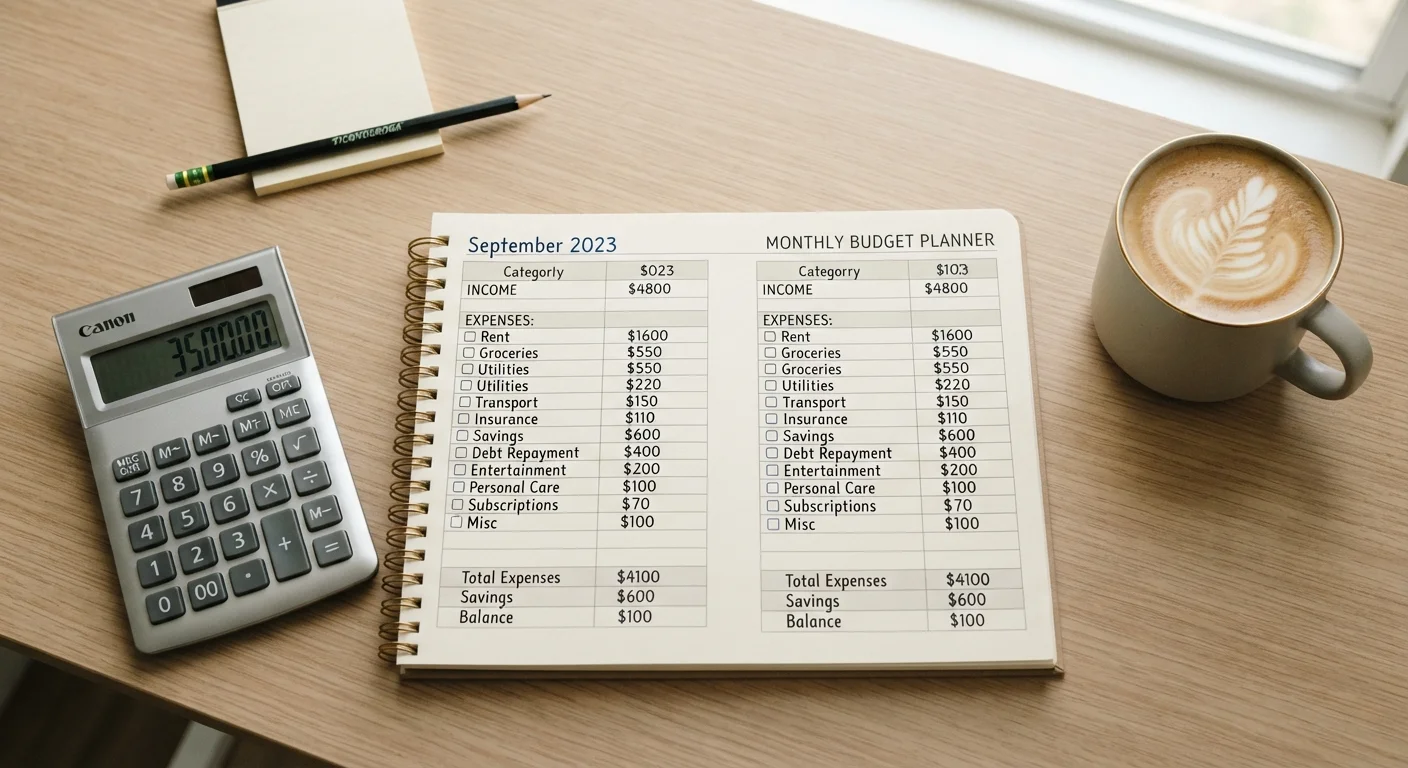
Think of it as a pre-authorization system. Before a dollar gets to leave your account, it already has a name tag. If you take home $3,800 a month, you create a plan that accounts for all $3,800. A portion might go to rent ($1,200), groceries ($400), utilities ($150), savings ($500), and so on. The process keeps going until every dollar is spoken for.
When you have money left over after covering essentials, ZBB forces a real decision: Where does this go? Extra debt paydown? A travel fund? A buffer for irregular expenses? This deliberate moment is where the method earns its reputation for reducing mindless spending.
Include an 'Oops' Category
Even careful budgeters face unexpected small expenses — a parking ticket, a last-minute gift, a forgotten annual fee. Building a modest buffer category (some call it a 'miscellaneous' or 'oops' line) into your zero-based budget prevents one surprise from unraveling the whole plan. Assign it a fixed amount each month; if unused, roll it into savings.
What Makes It Different from Traditional Budgeting
Most people who budget use an incremental approach — they look at what they spent last month, make small adjustments, and call it a budget. The problem is that this method perpetuates old habits. If you overspent on dining out last November, that inflated number quietly becomes this month's baseline.
Zero-based budgeting breaks that cycle. Each month, you rebuild from scratch. A category only gets funded if you actively decide it deserves funding. This is why ZBB tends to surface spending leaks that incremental budgeting misses — things like streaming services you forgot about or recurring charges that no longer serve you.
For a direct comparison of the two philosophies, see Zero-Based Budgeting vs. Percentage-Based Budgeting.
ZBB Doesn't Require Perfection
Mid-month adjustments are a normal part of zero-based budgeting, not a sign of failure. If an unexpected expense comes up, simply move dollars from a lower-priority category to cover it and document the change. The goal is intentional decision-making, not rigid adherence to a plan that can't flex.
Who Benefits Most — and Where It Gets Tricky
ZBB tends to work well for people with predictable monthly income who want granular control over their finances. It's particularly useful when money is tight and every dollar genuinely matters, or when someone is working toward a specific goal — eliminating a credit card balance, building a down payment fund, or reducing discretionary spending after a lifestyle change.
It requires more active maintenance than a set-it-and-forget-it approach. If mid-month a car repair comes up, you have to consciously move money from another category rather than just hoping there's enough cushion. This hands-on quality is a feature for some people and a friction point for others.
People with fluctuating freelance or gig income can use ZBB, but it works best when they budget conservatively from a reliable minimum, then re-allocate any surplus as it arrives. If you're new to budgeting entirely, Money Management for Beginners covers the foundational concepts first.
~33%
Americans who follow a detailed monthly budget
A Gallup survey found that roughly one in three Americans report keeping a detailed household budget, suggesting many people manage money without a formal system.
$1,000+
Average annual spend on unused subscriptions
Research by C+R Research found that consumers frequently underestimate their recurring subscription costs, with many unaware of services still charging their accounts.
Getting Started Without Overcomplicating It
The most common mistake new zero-based budgeters make is creating too many categories too soon. Start with broad buckets — housing, food, transportation, savings, debt, and personal spending — then refine as you get comfortable with the process.
Pull two months of bank and credit card statements before you set your first budget. This gives you realistic baselines for variable categories like groceries and gas rather than optimistic guesses. Underestimating those figures is one of the top reasons first budgets fail — something covered in depth in Why Most First Budgets Fall Apart.
For a structured walkthrough of building your first month-by-month plan, Building Your First Monthly Budget from Scratch provides a step-by-step process. And if your larger goal is reducing debt while building savings, the Saving & Debt hub offers complementary strategies that pair well with a ZBB approach.
This article is for general informational and educational purposes only and does not constitute personalized financial advice. Consult a qualified financial professional for guidance specific to your situation.