

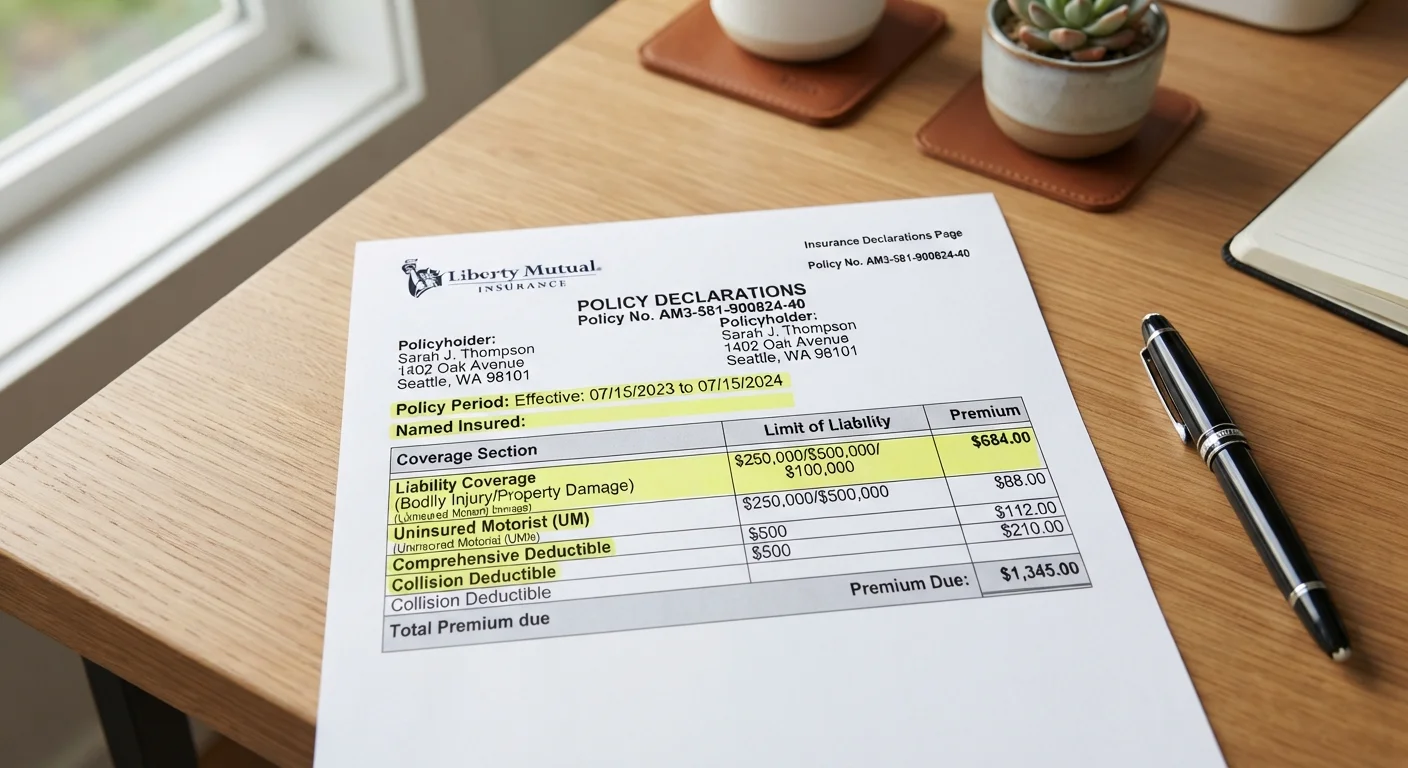
Key Takeaways
- The declarations page summarizes your policy's key terms but does not replace the full policy document.
- Named insured, policy period, coverage limits, and deductibles are the four most critical fields to verify.
- Errors on your dec page - like a wrong address or misspelled name - should be corrected with your insurer promptly.
- Reviewing your dec page at each renewal helps you catch coverage gaps or unexpected changes.
- Coverage limits and deductibles directly affect how much you'll receive - and spend - in a claim.
Insurance Declarations Page
The declarations page - often called the "dec page" - is a one- to two-page summary at the front of your insurance policy. It lists the most important details of your coverage in one place: who is insured, what is covered, how much coverage you have, and what you'll pay. Think of it as the cover sheet for your entire policy.
The declarations page is a legally binding summary document; discrepancies between it and the full policy form are typically resolved in favor of the policy form's language.
Why the Declarations Page Matters
Most policyholders tuck their insurance paperwork away and forget about it - until something goes wrong. The declarations page is the one document you should actually read from top to bottom. It tells you, at a glance, whether your coverage matches what you think you bought.
Insurers are required to provide a dec page with every policy. It's standardized enough that once you know what each field means, you can read any dec page - auto, home, renters, or life - with confidence. For a broader foundation, see our plain-language glossary of insurance terms before diving in.
Dec Page vs. Full Policy: Know the Difference
The declarations page summarizes your coverage but doesn't include exclusions, conditions, or the detailed policy language. Always keep both documents. When questions arise - especially during a claim - the full policy form governs what is actually owed. Our coverage terms reference explains additional entries you may encounter.
The Key Sections, Decoded
Every declarations page follows a similar structure. Here's what each section actually means:
Named Insured and Additional Insureds
The named insured is the primary person or entity the policy is issued to. If you have a co-owner, spouse, or lienholder listed, they appear as additional insureds - meaning they also have legal protection under the policy. Verify all names are spelled correctly; errors can complicate claims.
Policy Number and Policy Period
Your policy number is your unique identifier for every interaction with your insurer. The policy period shows the exact start and end dates of your coverage - coverage lapses the moment that end date passes if you haven't renewed.
Insured Property or Risk Description
This field identifies what is being covered - your home's address, your vehicle's year, make, model, and VIN, or the rented unit's address. Double-check this section carefully; a wrong address or VIN means the policy may not apply to your actual property.
Coverage Types and Limits
This is the heart of the dec page. Each coverage type is listed alongside its limit - the maximum your insurer will pay for that type of loss. For example, you might see liability coverage listed at $100,000 per occurrence, or dwelling coverage at $350,000. To understand what each coverage type actually does, see our guide on auto insurance coverage types or homeowners insurance coverage categories.
Deductible
The deductible is the amount you pay out of pocket before your insurer pays the rest of a covered claim. A higher deductible typically means a lower premium - and vice versa. Make sure the deductible listed matches what you agreed to when you purchased the policy.
Premium
The premium is the total amount you owe for the coverage period, often broken into installments. Some dec pages also show any discounts applied or fees added. Review this figure at each renewal - premiums can change even when your coverage doesn't.
Endorsements and Riders
Any modifications to the standard policy - added coverages, removed exclusions, or special terms - appear here as endorsements (also called riders). Each endorsement has its own number and brief description. Don't skip this section; it's where important customizations live.
Review Your Dec Page Every Renewal
Set a reminder to compare your new dec page to the previous one each time your policy renews. Look specifically at coverage limits, deductibles, and the insured property description. Even small changes can have a big impact on what you'll receive after a claim.
How to Use Your Dec Page at Renewal
When your renewal dec page arrives, don't assume nothing has changed. Compare it line by line with the previous version. Look for shifts in coverage limits, deductible amounts, and premium totals. Check that all listed property is still accurate - especially if you've moved, bought a new car, or made home improvements.
If anything looks off, contact your agent or insurer before the new policy period begins. Changes made after the fact may not be retroactive. For a deeper look at the terminology you'll encounter when things go wrong, our claims vocabulary reference guide is a helpful next step. You can also explore all coverage types we've broken down in plain language.
This article is for general informational purposes only and does not constitute insurance, legal, or financial advice. Coverage terms, limits, and regulations vary by insurer, policy type, and state. Always read your complete policy documents and consult a licensed insurance professional for guidance specific to your situation.