
Flood Insurance Is Not Part of Your Homeowners Policy - Here's Why That Matters

Key Takeaways
- Standard homeowners insurance explicitly excludes damage caused by flooding.
- Flood insurance must be purchased as a separate, standalone policy.
- Most U.S. flood insurance is available through FEMA's National Flood Insurance Program (NFIP).
- Flood risk exists in all 50 states, not only coastal or high-risk zones.
- New flood policies typically have a 30-day waiting period before coverage begins.
Flood Insurance
Flood insurance is a separate policy that covers physical damage to your home and belongings caused by flooding - such as storm surge, heavy rainfall runoff, or overflowing rivers. It is not included in a standard homeowners insurance policy. Homeowners must purchase it as a standalone product if they want protection against flood-related losses.
Most flood insurance in the U.S. is issued through the National Flood Insurance Program (NFIP), administered by FEMA, though a private market also exists. Coverage terms, limits, and waiting periods differ from standard homeowners policies.
The Exclusion Most Homeowners Never Notice
When people picture home insurance, they imagine a financial safety net that catches whatever goes wrong with their house. That assumption is understandable - but incomplete. Every standard homeowners policy contains a flood exclusion, usually buried in the policy language under a section describing what the insurer will not pay for.
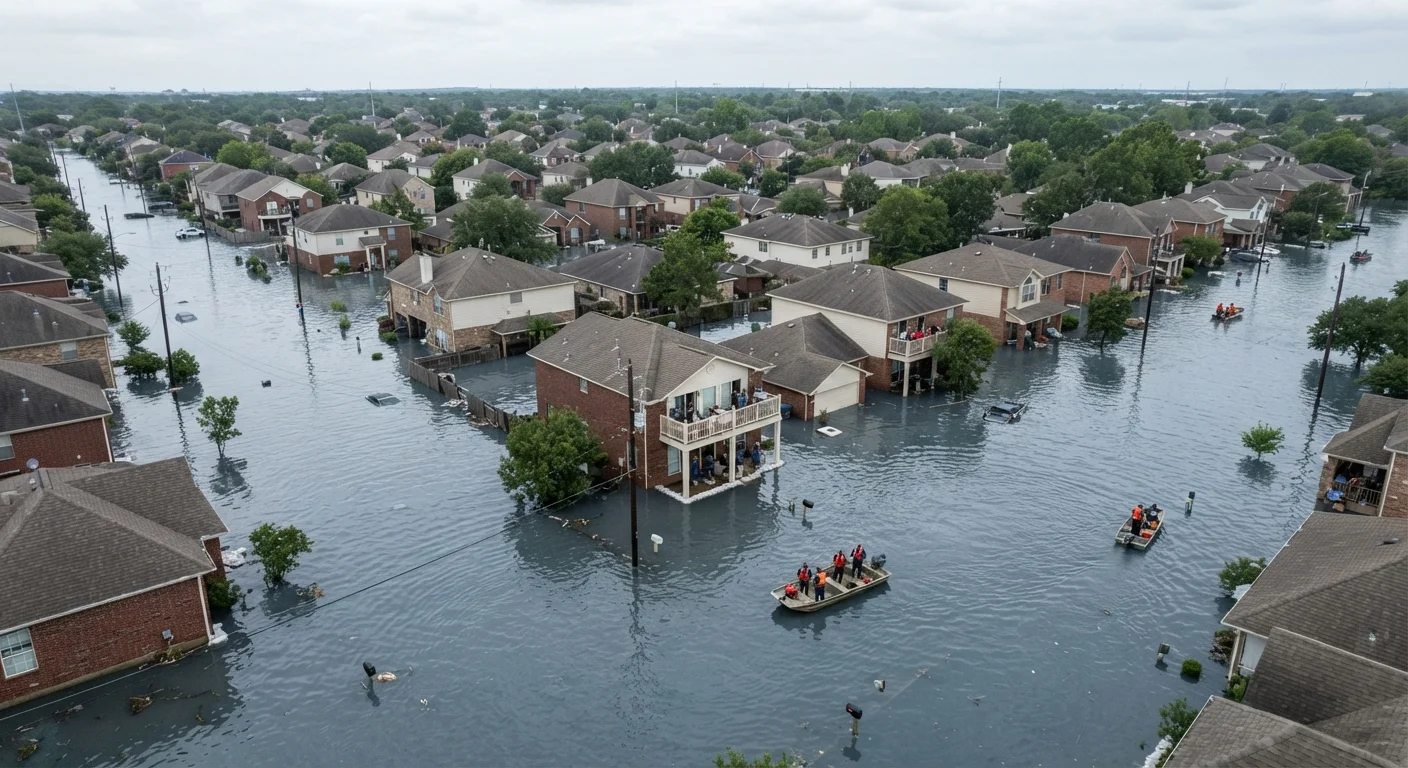
This exclusion applies regardless of how the water enters. Storm surge from a hurricane, a river that overtops its banks, or heavy rain that pools and seeps into your foundation - all of these are flood events, and all of them fall outside the scope of a standard policy. To understand how exclusions work more broadly, see how policy exclusions quietly limit coverage.
The practical consequence is significant: if a flood damages your home and you don't have a separate flood policy, your homeowners insurer will likely deny the claim entirely. The time to understand this gap is before a storm, not after.
Water Damage vs. Flood Damage: A Key Distinction
Homeowners policies typically do cover certain types of water damage - for example, a pipe that suddenly bursts or an appliance that leaks unexpectedly. The key distinction is the source. Water that originates inside the home from a covered peril may be covered; water that enters from outside due to flooding is excluded. If you're unsure how your policy treats a specific water-related loss, review your policy's definitions and exclusions sections or ask your agent directly.
Where Flood Insurance Actually Comes From
Because private insurers largely excluded flood risk from home policies decades ago, the federal government stepped in. The National Flood Insurance Program (NFIP), created by Congress in 1968 and administered by FEMA, is still the primary source of flood insurance for U.S. homeowners. Policies are sold through licensed private insurance agents, but the coverage itself is backed by the federal program.
In recent years, private insurers have re-entered the flood insurance market in some states, offering policies with different coverage limits, terms, and pricing compared to NFIP policies. Whether a private policy or an NFIP policy is more appropriate for a given property depends on factors like flood zone designation, desired coverage limits, and local market availability - a licensed agent familiar with your area can help you understand what's available.
~20%
Flood claims from outside high-risk zones
FEMA estimates that roughly one in five NFIP flood insurance claims comes from properties located outside designated high-risk Special Flood Hazard Areas.
$25 billion+
Average annual U.S. flood damage costs
According to NOAA, flooding is consistently the costliest type of natural disaster in the United States when measured by total annual economic losses.
Coverage under a standard NFIP policy is divided into two parts: building coverage (the physical structure) and contents coverage (your belongings). These are separate coverage elections, meaning you can buy one without the other - though most homeowners benefit from carrying both.
Why Flood Risk Is Broader Than Most People Assume
Many homeowners dismiss flood insurance because they don't live near a body of water or in a federally designated Special Flood Hazard Area (SFHA). That reasoning has a significant flaw: flooding is the most common and costly natural disaster in the United States, and it happens in every state.
Heavy, prolonged rainfall can overwhelm drainage systems in any neighborhood. Development that replaces natural ground cover with pavement and rooftops reduces the soil's ability to absorb water. Even areas that have never flooded before can experience it as land use and weather patterns shift over time.
Lenders are required to notify borrowers when a mortgaged property is located in a high-risk flood zone and to require flood insurance as a condition of the loan. But for properties in moderate- or low-risk zones, no such requirement applies - leaving the decision entirely to the homeowner. For a broader look at how coverage gaps surprise policyholders across different insurance types, see common coverage gaps that catch policyholders off guard.
Timing and Practical Steps to Consider
One detail that catches people off guard: NFIP flood policies typically carry a 30-day waiting period before they take effect. You cannot purchase a policy the week before a named storm makes landfall and expect coverage. Planning ahead is essential.
If you're reviewing your current homeowners policy and want to understand your full coverage picture, a breakdown of homeowners insurance coverage categories can clarify what each section of your existing policy actually does - and where the gaps are. You can also use a pre-signing policy checklist to spot exclusions and coverage limitations before you commit to any policy.
If you're a renter rather than a homeowner, the same flood exclusion applies - your landlord's policy covers the building structure, not your possessions. See what renters insurance actually covers for more on this distinction.
The core message is simple: knowing what your homeowners policy doesn't cover is just as important as knowing what it does. Flood insurance fills a specific, significant gap - and it's worth understanding whether that gap applies to your situation.
This article is for general informational and educational purposes only and does not constitute insurance, financial, or legal advice. Coverage terms, eligibility, exclusions, and regulations vary by insurer, policy, and state. Read your actual policy documents carefully, and consult a licensed insurance agent or adviser for guidance specific to your circumstances.
Don't Wait for Storm Season to Ask About Flood Coverage
Because NFIP policies have a 30-day waiting period, flood insurance purchased during an active weather threat won't protect you from that event. Reach out to a licensed insurance agent well before storm season to review your options. Asking now costs nothing; waiting until water is in the forecast may cost you everything.